Water Solution – One Call Ahead
Enquire? Send Your Mail

Optima Water Solutions is an STP Plant Manufacturer in Gurgaon. We design, install, commission, and maintain Sewage Treatment Plant systems, and hold ISO 9001:2015 certification with 12+ years of experience and 158+ completed projects across India. Our STP systems meet CPCB compliance standards and serve residential societies, commercial complexes, and industrial facilities in Gurgaon.
What is a Sewage Treatment Plant?
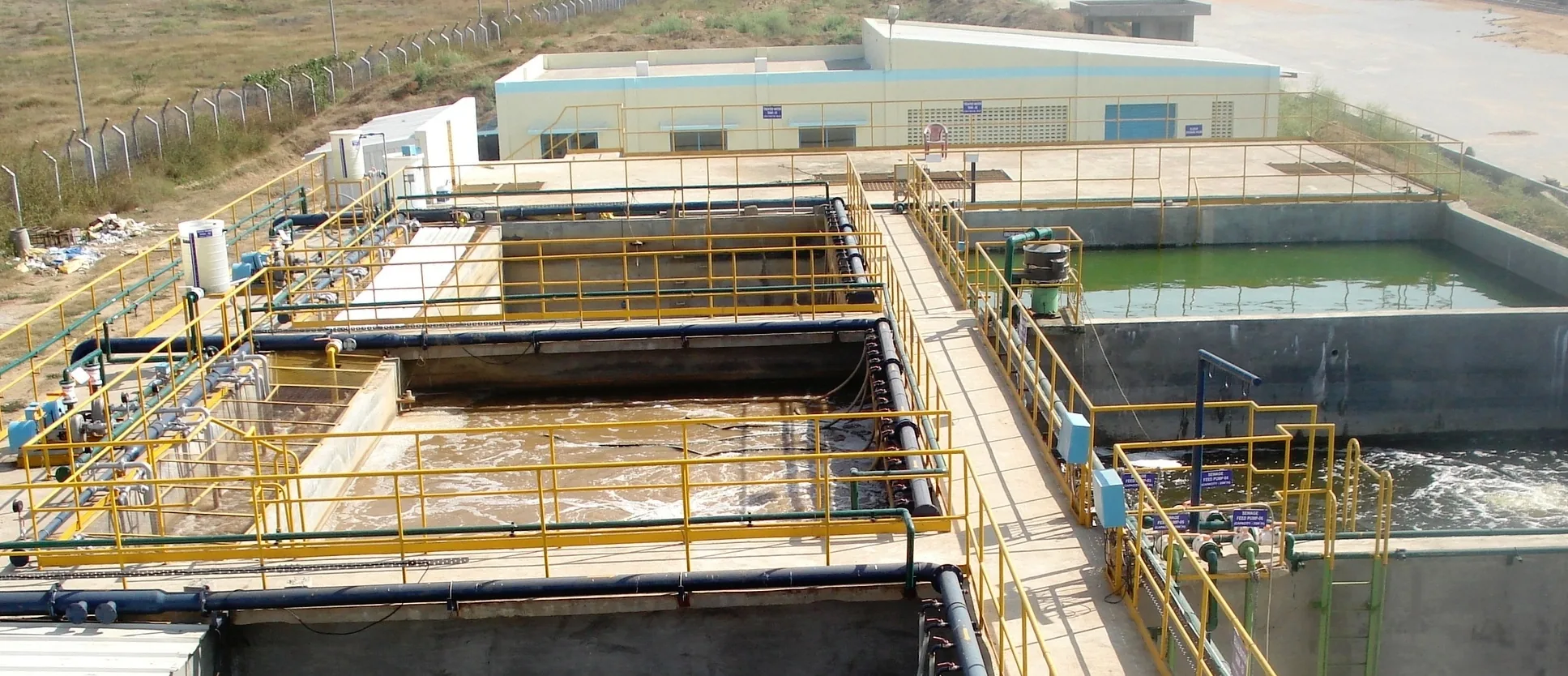
A Sewage Treatment Plant (STP) is a facility that processes domestic and municipal wastewater to remove contaminants before the treated water is discharged or reused. The process involves physical, biological, and chemical treatment stages that remove suspended solids, organic matter, nutrients, and pathogens.
Modern STP systems use technologies including MBBR (Moving Bed Biofilm Reactor), MBR (Membrane Bioreactor), SBR (Sequencing Batch Reactor), and conventional activated sludge processes — each suited to different capacities and site conditions.
In India, STPs are mandatory for residential societies above 20,000 sqm built-up area, commercial complexes, hotels, hospitals, and all industrial facilities discharging domestic effluent — as per CPCB norms and local Pollution Control Board regulations.
Sewage Treatment Plant in Gurgaon — Why It Matters
Gurgaon's STP demand is dominated by two categories: large corporate office campuses along the Golf Course Road and Cyber City belt, and RERA-registered group housing societies spread across Sohna Road, Dwarka Expressway, and the newer sectors. HSPCB requires STP approval for both, but the design brief differs sharply — office campuses need a plant sized for a sharp weekday occupancy peak, while group housing needs one sized for round-the-clock residential flow.
IMT Manesar and Udyog Vihar bring a third category — manufacturing and light industrial units, where HSPCB's ETP requirements sit alongside standard STP norms depending on what each unit produces. A number of our Gurgaon industrial clients need combined systems rather than sewage treatment alone.
Basement-level installation is common across Gurgaon's newer high-rise developments, similar to the pattern we see across NCR generally, given how tightly plots are built up in sectors along Golf Course Extension Road.
Gurgaon Wastewater Challenges & How Optima Solves Them
Gurugram grew vertically faster than its sewer network. In many sectors, master sewer lines and municipal plants arrived late, and GMDA ties sewer connections to a functioning network, so on-site treatment is not an extra here; it is often the only workable route. The city's groundwater is also under heavy stress, which is why Haryana's approvals insist on dual plumbing and recycled water for flushing, landscaping and construction.
The recurring site problems are practical ones. Basement plants have to cope with poor ventilation and limited headroom. Mixed-use towers combine residential flow with food courts and gyms, which send grease and shock loads to a plant sized only for flats. Weekday-only office occupancy leaves plants underloaded for two days a week. Newer sectors along Dwarka Expressway and Sohna Road also see monsoon waterlogging that tests tank levels and electrical rooms.
How Optima solves it: we size around real occupancy patterns, add equalisation tanks and grease traps where food outlets feed the plant, and design the treated-water network (flushing, horticulture, cooling-tower make-up) alongside the plant so recycled water has somewhere useful to go. For basements we position blowers and panels with service access and flood protection, and we support Gurugram sites from our Faridabad head office.
Key industrial areas we serve in Gurgaon:
Regulatory Note: Haryana State Pollution Control Board (HSPCB) mandates STPs for Group Housing projects and ETPs for industrial units in Gurgaon.
STP Norms & Compliance in Gurgaon
In Gurugram the Haryana State Pollution Control Board (HSPCB) issues Consent to Establish and Consent to Operate under the Water Act. Consent conditions seen in group-housing approvals require the STP to meet board-stipulated parameters, treated water to be reused with the aim of zero exit discharge, and treated water to be used for construction instead of fresh water. Projects above 20,000 sq m of built-up area additionally need environmental clearance, which carries its own water-recycling and monitoring conditions.
Town-planning approvals add engineering requirements. Service-plan approvals from the Directorate of Town and Country Planning call for two separate supply lines, one for potable water and one for recycled water, laid on opposite sides of the road, with recycled lines kept above sewer lines and marked with red tape reading "Recycled Water", plus dual-flush fittings. The Gurugram Metropolitan Development Authority (GMDA) ties sewer connection permission to a functioning master sewer and STP, and expects treated sewage to follow HSPCB, CPCB and NGT norms.
GMDA also sells treated water by tanker from its own plants for non-potable use, with permission that must be re-validated every six months. That is a useful backstop for construction, but it does not replace an on-site plant; regulators still expect your own treatment and reuse to be in place.
Organisations We Have Worked With in Gurgaon
A selection of clients we have supported on water and wastewater projects. We can share a reference list for your sector on request.
Group Silverglides
Gurugram
P Narayan & Company
Gurugram
Hero Motocorp Limited
Gurugram
Carrier Aircon Ltd.
Gurugram
Baderwals Projects Pvt. Ltd.
Gurugram
India Convention & Culture Center Pvt. Ltd.
Gurugram
STP Capacity & Technology for Gurgaon
Corporate campuses along Gurgaon's Golf Course Road and Cyber City corridor need an STP sized around a sharp weekday occupancy curve rather than a flat daily estimate — occupancy can run close to full capacity from 9 am to 7 pm on weekdays and drop close to zero on weekends and holidays. Sizing the plant like a residential system typically leaves it underloaded most of the time, so we build the design around the facility's actual attendance pattern.
RERA group housing societies along Sohna Road and Dwarka Expressway follow a more standard MBBR sizing approach based on unit count and expected occupancy, similar to group housing projects elsewhere in NCR, though basement installation is increasingly the norm given plot density in the newer sectors. IMT Manesar and Udyog Vihar industrial clients need a site-specific assessment, since HSPCB's requirements vary depending on the manufacturing process involved.
Sizing examples. A corporate campus with 4,000 employees at 45 litres per head uses about 180 KLD and returns roughly 145 KLD of sewage, but almost all of it arrives between 9 am and 7 pm on weekdays, so we add an equalisation tank and quote around 150 to 200 KLD instead of oversizing the biology. A 600-flat RERA society with about 3,000 residents at 135 litres per head uses roughly 405 KLD and returns about 324 KLD, which points to a 350 KLD plant. For a 150-room hotel (about 300 beds at 180 litres) expect roughly 54 KLD before banquets, laundry and spa load.
Which technology where. MBBR is our standard for group housing along Sohna Road, Golf Course Extension Road and Dwarka Expressway. MBR is the usual answer for basement plants in premium towers and malls, where treated water goes to flushing and cooling towers and the footprint is the constraint. SBR suits townships and large campuses above roughly 500 KLD, where batch operation and nitrogen removal justify the automation. Manufacturing units in IMT Manesar and Udyog Vihar need a separate effluent plant for process water; their staff and canteen sewage goes to a small domestic STP.
Our 4-Step Process — From Design to Handover
1
Site Assessment & Design
Free site visit. Wastewater characterisation. Custom system design based on flow rate, BOD, COD, and discharge norms.
2
Manufacturing & Supply
In-house fabrication at our Delhi NCR facility. All components tested before dispatch. Delivery to your site across India.
3
Installation & Commissioning
Expert installation team. Civil work coordination. Full commissioning with performance testing to CPCB standards.
4
O&M / AMC Support
Operator training. Annual Maintenance Contracts available. 24/7 emergency support. Guaranteed uptime.
Why Choose Optima Water Solutions
- ISO 9001:2015 certified manufacturer — quality assured at every stage
- 12+ years of experience — 158+ STP installations across India
- CPCB-compliant systems — all designs meet national discharge standards
- Full turnkey delivery — design, supply, install, commission, maintain
- In-house manufacturing — no middlemen, better quality control, faster delivery
- Post-installation AMC support — ongoing operations and maintenance contracts
- Multiple technology options — MBBR, MBR, SBR, conventional — best fit for your site
- Competitive pricing — transparent quotations, no hidden costs
- Pan India installation — projects completed from Delhi to Chennai to Mumbai
- Free site visit and technical assessment before any commitment
Industries & Applications in Gurgaon
Residential Societies
Hotels & Resorts
Hospitals
Commercial Complexes
Industrial Plants
Construction Sites
Educational Institutions
Government Projects
Need a Sewage Treatment Plant in Gurgaon?
Tell us your capacity, application and site requirements and our team can prepare a project-specific proposal. ISO 9001:2015 certified. 158+ projects delivered across India.
Related Services in Gurgaon
Learn More About Sewage Treatment Plant
Common Questions
Sewage Treatment Plant in Gurgaon — FAQ
How is a Gurgaon corporate campus STP sized differently from residential?
Corporate campuses along Golf Course Road and Cyber City have a sharp weekday occupancy peak and near-zero weekend use, unlike a residential society's steady daily flow. We size these systems around the facility's actual attendance pattern rather than a flat estimate, which avoids an underloaded plant most of the week.
Does a RERA group housing project in Gurgaon require HSPCB approval?
Yes. HSPCB mandates STP approval for RERA-registered group housing projects in Gurgaon, and this is typically processed alongside the RERA registration itself. We prepare the technical documentation HSPCB requires as part of our standard project scope.
What does an STP cost for a Gurgaon office campus?
Cost depends on employee headcount and building scale, typically ₹20 Lakh to ₹80 Lakh for a mid-size corporate campus. Basement or podium installation, common in Gurgaon's denser sectors, may add for ventilation and access work. Call +91 9711880791 for a headcount-based estimate.
Do IMT Manesar units need an ETP alongside their STP?
It depends on the manufacturing process. Some IMT Manesar and Udyog Vihar units produce industrial effluent that needs separate ETP treatment alongside domestic sewage treatment, while others only need a standard STP. We confirm this during the site visit based on what the unit actually produces.
How quickly does Optima respond to STP issues in Gurgaon?
Our NCR-based team covers Gurgaon directly, and most AMC callouts for societies and campuses in Sohna Road, Golf Course Road, and Manesar get a same-day site response given the short travel distance from our Delhi facility.
What does dual plumbing mean for STP design in Gurugram?
Group-housing approvals require separate potable and recycled supply lines, so the STP is designed with a treated-water tank and pump set feeding dedicated flushing and landscape lines. We plan that network with the plumbing consultant so the recycled water has a defined use from day one.
Can I rely on GMDA treated water instead of building an STP?
No. GMDA treated water is sold by tanker for non-potable uses and its permission must be re-validated every six months. HSPCB consent still expects you to treat and reuse your own sewage on site.
MBR or MBBR for a basement STP in Gurugram?
If the basement is tight and the water feeds flushing or cooling towers, MBR usually wins on footprint and treated-water quality. If there is room for tanks and the reuse is mainly gardening, MBBR with tertiary filtration costs less to buy and run.
Ready to Start?
Ask our team about site-assessment availability for your Gurgaon project.