Water Solution – One Call Ahead
Enquire? Send Your Mail

How Heat Pump Water Heating Works
A heat pump doesn't generate heat by burning fuel or resistive heating the way a boiler or electric geyser does — it extracts existing heat from the surrounding air (or in some configurations, water) and concentrates it into the water being heated, using the same refrigeration cycle found in an air conditioner running in reverse. A refrigerant absorbs ambient heat at a compressor, gets compressed to raise its temperature further, and transfers that heat to the water via a heat exchanger before cycling back to repeat the process. Because most of the delivered heat is "moved" from the air rather than generated from electricity directly, heat pumps typically deliver 3-5 units of heat energy for every 1 unit of electrical energy consumed — a Coefficient of Performance (COP) of 3-5, compared to a COP of below 1 for direct electric heating.
Heat Pump vs Electric Geyser vs Gas/Diesel Boiler
| Heat Pump | Electric Geyser | Gas/Diesel Boiler | |
|---|---|---|---|
| Typical efficiency (COP) | 3.0 – 5.0 | ~0.95 (resistive loss) | 0.75 – 0.9 |
| Running cost at scale | Lowest | Highest per unit heat | Fuel-price dependent, volatile |
| Fuel dependency | Electricity only | Electricity only | Gas/diesel supply chain |
| Emissions on-site | None | None | Combustion emissions |
| Best for | Continuous, high-volume demand (hotels, hospitals) | Small, low-volume point-of-use | Facilities with existing boiler infrastructure |
For most hospitality and healthcare facilities with continuous, high-volume hot water demand, the higher upfront cost of a heat pump system is typically recovered within 2-4 years through lower running costs, after which it continues to save on every subsequent year of operation.
Reliable Hot Water Solutions for Hospitality, Healthcare and Other Institutions
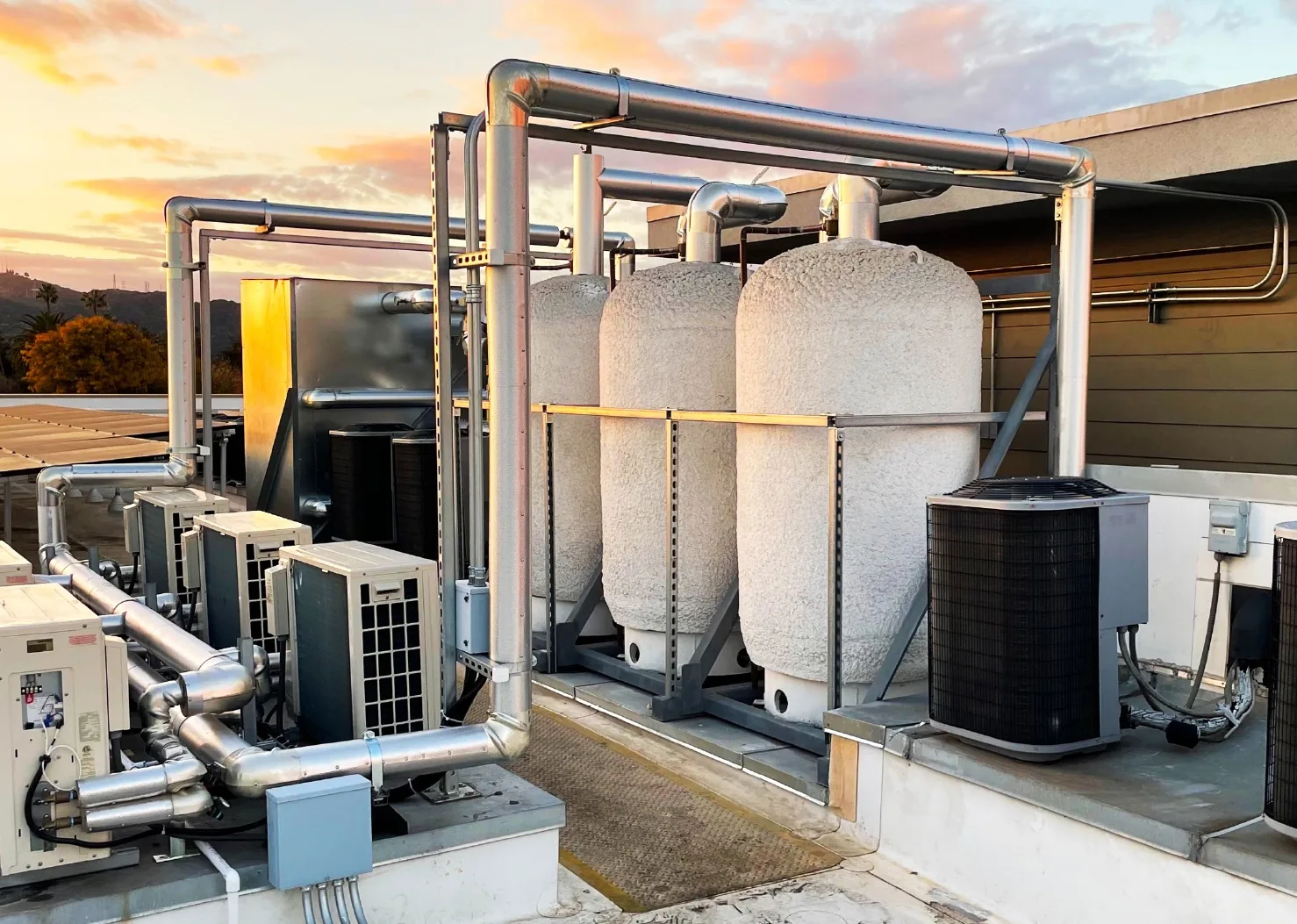
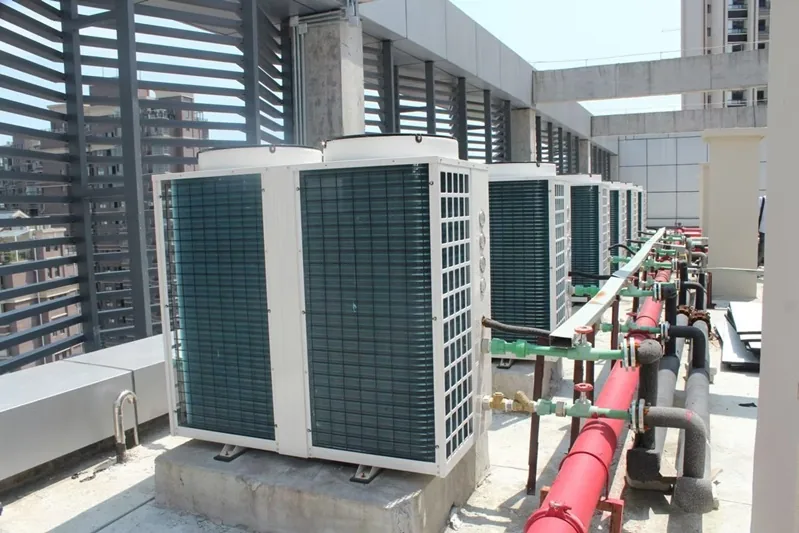
We specialize in designing and installing advanced hot water systems tailored for the unique needs of hotels and hospitals. Our cutting-edge heat pump technology offers an energy-efficient, cost-effective, and environmentally friendly solution to meet your hot water demands 24/7.
Why Choose Our Commercial Hot Water Systems?
- Energy Efficiency: Our heat pump-based systems utilize ambient air to generate hot water, significantly reducing energy consumption compared to traditional boilers.
- Cost Savings: Lower energy usage translates into reduced operational costs, helping your facility save money in the long run.
- Environmentally Friendly: Reduce your carbon footprint with eco-friendly technology that minimizes greenhouse gas emissions.
- Reliable Supply: Designed for high-demand environments, our systems ensure a continuous and reliable hot water supply essential for hotels and hospitals.
- Scalable Solutions: Customizable systems tailored to your facility's size and specific hot water requirements.
- Easy Maintenance: Modern design allows for straightforward maintenance, minimizing downtime and ensuring consistent performance.
Heat pumps extract heat from the surrounding air or water, making them one of the most energy-efficient solutions available. They operate quietly, have a longer lifespan, and contribute to sustainable building practices — perfect for facilities committed to green initiatives.
We are Authorised Channel Partners for Swegon Blue Box Heat Pump, Suntec Heat Pump, and AO Smith Heat Pump.
Sizing a Commercial Hot Water System
Correct sizing depends on peak simultaneous demand (not average demand) — a 100-room hotel doesn't need hot water for 100 rooms every minute, but it does need enough storage and recovery capacity for realistic peak periods (morning check-out rush, evening peak). Undersizing storage capacity is the most common complaint we resolve when taking over from another installer — the fix is almost always adding storage buffer capacity or a second heat pump module rather than a full system replacement, which is why we size for documented peak-hour demand patterns, not just total room count.
Where Commercial Hot Water Systems Are Used
- Hotels & resorts — guest room and laundry hot water supply
- Hospitals & healthcare facilities — sterilization, laundry, and patient care hot water needs
- Hostels & institutions — high-volume, continuous demand applications
- Commercial kitchens — consistent hot water for cleaning and food prep
Why Choose Optima Water Solutions for Hot Water Systems
Optima Water Solutions is an ISO 9001:2015 certified company with 12+ years of experience. As authorised channel partners for established heat pump brands, we size systems to your facility's actual peak demand and hot water usage pattern, and provide installation, commissioning, and ongoing maintenance support for hospitality, healthcare, and institutional clients.
Get a Quote for Hot Water Systems
Free site visit & custom proposal from our engineers within 48 hours. ISO 9001:2015 certified. 158+ projects delivered across India.
Common Questions
Hot Water Systems — Frequently Asked Questions
What is a heat pump hot water system?
A heat pump hot water system extracts heat from the surrounding air (or water) and transfers it to heat water — much like a refrigerator working in reverse. This makes it 2–4x more energy-efficient than traditional electric geysers or boilers, significantly reducing electricity costs.
Which industries benefit most from commercial hot water systems?
Hotels, hospitals, nursing homes, hostels, industrial canteens, and large residential complexes benefit most. Any facility with a continuous high-volume hot water demand (above 500 LPD) will see significant cost savings by switching to a heat pump system.
What brands does Optima Water supply for hot water systems?
Optima Water is an authorised channel partner for Swegon Blue Box Heat Pumps, Suntec Heat Pumps, and AO Smith Heat Pumps — covering a full range of capacities from small institutional units to large commercial installations.
How much energy can a heat pump hot water system save?
Heat pump systems typically achieve a COP (Coefficient of Performance) of 3–5, meaning for every 1 unit of electricity consumed, they produce 3–5 units of heat energy. This results in 60–75% energy savings compared to conventional electric water heaters.
Are heat pump hot water systems suitable for Delhi NCR climate?
Yes. Modern heat pump systems are designed to operate efficiently in ambient temperatures from 5°C to 45°C, making them well-suited for Delhi NCR's climate throughout the year including winter months.
What maintenance do hot water systems require?
Heat pump hot water systems require periodic filter cleaning, refrigerant pressure checks, storage tank inspection, and annual servicing. They have significantly fewer moving parts than boilers and require minimal maintenance compared to conventional systems. Optima Water provides AMC support.
Ready to Start?
Free site visit and assessment by our engineers. 158+ projects delivered across India.