Water Solution – One Call Ahead
Enquire? Send Your Mail
What is an effluent treatment plant (ETP)?
An effluent treatment plant (ETP) removes contaminants from industrial wastewater before it is discharged or reused. Water used in industries, hospitals and hotels picks up pollutants during use, such as organic waste, suspended solids, bacteria, oil and grease, chemicals, metals, resins, colorants and surfactants. These must be reduced to the levels set by the pollution control authorities. An ETP does this with physical, chemical and biological processes. The treated water can be recycled for chillers, cooling towers, gardening and toilet flushing.
Optima Water Solutions is an effluent treatment plant manufacturer in Delhi NCR and across India. We make both customized and standard ETP systems. We are a manufacturer, not a reseller, so the team that designs your ETP also fabricates it and supports it. If your wastewater is domestic sewage rather than industrial effluent, see our sewage treatment plants.
Which type of ETP fits your site
We build three kinds of ETP. The right one depends on your effluent, your discharge conditions, your space and your timeline.
| Type | Construction | Installation time | Best suited to |
|---|---|---|---|
| Civil-based ETP | RCC tanks built at your site | 3 to 6 months | Permanent, long-term installations. Designed for 20 to 25 years or more. |
| Prefabricated ETP | Factory-made package unit, also called a mobile ETP | 2 to 4 weeks | Small factories, hospitals, small production units and laundries without access to a centralized treatment system |
| Zero liquid discharge (ZLD) | ETP plus RO, evaporator and crystallizer stages | 6 to 12 months | Sites that cannot discharge any liquid, or that want to recover as much water as possible |
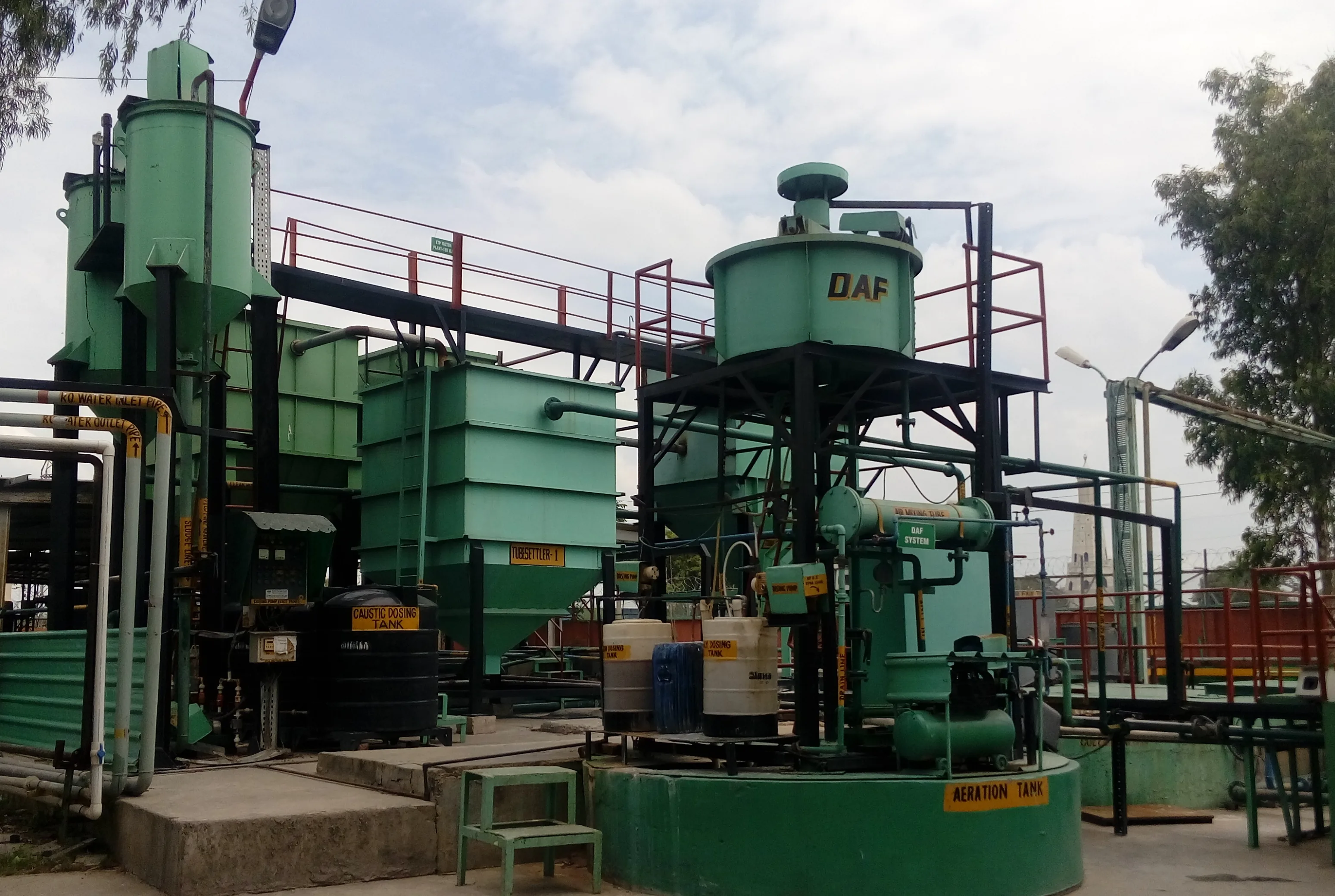
Civil construction based effluent treatment plant
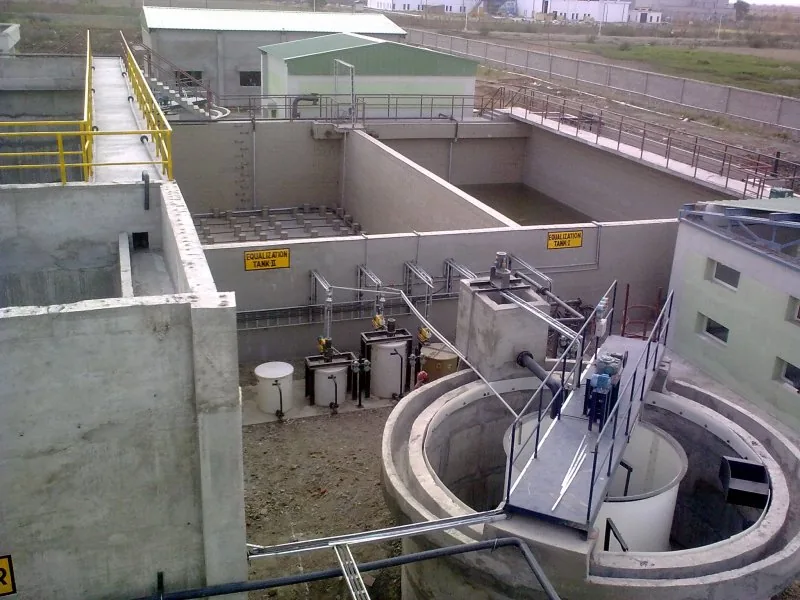
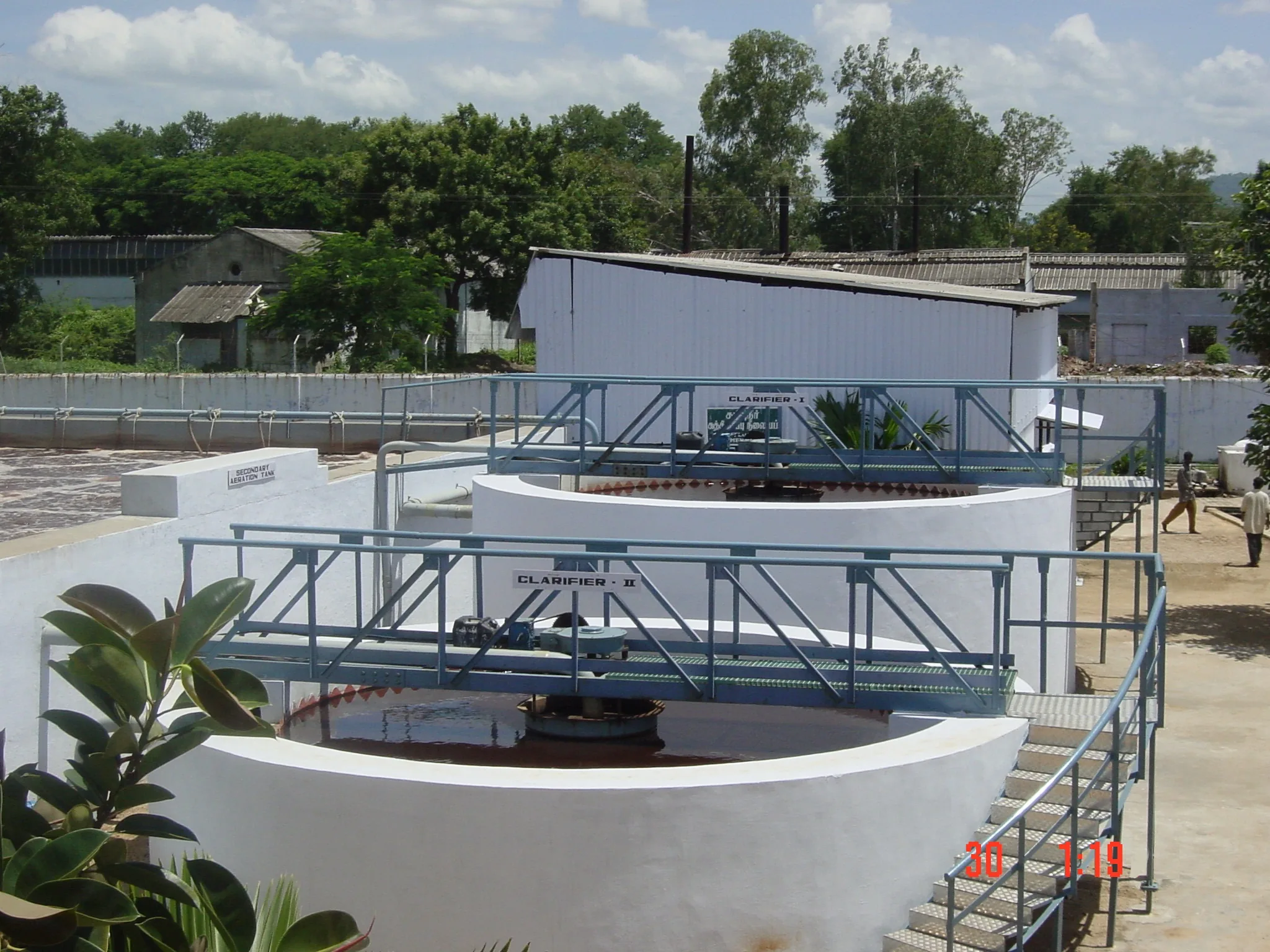
A civil-based ETP is built in RCC at your site. The collection tank, equalization tank, flash mixer tank, flocculation tank, aeration tank, clarifier and sludge tank are all permanent civil structures, designed for long-term operation of 20 to 25 years or more.
Prefabricated effluent treatment plant
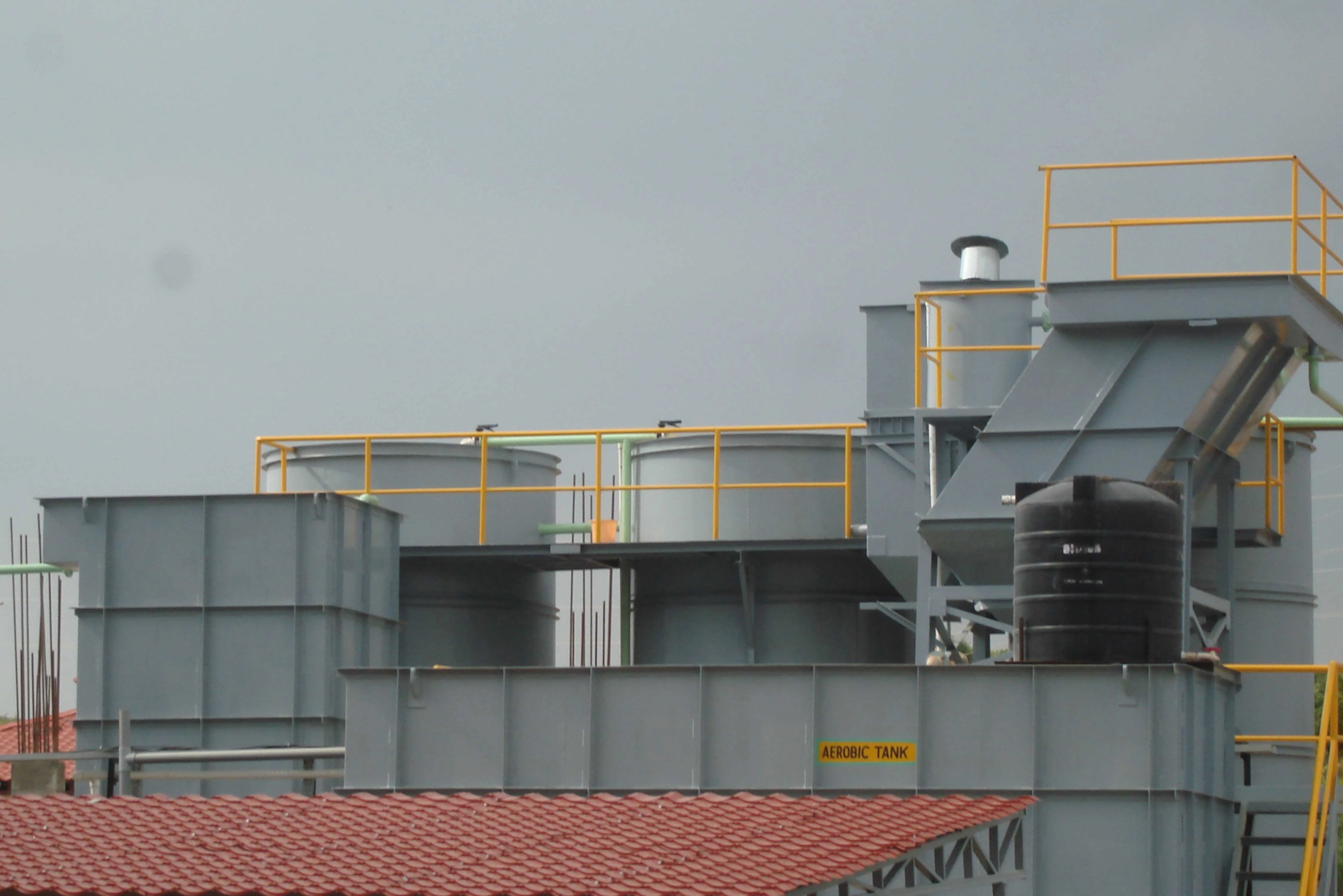
Small factories, hospitals, small production units and laundries are often not covered by a centralized wastewater treatment or drainage system. For these sites we supply prefabricated ETPs that are compact, economical and suited to decentralized treatment.
A prefabricated ETP saves cost and space. It can be installed in a basement or on a terrace, and it comes with recycling, full automation and the option to connect to municipal lines. We offer customized and standard package-type ETPs, also known as mobile effluent treatment plants.
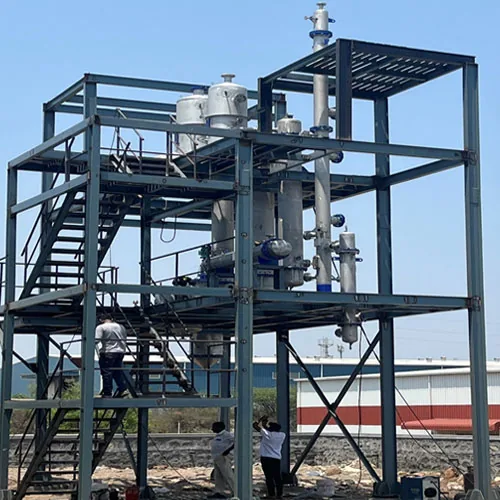
Zero liquid discharge (ZLD) plant
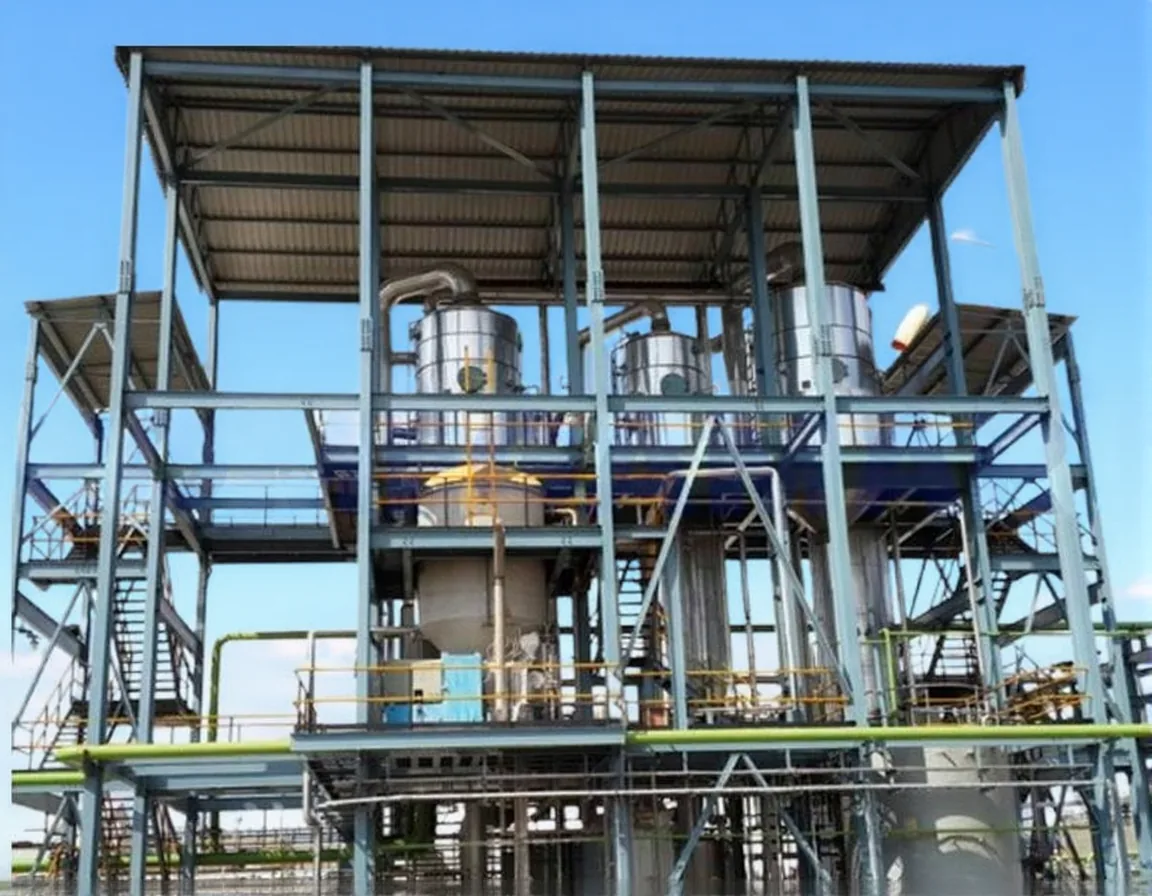
A zero liquid discharge plant is an ETP designed so that no liquid effluent leaves the plant boundary. It recovers and reuses the water, and it turns the salts and solids into dry waste. Its exact configuration varies by industry and depends on the wastewater's volume pattern and contaminant profile. We make ZLD plants in-house, and you can read more in our ZLD plant guide.
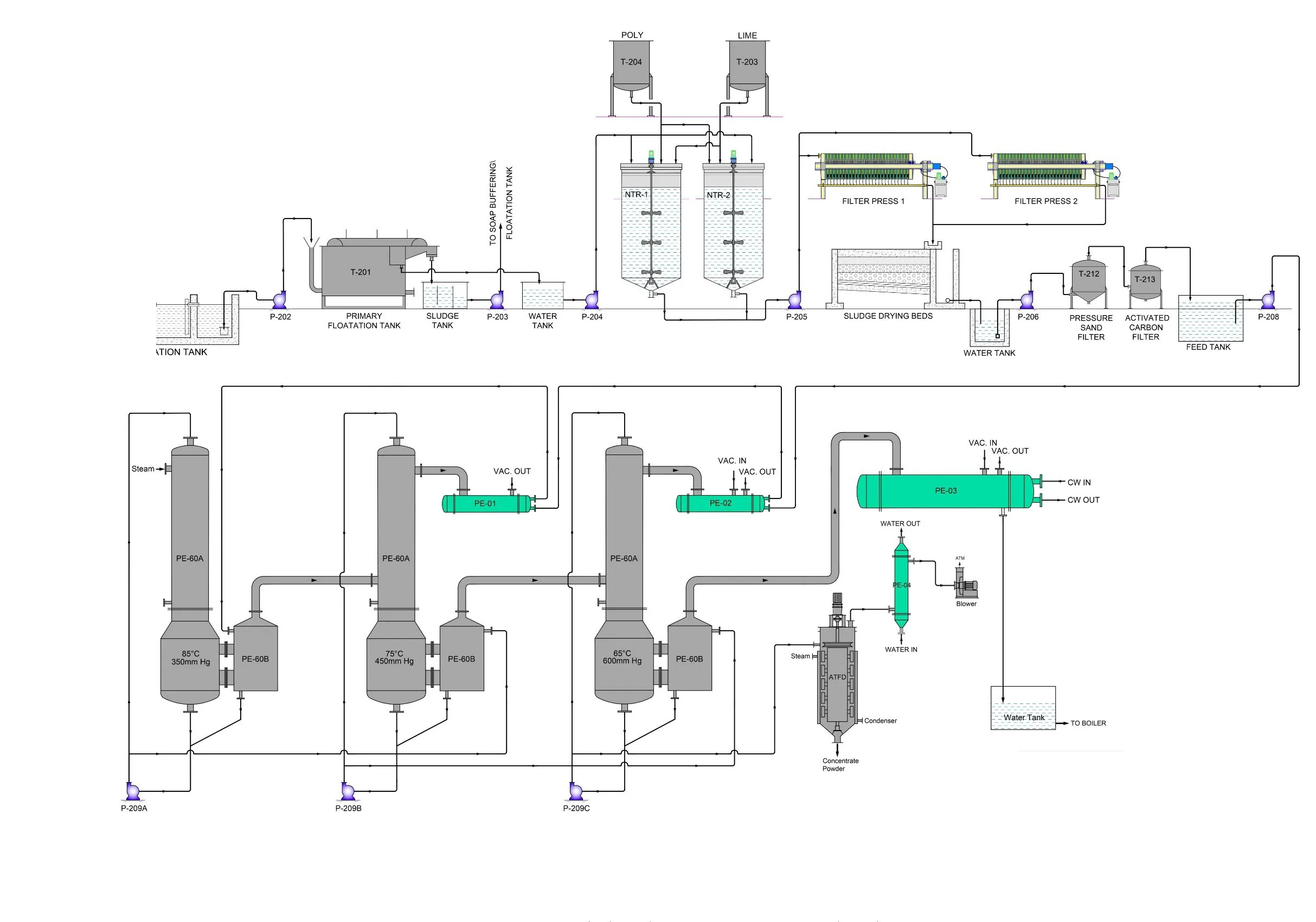
The treatment design depends on what you will use the recovered water for. For gardening, removing BOD, COD and suspended solids and then filtering is usually enough. For high-pressure boiler feed or process reuse, the plant adds pre-treatment and membrane filtration, using ultrafiltration and reverse osmosis. The RO reject is then concentrated further by mechanical or mist evaporation before crystallization. Where organics are present, the condensate may need polishing before reuse.
What a ZLD plant delivers
- No liquid discharge outside the plant boundary
- Water recovery of up to 95 to 99%
- Treatment that combines physical, chemical, biological and thermal stages
- Recovered water for cooling towers, boilers, washing, process use and gardening
- Salts and solids recovered as dry waste for safe disposal
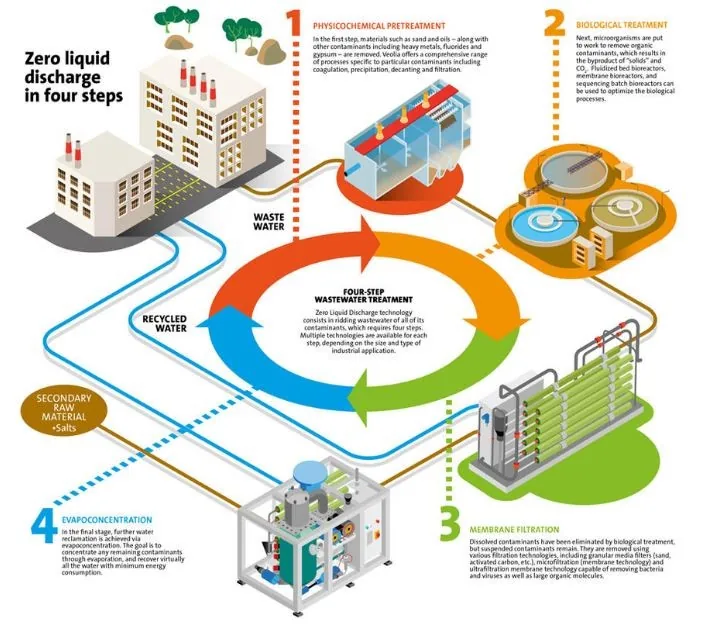
Typical ZLD process
- Primary treatment removes oil and suspended solids and adjusts pH.
- Secondary treatment uses biological processes such as MBBR or MBR to reduce BOD and COD.
- Tertiary treatment and RO filter the water further and recover it for reuse.
- The concentrated RO reject goes to a multiple effect evaporator (MEE).
- A crystallizer or agitated thin film dryer (ATFD) turns the concentrate into dry salt powder.
- Clean distillate is stored and reused in the plant.
ETP treatment stages explained
| Stage | Purpose |
|---|---|
| Primary (physical and chemical) | Screening, equalization, and coagulation and flocculation to remove suspended solids and neutralize pH |
| Secondary (biological) | Biological treatment (MBBR, MBR or activated sludge) to break down the organic load measured as BOD and COD |
| Tertiary (polishing) | Filtration and disinfection to meet final discharge or reuse standards |
| Advanced (where required) | Membrane filtration, activated carbon or ZLD stages for industries with strict discharge norms or a zero-discharge mandate |
Not every industry needs all four stages. A facility with mainly organic wastewater may need only primary and secondary treatment. A facility handling heavy metals, dyes or persistent chemicals typically needs the full train through to the advanced or ZLD stages. We decide this from your effluent analysis and not from a fixed industry template.
CPCB industry categories and what they mean for your ETP
The Central Pollution Control Board classifies industries as Red, Orange, Green or White according to their pollution potential. The category shapes your ETP requirements, consent conditions and monitoring obligations. Red category industries, such as chemicals, pharma, textiles and tanneries, face the strictest discharge requirements. These often include an Online Continuous Effluent Monitoring System (OCEMS) that reports directly to the pollution control board. Working out which category your facility falls in, and designing the plant for that category's actual requirements, is one of the first things we do when scoping a project.
Where ETP and ZLD systems are used
- Textile and dyeing units: color and chemical removal, and ZLD where it is mandated
- Pharmaceutical manufacturing: API and formulation wastewater. See our guide to an ETP for the pharma industry.
- Chemical and process industries: heavy metal and solvent removal
- Electroplating units, tanneries and paper mills
- Hospitals and hotels: process and utility wastewater
- Food and beverage processing: organic load reduction before discharge or reuse
What we need to size your ETP
Send us what you have. We can start from a site visit if some of this is missing.
- Daily effluent volume in KLD, and the process that produces it
- A recent effluent analysis: pH, BOD, COD, suspended solids, oil and grease, and any metals or colorants
- Your consent conditions and CPCB category, if you have them
- How you plan to use the treated water, or the discharge norm you must meet
- The space available, and your location and timeline
Why choose Optima Water Solutions for ETP and ZLD
Optima Water Solutions is an ISO 9001:2015 certified manufacturer with 12+ years of experience and 158+ completed projects across India. We design ETP and ZLD systems around your effluent and your discharge or reuse goals, from simple civil-based ETPs to full ZLD systems with MEE and crystallizer stages. Every installation comes with commissioning and operator training, and we offer AMC contracts.
Related reading: Effluent Treatment Plant for Pharma Industry · ETP vs STP: Key Differences · Zero Liquid Discharge (ZLD) Plant Guide · How to Choose an ETP Manufacturer in Delhi NCR
ETP manufacturer locations
ETP Manufacturer in Delhi · ETP Manufacturer in Noida · ETP Manufacturer in Gurugram · ETP Manufacturer in Ghaziabad · ETP Manufacturer in Faridabad · ETP Manufacturer in Mumbai · ETP Manufacturer in Jaipur · ETP Manufacturer in Lucknow · ETP Manufacturer in Pune · ETP Manufacturer in Bengaluru · ETP Manufacturer in Hyderabad · ETP Manufacturer in Chennai
Get a Quote for Effluent Treatment Plant
Free site visit & custom proposal from our engineers within 48 hours. ISO 9001:2015 certified. 158+ projects delivered across India.
Common Questions
Effluent Treatment Plant — Frequently Asked Questions
What is an effluent treatment plant (ETP)?
An effluent treatment plant treats liquid effluent from industries before it is discharged or reused. It uses physical, chemical and biological processes to remove pollutants such as organic matter, heavy metals, suspended solids, oil, grease and colorants, so the water meets the discharge standards set by CPCB and the state pollution control board.
Which industries need an ETP in Delhi NCR?
Industries that generate liquid effluent must treat it as required by DPCC and CPCB. This includes textile and dyeing units, pharmaceutical companies, food processing plants, hotels and hospitals, electroplating units, tanneries, chemical manufacturers and paper mills.
What is the difference between an ETP and an STP?
An ETP treats industrial wastewater that can contain chemicals, heavy metals and complex pollutants. An STP treats domestic sewage from homes, societies and commercial buildings. ETPs usually need more treatment stages, such as chemical dosing, advanced oxidation and membrane filtration.
What is zero liquid discharge (ZLD) and when is it required?
Zero liquid discharge is an advanced ETP system that recovers and reuses the water so that no liquid effluent leaves the plant boundary. Salts and solids are recovered as dry waste. ZLD is mandated for some highly polluting sectors and critically polluted clusters under NGT and MoEFCC directives, and your pollution control board consent conditions tell you whether it applies to you.
How do I know whether I need ZLD or a standard ETP?
It depends on your industry category, your location and the consent conditions issued by your state pollution control board. If you are allowed to discharge treated water, a standard ETP may be enough. If discharge is not permitted, or you want to recover as much water as possible, ZLD is the route. We review your effluent and your consent conditions before recommending either.
How long does it take to install an ETP?
A prefabricated ETP can be installed in 2 to 4 weeks. A civil-based ETP typically takes 3 to 6 months. A ZLD system with evaporators and a crystallizer can take 6 to 12 months.
Can treated ETP water be reused?
Yes. Treated ETP water can be reused for cooling towers, gardening, toilet flushing and car washing, and in some cases back in the process. A ZLD system recovers up to 95 to 99% of the water.
What do I need to share to size an ETP?
Send the daily effluent volume, the process that produces it, a recent effluent analysis (pH, BOD, COD, suspended solids, oil and grease, and any metals or colorants), your consent conditions, how you plan to reuse the water, and the space available. We can start from a site visit if some of this is missing.
Ready to Start?
Free site visit and assessment by our engineers. 158+ projects delivered across India.