
ETP vs STP: Key Differences Explained | Which Do You Need?
ETP vs STP: What is the Difference?
The two most commonly confused terms in industrial water treatment are ETP (Effluent Treatment Plant) and STP (Sewage Treatment Plant). Both treat wastewater — but they treat very different types of wastewater, use different treatment stages, and answer to different parts of a pollution control board's inspection checklist. Get this wrong on a project and you can end up with a plant that technically runs but fails compliance the first time an inspector actually tests the discharge.
| Factor | ETP | STP |
|---|---|---|
| Full Form | Effluent Treatment Plant | Sewage Treatment Plant |
| Wastewater Source | Industrial process waste | Domestic/municipal sewage |
| Contaminants | Chemicals, heavy metals, dyes | Organic matter, BOD, pathogens |
| Who Needs It | Factories, pharma, textile, food | Societies, hotels, hospitals |
| Regulatory Body | CPCB / State PCB (industrial) | CPCB / Municipal Authority |
| Reuse Potential | Process reuse, ZLD possible | Irrigation, flushing, gardening |
What is an ETP (Effluent Treatment Plant)?
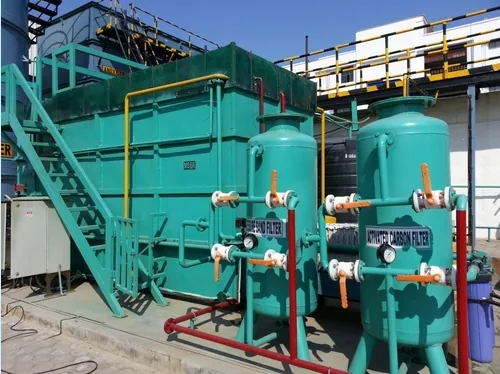
An ETP is designed to treat wastewater generated from industrial processes. Industrial effluent contains chemicals, heavy metals, dyes, solvents, and other hazardous substances that cannot be treated by a standard STP.
Industries that require an ETP include textile plants, pharmaceutical manufacturers, food processing units, electroplating facilities, chemical plants, and paper mills.
What is an STP (Sewage Treatment Plant)?
An STP treats domestic sewage — the wastewater that comes from toilets, bathrooms, kitchens, and laundries. The primary contaminants are biological: BOD (Biochemical Oxygen Demand), suspended solids, and pathogens.
How the Treatment Process Actually Differs
An STP is built around biological treatment — MBBR, MBR, or SBR stages where bacteria break down organic matter, followed by clarification and disinfection. The chemistry is fairly predictable because domestic sewage composition doesn't vary much from one site to another.
An ETP almost always needs a chemical/physical stage first — coagulation, flocculation, and pH neutralization to knock out heavy metals and non-biodegradable chemicals — before any biological stage can work at all. This is also why ETP design is far more site-specific than STP design: a textile dyeing unit's effluent and a pharma unit's effluent need genuinely different treatment trains, even though both are technically "ETPs."
Cost Comparison: Which Costs More?
For a comparable flow rate, an ETP typically costs 20-40% more than an STP of the same capacity. The gap comes from the extra chemical dosing systems, sludge handling for chemical sludge (which is usually hazardous waste requiring authorized disposal), and more instrumentation to monitor a wider range of parameters. Running costs follow the same pattern — ETP chemical consumables (coagulants, pH correction chemicals) add an ongoing cost that a standard STP doesn't have.
What Happens If You Install the Wrong One?
This isn't just a technical mismatch — it's a compliance failure waiting to happen. An STP-only system cannot remove heavy metals or non-biodegradable industrial chemicals, so a factory relying on one will fail effluent testing the moment a pollution control board inspector samples the discharge, regardless of how well the biological stage is performing. Penalties range from closure notices to CPCB-mandated shutdowns until a compliant ETP is installed — a far more expensive fix than designing it correctly the first time.
Can One Plant Do Both?
In many real-world projects, a combined ETP + STP is installed — a Combined Effluent Treatment Plant (CETP). This is common in industrial estates where both process wastewater and domestic sewage from staff quarters need to be treated together. Optima Water Solutions designs and builds CETPs tailored to your combined flow rates.
Which Do You Need?
The answer depends on what kind of wastewater your facility generates. If you are a factory or industrial unit — you need an ETP. If you run a residential society, hotel, hospital, or office complex — you need an STP. If you're an industry with staff accommodation on site — you likely need both.
Optima Water Solutions provides free consultancy to help you determine the right system for your facility. Call us at +91 9711880791 or WhatsApp us for a quick response.