Water Solution – One Call Ahead
Enquire? Send Your Mail

Optima Water Solutions is an STP Plant Manufacturer in Faridabad. We design, install, commission, and maintain Sewage Treatment Plant systems, and hold ISO 9001:2015 certification with 12+ years of experience and 158+ completed projects across India. Our STP systems meet CPCB compliance standards and serve residential societies, commercial complexes, and industrial facilities in Faridabad.
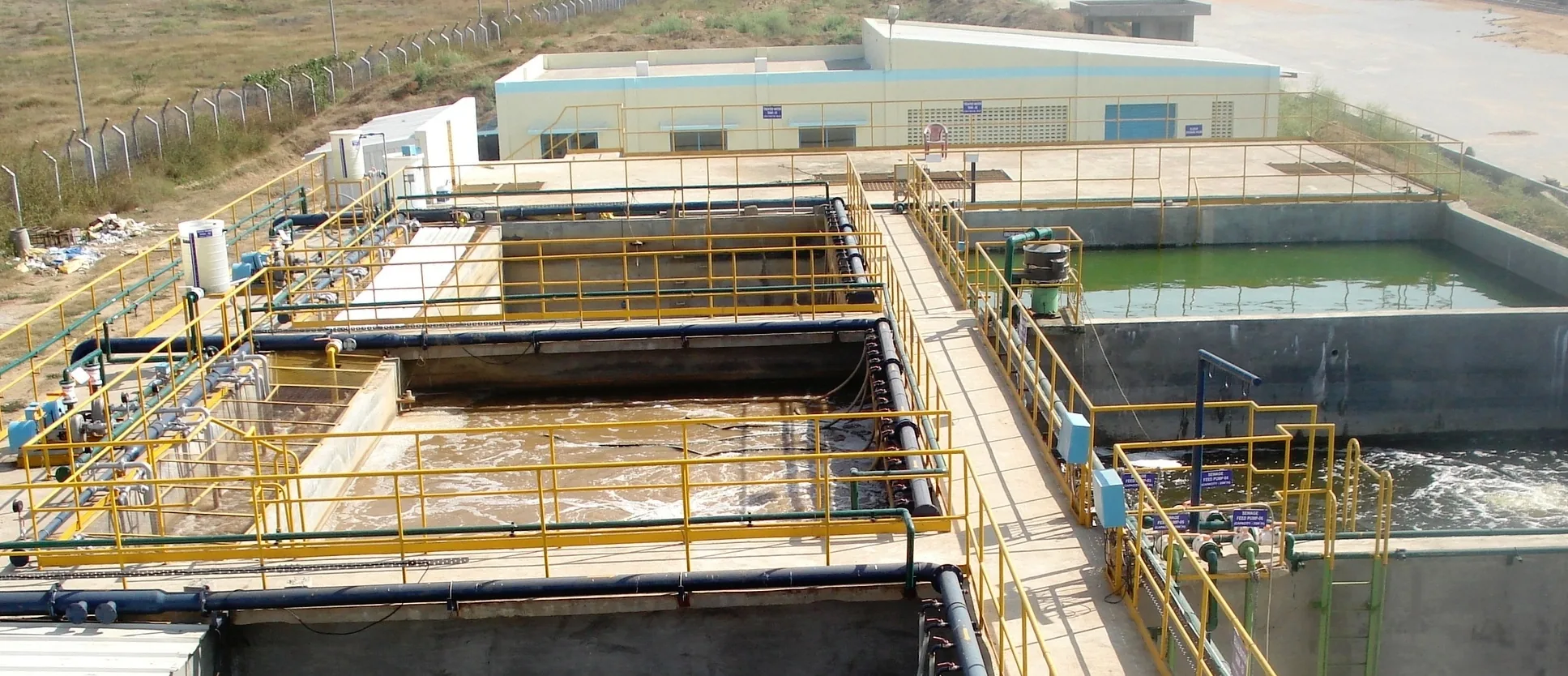
What is a Sewage Treatment Plant?
A Sewage Treatment Plant (STP) is a facility that processes domestic and municipal wastewater to remove contaminants before the treated water is discharged or reused. The process involves physical, biological, and chemical treatment stages that remove suspended solids, organic matter, nutrients, and pathogens.
Modern STP systems use technologies including MBBR (Moving Bed Biofilm Reactor), MBR (Membrane Bioreactor), SBR (Sequencing Batch Reactor), and conventional activated sludge processes — each suited to different capacities and site conditions.
In India, STPs are mandatory for residential societies above 20,000 sqm built-up area, commercial complexes, hotels, hospitals, and all industrial facilities discharging domestic effluent — as per CPCB norms and local Pollution Control Board regulations.
Sewage Treatment Plant in Faridabad — Why It Matters
Faridabad's industrial and residential growth has made STP infrastructure a practical necessity, not just a compliance checkbox. Around Sector 24-25 Industrial, Sector 58-59 Industrial, NIT Faridabad Industrial, the case for a properly designed system is straightforward — HSPCB inspection is routine, and retrofitting after the fact costs more than building it in from the start.
We handle STP projects in Faridabad from initial site assessment through to long-term AMC support, working as a single point of contact rather than handing the project off between design, supply, and installation teams.
Faridabad Wastewater Challenges & How Optima Solves Them
Faridabad is one of Haryana's largest industrial districts, with an estimated tens of thousands of industrial units, and its sewage and effluent infrastructure has struggled to keep pace. News reports over several years describe municipal plants that were non-functional or running below capacity, large volumes of untreated wastewater reaching drains, the Agra Canal and the Yamuna, and growing concern about groundwater contamination. Upgrades of the Pratapgarh and Mirzapur plants and new micro-STPs for park irrigation have been under way, but delays have been common.
That history shapes what regulators and neighbours expect from private plants. Factories that mix canteen sewage with process effluent end up with a stream that neither a basic STP nor a basic ETP can treat reliably. Housing societies in the newer sectors discharge into networks that are not always connected to a working treatment plant. And treated water is valuable here: the city's own plants have supplied water to refill Badkhal Lake and irrigate parks, which shows how much non-potable demand exists.
How Optima solves it: we separate streams at the start. Staff, canteen and washroom sewage goes to a domestic STP, process wastewater goes to an ETP built for that industry, and neither is allowed to overload the other. For housing and institutions we design the reuse loop for flushing and landscaping, and we offer monitoring and AMC from our Faridabad base.
Key industrial areas we serve in Faridabad:
Regulatory Note: Haryana State Pollution Control Board (HSPCB) regulates effluent discharge in Faridabad. All industries must have functional ETPs. STPs required for group housing above RERA norms.
STP Norms & Compliance in Faridabad
HSPCB regulates both sewage and industrial effluent in Faridabad. Consent to Establish is needed before construction and Consent to Operate before the plant runs; for group housing the board's conditions typically include meeting its STP parameters, separating grey and black water through dual plumbing, and reusing treated water with the aim of zero exit discharge. Developments above 20,000 sq m of built-up area also go through environmental clearance, which carries its own treatment and reuse conditions.
Industrial units face a second layer. Process wastewater is regulated as industrial effluent under the consent for each unit, so a Faridabad factory usually needs an ETP, and its domestic sewage must still be treated before reuse or discharge. Because the Tribunal has been supervising sewage treatment around the Yamuna basin, expect inspection and sampling to be taken seriously, and keep operating logs, lab reports and consent renewals current.
On treated-water quality, the NGT's April 2019 order set a BOD ceiling of 10 mg/L for new STPs in large cities, with faecal coliform and suspended-solids limits alongside. Individual consents may specify different numbers, so we design to the figures in yours.
Organisations We Have Worked With in Nearby Gurugram and Delhi
A selection of clients we have supported on water and wastewater projects. We can share a reference list for your sector on request.
Group Silverglides
Gurugram
Indian Council of Social Science Research (ICSSR)
New Delhi
P Narayan & Company
Gurugram
Unique Infra Pvt. Ltd.
New Delhi
Shanvi Estate Management Services Pvt. Ltd.
New Delhi
Dutt Mediproducts Pvt. Ltd.
New Delhi
Startech Project Design Build
New Delhi
True Villas Developers Pvt. Ltd.
New Delhi
Hero Motocorp Limited
Gurugram
Carrier Aircon Ltd.
Gurugram
Baderwals Projects Pvt. Ltd.
Gurugram
India Convention & Culture Center Pvt. Ltd.
Gurugram
STP Capacity & Technology for Faridabad
Sizing for Faridabad's typical sites. A factory with 600 workers at 45 litres per head uses about 27 KLD and returns roughly 22 KLD of domestic sewage; adding canteen load, a 25 KLD STP is usually enough, kept completely separate from the process ETP. A 300-bed hospital at 450 litres per bed uses about 135 KLD and returns around 108 KLD, so a 110 to 120 KLD plant with a robust disinfection stage is appropriate. A 250-flat society with about 1,125 residents at 135 litres uses roughly 152 KLD and returns about 121 KLD, which points to a 125 to 150 KLD plant.
Which technology fits which Faridabad user? MBBR is the dependable choice for housing societies, hotels, colleges and factory staff sewage. MBR is worth its higher cost for hospitals, banquet venues and sites where treated water feeds flushing lines under a tight footprint. SBR suits township-scale or institutional plants of several hundred KLD with variable flow. Industries such as auto components, forging, electroplating and textile processing in Sector 24-25, NIT and IMT Faridabad should not rely on an STP for process wastewater; see our effluent treatment plant page for that side of the project.
Our 4-Step Process — From Design to Handover
1
Site Assessment & Design
Free site visit. Wastewater characterisation. Custom system design based on flow rate, BOD, COD, and discharge norms.
2
Manufacturing & Supply
In-house fabrication at our Delhi NCR facility. All components tested before dispatch. Delivery to your site across India.
3
Installation & Commissioning
Expert installation team. Civil work coordination. Full commissioning with performance testing to CPCB standards.
4
O&M / AMC Support
Operator training. Annual Maintenance Contracts available. 24/7 emergency support. Guaranteed uptime.
Why Choose Optima Water Solutions
- ISO 9001:2015 certified manufacturer — quality assured at every stage
- 12+ years of experience — 158+ STP installations across India
- CPCB-compliant systems — all designs meet national discharge standards
- Full turnkey delivery — design, supply, install, commission, maintain
- In-house manufacturing — no middlemen, better quality control, faster delivery
- Post-installation AMC support — ongoing operations and maintenance contracts
- Multiple technology options — MBBR, MBR, SBR, conventional — best fit for your site
- Competitive pricing — transparent quotations, no hidden costs
- Pan India installation — projects completed from Delhi to Chennai to Mumbai
- Free site visit and technical assessment before any commitment
Industries & Applications in Faridabad
Residential Societies
Hotels & Resorts
Hospitals
Commercial Complexes
Industrial Plants
Construction Sites
Educational Institutions
Government Projects
Need a Sewage Treatment Plant in Faridabad?
Tell us your capacity, application and site requirements and our team can prepare a project-specific proposal. ISO 9001:2015 certified. 158+ projects delivered across India.
Related Services in Faridabad
Learn More About Sewage Treatment Plant
Common Questions
Sewage Treatment Plant in Faridabad — FAQ
What determines STP pricing for a Faridabad project?
Capacity, technology, and site conditions are the main cost drivers for an STP in Faridabad. Smaller systems start from roughly ₹4-6 Lakh, with cost scaling for higher flow rates or added treatment stages. We quote after seeing the site.
Is STP compliance mandatory for Faridabad developments?
For most projects above the applicable size threshold, yes. The Haryana Pollution Control Board and CPCB both apply requirements to residential, commercial, and industrial sites in Faridabad. We help confirm which rules apply to your specific development.
Which treatment technology fits Faridabad projects best?
MBBR is the standard, cost-effective choice for most Faridabad projects. For sites that need treated water for reuse — flushing, gardens, or similar — MBR technology is usually the better fit despite the higher upfront cost.
How soon can an STP be operational in Faridabad?
From order confirmation, a packaged STP in Faridabad typically reaches commissioning within 4 to 8 weeks, assuming the site is ready for installation. We manage the schedule directly with your civil and project teams.
What ongoing support does Optima offer in Faridabad?
We provide Annual Maintenance Contracts for Faridabad clients, covering scheduled servicing, breakdown response, and operator training, so the STP continues to perform reliably well after the initial installation.
My Faridabad factory has staff sewage and process effluent. Do I need both an STP and an ETP?
Usually yes. Domestic sewage and process wastewater have very different chemistry, and mixing them overloads either plant. We design the STP for staff and canteen load and the ETP for your specific process, then agree the reuse plan with your consent conditions.
Can treated water from a Faridabad STP be reused on site?
Yes. Treated sewage is commonly reused for flushing, landscaping, dust suppression and, after additional polishing, cooling-tower make-up. The city's own plants already supply water to parks and Badkhal Lake, so non-potable demand is not the constraint.
How do I keep my plant compliant if municipal infrastructure is unreliable?
Treat the municipal network as unreliable and run your plant to the standard in your own consent: keep sampling records, retain lab reports and renew consent on time. Our AMC includes scheduled sampling so evidence is ready for an inspection.
Ready to Start?
Ask our team about site-assessment availability for your Faridabad project.