
What is a Sewage Treatment Plant (STP)? Complete Guide 2026
What is a Sewage Treatment Plant (STP)?
A Sewage Treatment Plant (STP) is a facility engineered to remove biological and chemical contaminants from municipal or domestic wastewater — commonly called sewage — before it is safely discharged into the environment or recycled for non-potable reuse. In India, the rapid growth of urban housing societies, commercial complexes, and industrial townships has made STPs not just a regulatory obligation but a critical infrastructure necessity.
In 2026, with the Central Pollution Control Board (CPCB) tightening effluent discharge norms and state pollution control boards conducting more frequent inspections, the question is no longer whether you need an STP — but which type, what capacity, and how to maintain it.
What Does a Sewage Treatment Plant Treat?
Sewage is the wastewater generated from human daily activities — toilets, bathrooms, kitchen sinks, laundry, and floor washing. It is distinct from industrial effluent (which requires an Effluent Treatment Plant (ETP)). The primary contaminants in sewage include:
- BOD (Biochemical Oxygen Demand): The amount of dissolved oxygen required by bacteria to break down organic matter. High BOD indicates heavy organic pollution.
- COD (Chemical Oxygen Demand): Total organic and inorganic matter that consumes oxygen during chemical oxidation.
- TSS (Total Suspended Solids): Particles like sand, silt, and organic debris suspended in the water.
- Pathogens: Bacteria, viruses, and parasites originating from human waste.
- Nutrients: Nitrogen and phosphorus compounds that cause algal blooms if discharged untreated.
- FOG (Fats, Oils, Grease): Mainly from kitchen waste, which clogs pipes and disrupts biological treatment if untreated.
How Does a Sewage Treatment Plant Work? Stage-by-Stage Breakdown
Stage 1: Preliminary Treatment
Raw sewage first enters a screen chamber where bar screens and fine screens remove large physical debris — plastics, rags, grit, and coarse solids. This protects downstream pumps and treatment equipment from damage. In larger plants, a grit chamber removes sand and inorganic particles through gravitational settling.
Stage 2: Primary Treatment (Sedimentation)
The wastewater flows into a primary sedimentation tank where suspended organic solids settle at the bottom as raw sludge. Floatables like oils and grease rise to the surface and are skimmed off. Primary treatment typically removes 50–70% of suspended solids and 25–40% of BOD.
Stage 3: Secondary Treatment (Biological Treatment)
The most critical stage. Microorganisms — primarily aerobic bacteria — consume dissolved organic matter in the wastewater, converting it into carbon dioxide, water, and more biomass. Common technologies used in India:
- MBBR (Moving Bed Biofilm Reactor): Plastic carriers with high surface area are kept in suspension inside an aeration tank. Bacteria colonise these carriers, forming a biofilm that efficiently degrades organic matter. MBBR is compact, low-maintenance, and handles flow fluctuations well — ideal for housing societies and hotels.
- SBR (Sequential Batch Reactor): A fill-and-draw process where aeration, settling, and decanting happen in the same tank in timed cycles. SBR delivers excellent effluent quality and is preferred for large-capacity plants above 500 KLD.
- Extended Aeration (EA): A conventional activated sludge process with a longer aeration time. Simple to operate, widely used across India for medium-capacity plants.
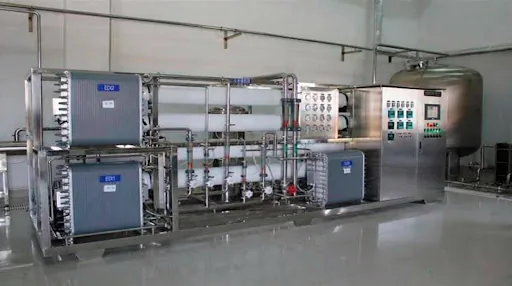
- MBR (Membrane Bioreactor): Combines biological treatment with microfiltration membranes. Produces the highest quality treated water — suitable for direct reuse without additional tertiary treatment.
Stage 4: Secondary Clarification
After biological treatment, the mixed liquor passes into a secondary clarifier where biological sludge settles. Clarified water overflows to tertiary treatment. A portion of the settled sludge is returned to the aeration tank to maintain bacterial concentration.
Stage 5: Tertiary Treatment and Disinfection
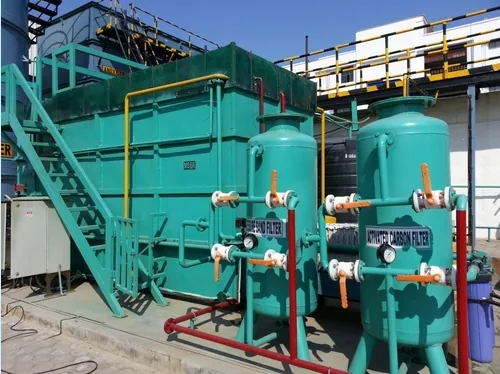
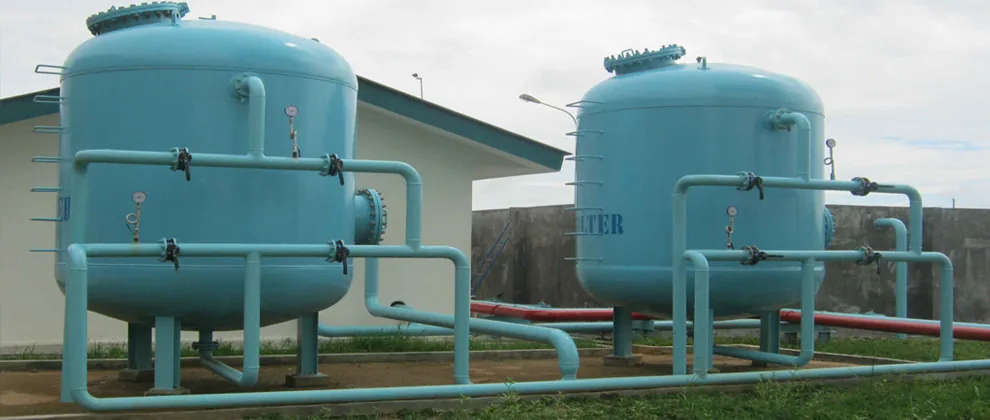
Final polishing step to meet CPCB discharge norms. This typically involves sand and multimedia filtration, activated carbon filtration, UV disinfection, and/or chlorination. After tertiary treatment, the effluent should have BOD below 10 mg/L and TSS below 10 mg/L.
Stage 6: Sludge Management
Sludge generated during primary and secondary treatment is thickened, dewatered through a filter press or centrifuge, producing a semi-dry cake that can be used as manure or sent to a sludge drying bed.
STP Technology Comparison
| Technology | Best Capacity | Space | Effluent Quality | Best For |
|---|---|---|---|---|
| MBBR | 50–500 KLD | Low–Medium | Good | Housing societies, hotels |
| SBR | 500 KLD+ | Medium | Very Good | Townships, municipalities |
| Extended Aeration | 100–1000 KLD | High | Good | Industrial townships |
| MBR | 50–500 KLD | Very Low | Excellent | Water reuse, tight space |
| FAB | 50–200 KLD | Low | Good | Constrained space, retrofits |
STP Cost in India 2026 — Capacity-Wise Price Guide
| Capacity | Approx. Installed Cost (₹) | Typical Application |
|---|---|---|
| 50 KLD | ₹15–25 lakh | Small housing society (50–100 flats) |
| 100 KLD | ₹25–45 lakh | Mid-size society, small hotel |
| 200 KLD | ₹50–80 lakh | Large housing complex, hospital |
| 500 KLD | ₹1–2 crore | Township, large commercial complex |
| 1 MLD | ₹2–4 crore | Industrial estate, IT park |
Annual AMC costs typically range from 5–8% of capital cost, covering routine service visits, consumables, sludge removal coordination, and minor repairs.
Who Needs an STP in India? CPCB Requirements
Under CPCB guidelines and state PCB notifications, the following require a functional and compliant STP:
- Residential societies with 20 or more dwelling units or built-up area exceeding 5,000 sq. ft.
- Hotels with 100 or more rooms (or as specified by the state PCB)
- Hospitals and healthcare facilities above a defined bed count
- Commercial buildings and IT parks above a defined floor area
- Educational institutions with residential facilities
- Industrial units generating domestic sewage from worker accommodation
STP Reuse Applications
A well-operating STP creates a reusable resource. Common reuse applications for STP-treated water include:
- Toilet flushing: Reduces fresh water consumption by 25–30% in a typical housing society.
- Landscape irrigation: Provides nutrients for plants while reducing municipal water demand.
- Cooling tower make-up water: After appropriate tertiary treatment.
- Construction activities: Curing concrete and dust suppression.
- Car washing: In gated communities, STP-treated water is channelled to car wash bays.
Why Choose Optima Water Solutions for Your STP?
Optima Water Solutions is an ISO 9001:2015 certified manufacturer with 12+ years of experience and 158+ completed projects across Delhi NCR and India. We offer end-to-end STP services — design, supply, installation, commissioning, and annual maintenance contracts (AMC).
Contact us at +91 9711880791 for a free site visit and quote within 48 hours.