
Industrial RO Plant Maintenance Guide — Complete Checklist India 2026
Why RO Plant Maintenance Cannot Be Ignored
An industrial Reverse Osmosis (RO) plant is one of the highest-value pieces of equipment in any water treatment system — and one of the most maintenance-sensitive. RO membranes are thin-film composite (TFC) structures operating under 10–40 bar pressure, filtering water at a molecular level. They are engineered for high performance, but they are not self-sustaining. Without proper maintenance, an RO plant that was designed to run for 5–7 years on the same membrane set will fail in 18–24 months — costing lakhs in premature membrane replacement and production downtime.
In India, 80% of industrial RO plant failures are preventable. The causes are almost always the same: inadequate pre-treatment, wrong chemical dosing, missed cleaning cycles, and untrained operators. This guide gives you the complete maintenance protocol to protect your RO investment and keep your plant delivering designed output year after year.
Understanding What Damages RO Membranes
Before you can maintain an RO system correctly, you need to understand the four types of fouling that attack membranes:
- Scaling: When sparingly soluble salts — calcium carbonate (CaCO₃), calcium sulphate (CaSO₄), barium sulphate, silica — exceed their solubility limits in the concentrate stream, they precipitate onto the membrane surface as hard scale. Scaling causes permanent flux decline and rejection loss if not addressed early. Most common in Indian groundwater with high hardness and alkalinity.
- Biofouling: Bacteria colonise the membrane surface and form a biofilm (slime layer) that blocks water flow. Biofouling is progressive — once established, it is very difficult to remove completely. It is the most common fouling type in surface water RO systems and in plants with inadequate pre-chlorination or UV treatment.
- Colloidal fouling: Fine particles — clay, iron hydroxide, silica colloids, organic matter — deposit on the membrane surface, reducing flux. High SDI (Silt Density Index) in the feed water is the primary indicator. SDI should be below 5 for spiral wound membranes; below 3 is ideal.
- Organic fouling: Natural organic matter (NOM), humic acids, oils, or process chemicals deposit on the membrane. Common in surface water sources and in industrial recycle water applications.
Pre-Treatment — The Most Important Part of RO Maintenance
80% of RO membrane problems originate in inadequate pre-treatment. The pre-treatment train must be fully functional and correctly maintained before the RO unit — otherwise you are spending money cleaning membranes that are being continuously re-fouled.
Softener Maintenance (Before RO)
- Check softener outlet hardness daily — should be <5 mg/L as CaCO₃. If hardness is above this, regenerate immediately.
- Maintain salt level in brine tank above 50% at all times. Running the softener with insufficient salt causes hardness breakthrough onto RO membranes — the single most common cause of CaCO₃ scaling in Indian RO plants.
- Regenerate based on treated volume, not just timer — use a hardness meter on the softener outlet for accurate monitoring.
- Inspect resin annually for resin bead degradation, iron fouling of resin, or resin compaction.
Multimedia Filter (MMF) Maintenance
- Backwash the MMF daily (or when differential pressure across the filter exceeds 0.5 bar).
- Check turbidity / SDI of MMF outlet quarterly — turbidity should be <1 NTU, SDI <5.
- Inspect filter media annually. Replace media every 3–5 years or when SDI target cannot be maintained despite correct backwashing.
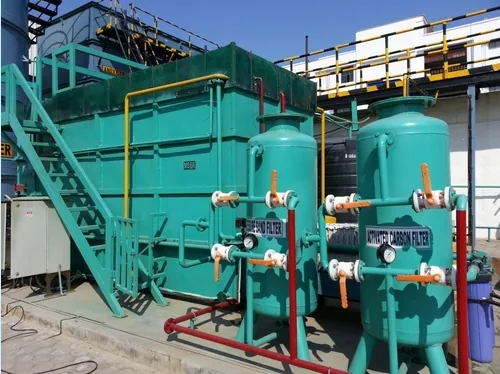
Activated Carbon Filter (ACF) Maintenance
- ACF removes residual chlorine that would destroy TFC RO membranes. Monitor free chlorine in the RO feed water daily — must be 0.0 mg/L (zero). Even 0.1 mg/L free chlorine will progressively oxidise and destroy TFC membranes.
- Backwash ACF daily to prevent bacterial growth in the carbon bed — ACF is the most common source of biofouling bacteria in RO pre-treatment.
- Replace activated carbon every 1.5–2 years, or when free chlorine starts breaking through to the RO feed.
5-Micron Cartridge Filter (CF) Maintenance
- Replace cartridge filters when differential pressure exceeds 1 bar, or every 30–60 days depending on feed water quality.
- Never run cartridge filters until they collapse — a burst cartridge releases concentrated particle load directly onto the RO membranes.
- Use wound polypropylene cartridges for most applications; pleated cartridges for higher flow rates.
Daily Operational Checks — RO System
Record all these readings in the daily log. Trends matter more than individual readings — a gradual increase in feed pressure or decrease in permeate flow signals developing fouling before it becomes a crisis.
| Parameter | How to Check | Target Value | Action if Out of Range |
|---|---|---|---|
| Feed pressure | Feed pressure gauge | 10–20 bar (BW RO) | Check HPP, pre-treatment |
| Permeate flow | Permeate flow meter | ±10% of design | CIP if decline >10% |
| Concentrate flow | Concentrate flow meter | Per design recovery | Adjust concentrate valve |
| Permeate conductivity | Online conductivity meter | As per design (e.g. <500 µS/cm) | CIP if rise >10–15% |
| System recovery | Permeate / (Permeate + Concentrate) | 65–75% (BW RO) | Do not exceed design recovery |
| Feed chlorine | Chlorine test kit | 0.0 mg/L | Replace ACF cartridge immediately |
| Anti-scalant dosing | Check dosing pump stroke rate and solution level | Per vendor recommendation | Refill, recalibrate pump |
Chemical Dosing — What, Why, and How Much
Anti-Scalant (Scale Inhibitor)
Anti-scalant is dosed into the RO feed water (before the cartridge filter) to prevent precipitation of sparingly soluble salts on the membrane surface. It works by inhibiting crystal growth and dispersing microcrystals before they can form a scale layer.
- Dosage: Typically 2–5 mg/L of feed water, but must be calculated using RO system design software (ROSA, IMSDesign, or equivalent) based on actual feed water chemistry.
- Anti-scalant selection: Must match the specific scaling ions present. A generic anti-scalant not matched to your water chemistry will under-protect against some ions while over-dosing others.
- Dosing point: Before the cartridge filter (after the softener and ACF) — never directly into the high-pressure piping.
- Check daily: Anti-scalant solution tank level and dosing pump operation. Running without anti-scalant for even 2–3 hours in high-hardness water can initiate carbonate scaling that will require an acid CIP to remove.
Sodium Bisulphite (for chlorine neutralisation)
If your pre-treatment includes chlorination (for biofouling control), sodium bisulphite (SBS) must be dosed before the ACF or directly before the RO to neutralise residual chlorine. Dose at 1.5–2 × stoichiometric ratio to ensure complete neutralisation. Monitor with an ORP meter — ORP below +200 mV confirms zero free chlorine.
Membrane Cleaning — CIP (Clean-in-Place) Protocol
CIP is required when any of the following normalised parameters drop or rise by more than 10–15% from baseline (measured at identical operating conditions):
- Normalised permeate flow decreases by >10%
- Normalised salt passage (conductivity) increases by >10%
- Normalised feed-to-concentrate differential pressure increases by >15%
Acid CIP (for carbonate and metal oxide scale)
Mix 2% citric acid or 0.1–0.2% hydrochloric acid (pH 2–3) in the CIP tank with warm water (30–35°C). Circulate through the pressure vessels at low pressure (4–5 bar) and low flow for 60–90 minutes. Flush with RO permeate. Acid CIP dissolves carbonate scale and iron/manganese deposits.
Alkaline CIP (for biofouling and organic fouling)
Mix 0.1% NaOH + 0.025% sodium dodecyl sulphate (SDS) at pH 11–12 with warm water (35–40°C). Circulate for 60–90 minutes with 30-minute soaks. Flush with permeate. Alkaline CIP breaks down biofilm and saponifies oils and organic deposits.
For combined fouling, always clean with acid first, then alkaline — never the reverse. Allow 1-hour rinse between cleaning solutions.
RO Membrane Lifespan — How Long Should They Last?
With proper maintenance, TFC spiral wound RO membranes from reputable manufacturers (Toray, Dow Filmtec, Hydranautics, Koch) should last 5–7 years in industrial applications. Common reasons for premature membrane failure in India:
- Chlorine exposure — single most common cause of membrane oxidation damage
- Calcium carbonate scaling from inadequate softening or anti-scalant failure
- Biological fouling from inadequate pre-treatment biocide control
- Mechanical damage from water hammer — always start HPP slowly against closed permeate valve
- Excessive pressure — do not exceed maximum operating pressure specified by manufacturer
Annual Maintenance Tasks
- Inspect all O-rings and interconnectors during the annual shutdown — replace any showing compression set or cracking
- Check HPP (High Pressure Pump) mechanical seal and bearings — replace proactively every 3–4 years
- Performance test all membranes at standard conditions and compare to commissioning baseline — decide on membrane replacement if normalised performance cannot be restored by CIP
- Calibrate all online instruments — conductivity meters, flow meters, pressure gauges — against calibrated standards
- Inspect and clean the dosing system tanks, pumps, and injection points
Why Choose Optima Water Solutions for RO AMC?
Optima Water Solutions provides comprehensive Annual Maintenance Contracts (AMC) for industrial RO plants across Delhi NCR, Noida, Gurgaon, Faridabad, Ghaziabad, and pan-India. Our AMC includes monthly scheduled service visits, emergency breakdown response within 24 hours, chemical dosing review, CIP services, and annual performance testing with written reports. We carry membrane stock for 12+ common RO membrane models, enabling fast replacement without extended downtime.
Contact us at +91 9711880791 or visit our RO Plant page to request an AMC proposal for your existing RO system. You may also find our Water Softener Plant and Ultrafiltration Plant pages useful for pre-treatment planning.