Water Solution – One Call Ahead
Enquire? Send Your Mail

Optima Water Solutions is an STP Plant Manufacturer in Noida. We design, install, commission, and maintain Sewage Treatment Plant systems, and hold ISO 9001:2015 certification with 12+ years of experience and 158+ completed projects across India. Our STP systems meet CPCB compliance standards and serve residential societies, commercial complexes, and industrial facilities in Noida.
What is a Sewage Treatment Plant?
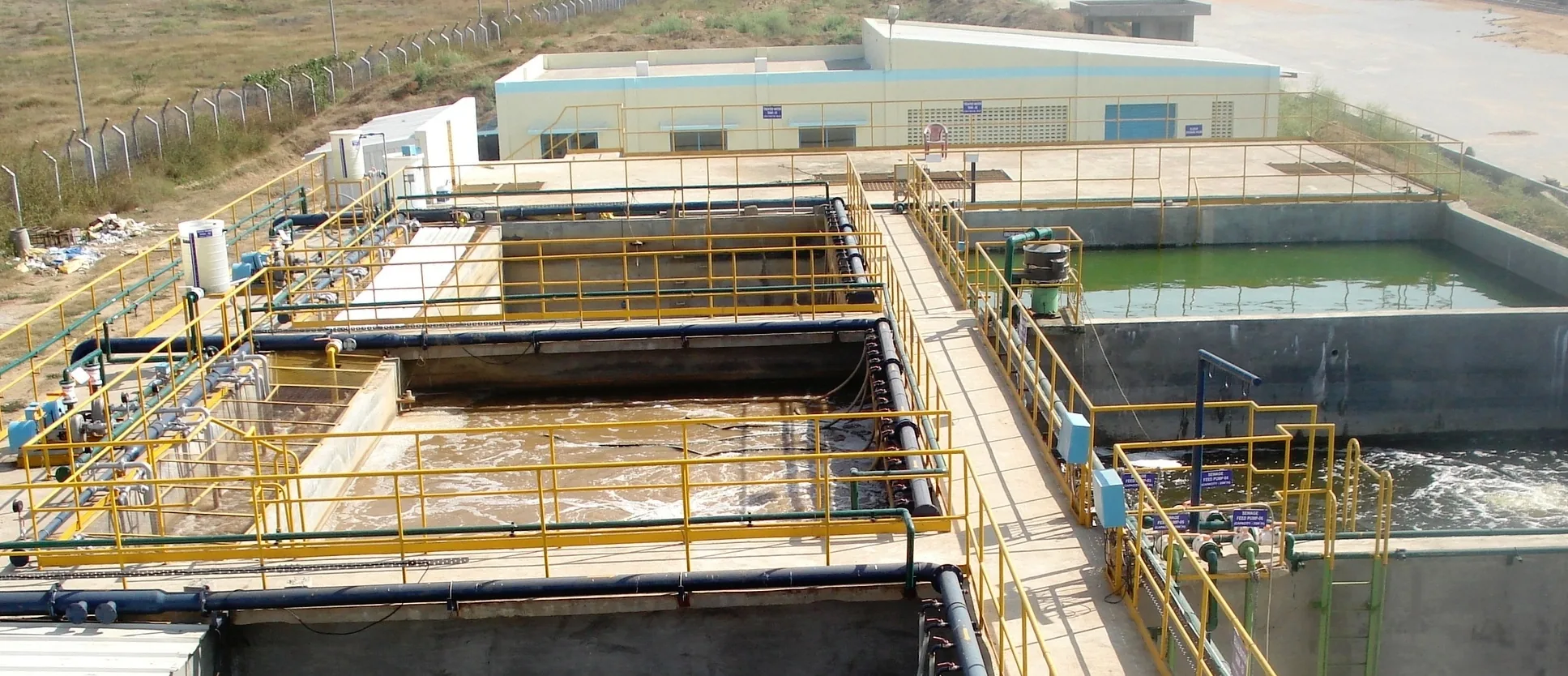
A Sewage Treatment Plant (STP) is a facility that processes domestic and municipal wastewater to remove contaminants before the treated water is discharged or reused. The process involves physical, biological, and chemical treatment stages that remove suspended solids, organic matter, nutrients, and pathogens.
Modern STP systems use technologies including MBBR (Moving Bed Biofilm Reactor), MBR (Membrane Bioreactor), SBR (Sequencing Batch Reactor), and conventional activated sludge processes — each suited to different capacities and site conditions.
In India, STPs are mandatory for residential societies above 20,000 sqm built-up area, commercial complexes, hotels, hospitals, and all industrial facilities discharging domestic effluent — as per CPCB norms and local Pollution Control Board regulations.
Sewage Treatment Plant in Noida — Why It Matters
Noida's STP demand is closely tied to RERA. Group housing projects above the RERA threshold cannot get their occupancy certificate without a functioning, UPPCB-approved STP, which makes the treatment plant a critical-path item on the construction schedule rather than something added after the building is ready — a sequencing issue we manage closely with developers across Sectors 57 to 63 and the Noida Extension belt.
Noida's Export Processing Zone and the Ecotech and Surajpur industrial areas add a manufacturing and light-industrial layer, where UPPCB's ETP requirements apply alongside standard STP norms depending on the unit's output. Greater Noida's Knowledge Park, largely institutional and IT-focused, follows a pattern closer to Noida's residential and commercial demand than the industrial belt.
Because UPPCB and DPCC both have jurisdiction touching different parts of the wider Noida-Delhi boundary, we confirm the correct approving authority for each project early, since applying to the wrong board is a common and entirely avoidable delay.
Noida Wastewater Challenges & How Optima Solves Them
Noida's wastewater challenge is density combined with enforcement. Thousands of high-rise flats sit in sectors planned decades ago, while Greater Noida West and the Expressway belt add newer towers. The city's drains lead towards the Yamuna basin, so UPPCB and the Tribunal have paid close attention to group-housing compliance in this city.
The recurring site problems are ones owners recognise. Societies take over plants from builders that were undersized or never fully commissioned. Resident associations cut operating budgets, so aeration is switched off at night and sampling is skipped. IT parks and film-city campuses see sharp weekday peaks. Basement locations leave little room for sludge removal, and monsoon surcharge from storm drains can flood plant rooms.
How Optima solves it: for new projects we design plants that can be commissioned and consented before handover, with automation that keeps aeration on and logs the numbers. For existing societies we audit the plant, correct under-sizing with add-on modules and set up a monitoring and AMC routine. For IT and commercial campuses we add equalisation and a cooling-tower reuse plan.
Key industrial areas we serve in Noida:
Regulatory Note: UPPCB and DPCC jointly monitor industries and large projects in Noida. STPs mandatory for group housing above RERA threshold.
STP Norms & Compliance in Noida
UPPCB grants Consent to Establish and Consent to Operate under the Water Act, and the Noida Authority, Greater Noida Authority and Yamuna Expressway Authority sanction layouts and buildings. Group housing in these sectors is expected to treat its own sewage, and the occupancy certificate depends on a functioning, consented plant. The Tribunal has examined UPPCB's review of 95 listed Noida group-housing societies and compensation followed where plants were missing, unused or non-compliant.
Tribunal records also show a complex assessed environmental compensation for operating without Consent to Operate even though a sample of its treated water conformed. That outcome is why we advise treating the consent as a hard milestone, not a formality. Projects above 20,000 sq m of built-up area need environmental clearance, and industrial units in Noida's sectors and in the Greater Noida industrial areas are regulated for process effluent separately from sewage.
The Tribunal's April 2019 order set a BOD ceiling of 10 mg/L for new STPs in large cities; follow the numbers written in your own consent.
Organisations We Have Worked With in Noida
A selection of clients we have supported on water and wastewater projects. We can share a reference list for your sector on request.
Windsor IT Park
Noida
Varindera Construction
Noida
Omaxe Ltd.
Noida
Rudrabhishek Enterprises Ltd. (REPL)
Noida
Mahindra Auto Industries Pvt. Ltd.
Noida
Aadhar Buildcon (India) Pvt. Ltd.
Noida
UEM India Pvt. Ltd.
Noida
Toshiba India Pvt. Ltd.
Noida
Minda Corporation Pvt. Ltd.
Noida
STP Capacity & Technology for Noida
For RERA group housing projects in Noida, the STP timeline has to be planned backward from the occupancy certificate date, not forward from construction start. UPPCB approval and plant commissioning both need to be complete before OC can be granted, so we treat the STP as a critical-path item on the project schedule and coordinate installation to finish well ahead of the OC application, rather than after the building is otherwise ready.
Noida Export Processing Zone and Ecotech industrial units need a site-specific look at whether ETP treatment applies alongside the standard STP scope, based on what each unit manufactures. Greater Noida's Knowledge Park institutional and IT campus projects follow a more standard commercial sizing approach, closer to office campus demand than heavy industry.
Sizing examples. A 600-flat society with about 2,700 residents at 135 litres uses roughly 365 KLD and returns about 292 KLD, which points to a 300 KLD plant. An IT park or film-city campus with 5,000 staff at 45 litres uses about 225 KLD and returns roughly 180 KLD, concentrated in working hours. A Greater Noida factory with 1,200 workers uses around 54 KLD of domestic water and returns about 43 KLD, which a 50 KLD STP covers while the process ETP is designed separately.
Choosing technology. MBBR is the standard for group housing with room for tanks. MBR is the better fit for basement plants and campuses that reuse water in flushing and cooling towers. SBR suits large societies and institutions where flow varies through the day. For existing societies with an under-performing plant, we often retrofit an MBBR media stage or a tertiary filter rather than rebuild.
Our 4-Step Process — From Design to Handover
1
Site Assessment & Design
Free site visit. Wastewater characterisation. Custom system design based on flow rate, BOD, COD, and discharge norms.
2
Manufacturing & Supply
In-house fabrication at our Delhi NCR facility. All components tested before dispatch. Delivery to your site across India.
3
Installation & Commissioning
Expert installation team. Civil work coordination. Full commissioning with performance testing to CPCB standards.
4
O&M / AMC Support
Operator training. Annual Maintenance Contracts available. 24/7 emergency support. Guaranteed uptime.
Why Choose Optima Water Solutions
- ISO 9001:2015 certified manufacturer — quality assured at every stage
- 12+ years of experience — 158+ STP installations across India
- CPCB-compliant systems — all designs meet national discharge standards
- Full turnkey delivery — design, supply, install, commission, maintain
- In-house manufacturing — no middlemen, better quality control, faster delivery
- Post-installation AMC support — ongoing operations and maintenance contracts
- Multiple technology options — MBBR, MBR, SBR, conventional — best fit for your site
- Competitive pricing — transparent quotations, no hidden costs
- Pan India installation — projects completed from Delhi to Chennai to Mumbai
- Free site visit and technical assessment before any commitment
Industries & Applications in Noida
Residential Societies
Hotels & Resorts
Hospitals
Commercial Complexes
Industrial Plants
Construction Sites
Educational Institutions
Government Projects
Need a Sewage Treatment Plant in Noida?
Tell us your capacity, application and site requirements and our team can prepare a project-specific proposal. ISO 9001:2015 certified. 158+ projects delivered across India.
Sewage Treatment Plant in Other Cities
Related Services in Noida
Learn More About Sewage Treatment Plant
Common Questions
Sewage Treatment Plant in Noida — FAQ
Can a Noida building get its occupancy certificate without a working STP?
No. UPPCB-approved, commissioned STP is a prerequisite for the occupancy certificate on RERA group housing projects in Noida. This makes the STP a critical-path item on the construction schedule, and we coordinate installation timing specifically to avoid delaying the OC application.
Which authority approves STPs in Noida — UPPCB or DPCC?
UPPCB is the primary approving authority for Noida projects, since Noida falls under Uttar Pradesh. DPCC governs Delhi separately. We confirm the correct board for each project at the outset, since misdirected applications are a common and avoidable source of delay.
What does an STP cost for a Noida RERA project?
For a typical RERA group housing project, costs range from ₹18 Lakh to ₹70 Lakh depending on unit count and flow rate, broadly similar to other NCR markets. Call +91 9711880791 for a quote timed to your RERA and OC schedule.
Do Noida Export Processing Zone units need ETP alongside their STP?
Some do, depending on the manufacturing process — certain units in the Export Processing Zone and Ecotech industrial areas generate effluent that needs ETP treatment alongside standard domestic sewage treatment. We assess this per unit rather than applying a blanket requirement.
How long does STP installation take for a Noida group housing project?
Typically 4 to 8 weeks from order confirmation for a packaged system, though we plan the schedule backward from the developer's target occupancy certificate date to make sure commissioning and UPPCB sign-off are complete in time.
Our Noida society's STP was handed over by the builder and keeps failing samples. What should we do?
Start with an audit of flow, sizing and aeration. Often the plant is undersized or its blowers are switched off at night. Fixes range from adding an MBBR stage or tertiary filter to a monitoring and AMC routine.
Does the operating consent matter if my treated water meets the limits?
Yes. Tribunal records show complexes assessed compensation for operating without a valid Consent to Operate even when sampled water conformed.
Do IT and film-city campuses in Noida need a different STP design?
Usually yes. Weekday office peaks call for equalisation, and treated water is often reused in flushing and cooling towers, which needs additional filtration.
Ready to Start?
Ask our team about site-assessment availability for your Noida project.