Water Solution – One Call Ahead
Enquire? Send Your Mail

Optima Water Solutions is an STP Plant Manufacturer in Mumbai. We design, install, commission, and maintain Sewage Treatment Plant systems, and hold ISO 9001:2015 certification with 12+ years of experience and 158+ completed projects across India. Our STP systems meet CPCB compliance standards and serve residential societies, commercial complexes, and industrial facilities in Mumbai.
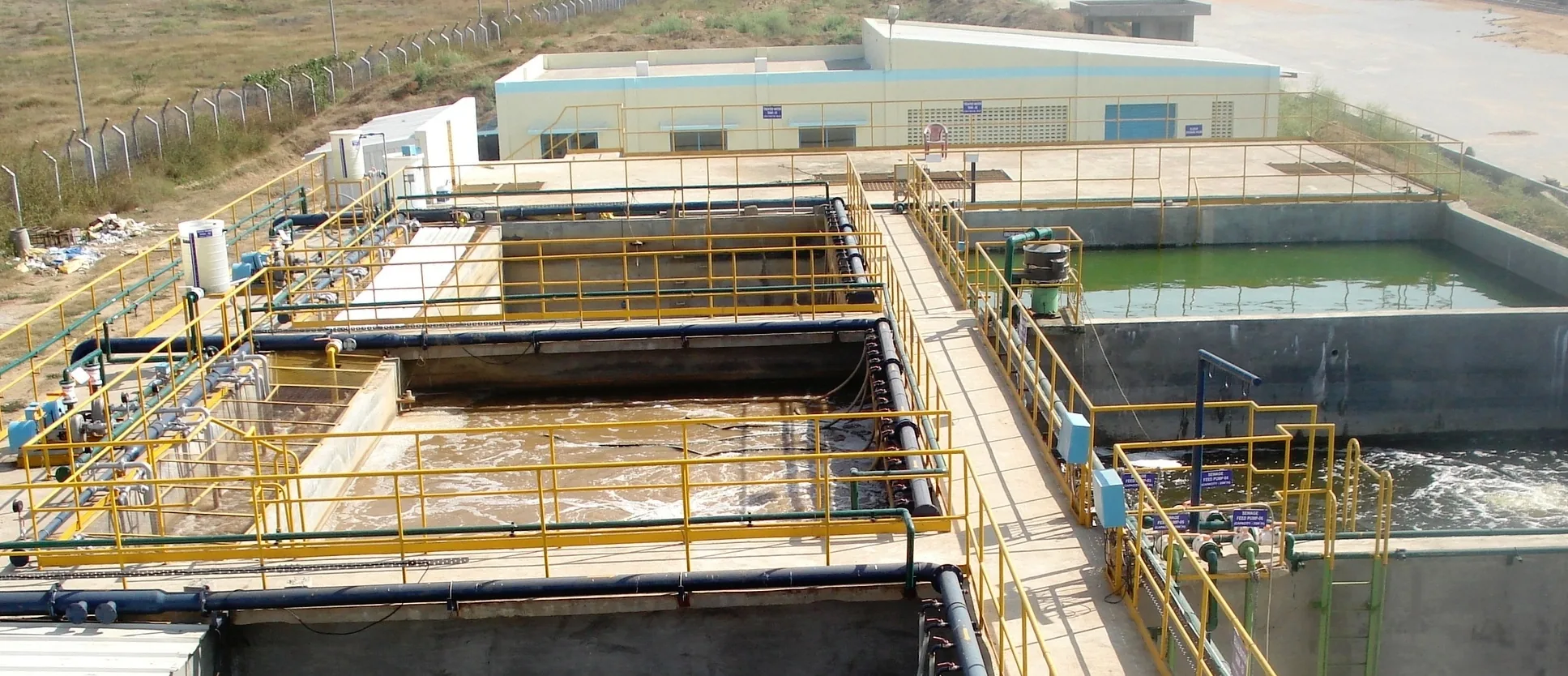
What is a Sewage Treatment Plant?
A Sewage Treatment Plant (STP) is a facility that processes domestic and municipal wastewater to remove contaminants before the treated water is discharged or reused. The process involves physical, biological, and chemical treatment stages that remove suspended solids, organic matter, nutrients, and pathogens.
Modern STP systems use technologies including MBBR (Moving Bed Biofilm Reactor), MBR (Membrane Bioreactor), SBR (Sequencing Batch Reactor), and conventional activated sludge processes — each suited to different capacities and site conditions.
In India, STPs are mandatory for residential societies above 20,000 sqm built-up area, commercial complexes, hotels, hospitals, and all industrial facilities discharging domestic effluent — as per CPCB norms and local Pollution Control Board regulations.
Sewage Treatment Plant in Mumbai — Why It Matters
Mumbai's problem is not awareness of STP rules, it is vertical density. A residential tower in Andheri or Powai often has less ground-level open space than a single-storey plot in a smaller city, which pushes STP design toward tight footprints, low headroom, and podium-level installation rather than the standalone treatment shed common elsewhere. MPCB has also tightened enforcement on Category Red units near the MIDC belts, and a growing share of our Mumbai enquiries now come from societies renewing an old plant that no longer meets current MPCB norms rather than new construction.
Around Andheri MIDC, Bhandup MIDC, and Taloja MIDC, industrial effluent rules sit on top of the standard sewage norms, so a mixed-use development near these zones sometimes needs both an STP for domestic waste and a separate ETP stream for any industrial discharge on site — a distinction we walk clients through before design begins.
Our Mumbai project team works directly with MPCB-approved consultants for the CTE and CTO paperwork, which is usually the slowest part of any Mumbai project if it is not started early.
Mumbai Wastewater Challenges & How Optima Solves Them
Mumbai discharges to the sea, and that shapes everything. The city's large municipal plants at Worli, Bandra, Versova, Malad and elsewhere mostly release treated sewage through marine outfalls or into creeks such as Malad, Gorai and Thane. A CPCB review prepared for the Tribunal found several of these plants falling short of the prescribed norms, and the Municipal Corporation's own consent requires a share of its treated sewage to be reused. The expectation on private developers follows the same logic: treat to a high standard and reuse as much as possible.
On site the constraints are physical. Redevelopment plots are small, towers rise on podiums, and the only space for a plant may be a low-headroom basement or a stilt level shared with parking. Monsoon flooding, coastal humidity and salt air are hard on blowers and panels. Mixed-use buildings add restaurant grease, gym and spa load, and clinics inside residential towers send disinfectant-laden water to a plant sized only for flats.
How Optima solves it: we start from the space envelope and work backwards. That usually means MBR or compact MBBR with fine screening and a grease trap, panels raised above flood level, enclosed noise-treated blower rooms and treated-water tanks sized for flushing, gardening and fire-fighting top-up. We also plan access for sludge removal in tight service lanes, which is where many Mumbai plants quietly fail.
Key industrial areas we serve in Mumbai:
Regulatory Note: Maharashtra Pollution Control Board (MPCB) enforces strict Category Red industry norms. Large residential projects above 20,000 sqm require MPCB-approved STP.
STP Norms & Compliance in Mumbai
The Maharashtra Pollution Control Board (MPCB) grants Consent to Establish before construction and Consent to Operate before occupation, through its online consent portal. MPCB consent letters for construction projects in the state typically require the treated domestic effluent to be recycled for flushing, fire-fighting and gardening, often at a stated share such as 60%, with a separate meter so that the recycling can be proved, and with online monitoring that connects the STP to the Board's server.
Planning rules add a second gate. Published compliance guides report that Mumbai's Development Control and Promotion Regulations 2034 tie the occupancy certificate to a working plant, so the STP sits on the critical path for handover. Redevelopment and slum rehabilitation projects are treated like any other new construction for this purpose. Projects above 20,000 sq m of built-up area also need environmental clearance, which adds its own recycling and monitoring conditions.
On quality, MPCB's norms for reuse-oriented treatment push BOD to about 10 mg/L, with limits on suspended solids, pH, ammoniacal nitrogen and oil and grease, and disinfection to a low coliform count. Older civil-built plants often cannot reach that consistently, so we design to the figures in your consent and keep sampling records ready for inspection.
STP Capacity & Technology for Mumbai
Space, not technology, decides most Mumbai STP designs. Where a tower has a compact plot, we specify MBR systems because the membrane stage produces higher-quality treated water in a smaller tank footprint than conventional MBBR, which matters when the plant has to fit under a parking podium or in a corner of the stilt floor. Societies with slightly more room, particularly in the newer Thane and Navi Mumbai extensions, often stay with MBBR for its lower running cost.
Redevelopment projects are a distinct category in Mumbai. When an older building is torn down and rebuilt at higher density under a redevelopment scheme, the STP has to be resized for the new occupant load, and MPCB treats this as a fresh approval rather than an extension of the old one. We handle this resizing and the associated paperwork as a standard part of Mumbai redevelopment projects, since it comes up often enough to plan for from the start.
Sizing examples. A 250-flat redevelopment tower with about 1,000 residents at 135 litres per head uses roughly 135 KLD and returns about 108 KLD, so a 125 KLD plant is a fair fit. A 200-room hotel with around 400 beds at 180 litres per bed uses about 72 KLD and returns roughly 58 KLD, before kitchen and laundry peaks. A commercial tower with 3,000 occupants at 45 litres uses about 135 KLD and returns about 108 KLD, nearly all of it between morning and evening.
Choosing by site. MBR is our usual answer where the plant must sit under a podium and treated water feeds flushing or cooling towers. MBBR suits towers with room for a conventional tank layout. SBR fits large campuses, hospitals and townships in Navi Mumbai and Thane where flow swings through the day. In the MIDC belts at Taloja, Ambernath and Thane, process effluent needs a separate ETP and only staff and canteen sewage goes to the STP.
Our 4-Step Process — From Design to Handover
1
Site Assessment & Design
Free site visit. Wastewater characterisation. Custom system design based on flow rate, BOD, COD, and discharge norms.
2
Manufacturing & Supply
In-house fabrication at our Delhi NCR facility. All components tested before dispatch. Delivery to your site across India.
3
Installation & Commissioning
Expert installation team. Civil work coordination. Full commissioning with performance testing to CPCB standards.
4
O&M / AMC Support
Operator training. Annual Maintenance Contracts available. 24/7 emergency support. Guaranteed uptime.
Why Choose Optima Water Solutions
- ISO 9001:2015 certified manufacturer — quality assured at every stage
- 12+ years of experience — 158+ STP installations across India
- CPCB-compliant systems — all designs meet national discharge standards
- Full turnkey delivery — design, supply, install, commission, maintain
- In-house manufacturing — no middlemen, better quality control, faster delivery
- Post-installation AMC support — ongoing operations and maintenance contracts
- Multiple technology options — MBBR, MBR, SBR, conventional — best fit for your site
- Competitive pricing — transparent quotations, no hidden costs
- Pan India installation — projects completed from Delhi to Chennai to Mumbai
- Free site visit and technical assessment before any commitment
Industries & Applications in Mumbai
Residential Societies
Hotels & Resorts
Hospitals
Commercial Complexes
Industrial Plants
Construction Sites
Educational Institutions
Government Projects
Need a Sewage Treatment Plant in Mumbai?
Tell us your capacity, application and site requirements and our team can prepare a project-specific proposal. ISO 9001:2015 certified. 158+ projects delivered across India.
Sewage Treatment Plant in Other Cities
Related Services in Mumbai
Learn More About Sewage Treatment Plant
Common Questions
Sewage Treatment Plant in Mumbai — FAQ
Why do Mumbai STPs need a smaller footprint than other cities?
Mumbai plot sizes and FSI rules leave far less open ground area per resident than most Indian cities, so societies in Andheri, Powai, and Bandra often need the STP tucked into a podium level or basement corner. MBR technology handles this well since it treats the same flow in a smaller tank than conventional MBBR.
Does a Mumbai redevelopment project need a new STP approval?
Yes. MPCB treats a redeveloped building as a new project with a higher occupant load, which means the STP has to be resized and re-approved rather than simply reused. We factor this into the design and paperwork for every Mumbai redevelopment enquiry we take on.
What is the cost of an STP for a Mumbai high-rise?
A packaged STP for a Mumbai high-rise of 300 to 800 flats typically runs ₹15 Lakh to ₹55 Lakh, with MBR-based systems at the higher end of that range due to membrane cost. Podium or basement installation may add for ventilation work. Call +91 9711880791 for a site-specific quote.
Do properties near Andheri or Taloja MIDC need both an STP and an ETP?
If the site has any industrial process discharge alongside normal domestic sewage, MPCB usually requires the two streams to be treated separately — an STP for domestic waste and an ETP for the industrial effluent. We assess this during the site visit before recommending a single-system or dual-system design.
How long does MPCB approval take for a Mumbai STP project?
CTE and CTO approval from MPCB typically takes 4 to 8 weeks once the application is complete, and incomplete paperwork is the most common cause of delay. Our Mumbai team prepares the full documentation set upfront to avoid the back-and-forth that stalls most first-time applications.
Why does MPCB ask for a separate meter on recycled water?
Consent conditions commonly require a stated share of treated sewage to be reused for flushing, gardening and fire-fighting. The meter is the evidence that the share is actually being reused, so we plan metering into the treated-water network at design stage.
Can a Mumbai STP sit in a basement?
Yes, if ventilation, access and flood protection are designed in. We normally pair a basement location with MBR, enclosed blower rooms and raised electrical panels, and keep a service route open for sludge removal.
Do clinics or restaurants inside a Mumbai tower change the STP design?
They do. Restaurants add grease and clinics add disinfectant load, so we specify a grease trap, equalisation and, where needed, a pre-treatment stage so the biology is not upset.
Ready to Start?
Ask our team about site-assessment availability for your Mumbai project.