Water Solution – One Call Ahead
Enquire? Send Your Mail

Optima Water Solutions is an STP Plant Manufacturer in Pune. We design, install, commission, and maintain Sewage Treatment Plant systems, and hold ISO 9001:2015 certification with 12+ years of experience and 158+ completed projects across India. Our STP systems meet CPCB compliance standards and serve residential societies, commercial complexes, and industrial facilities in Pune.
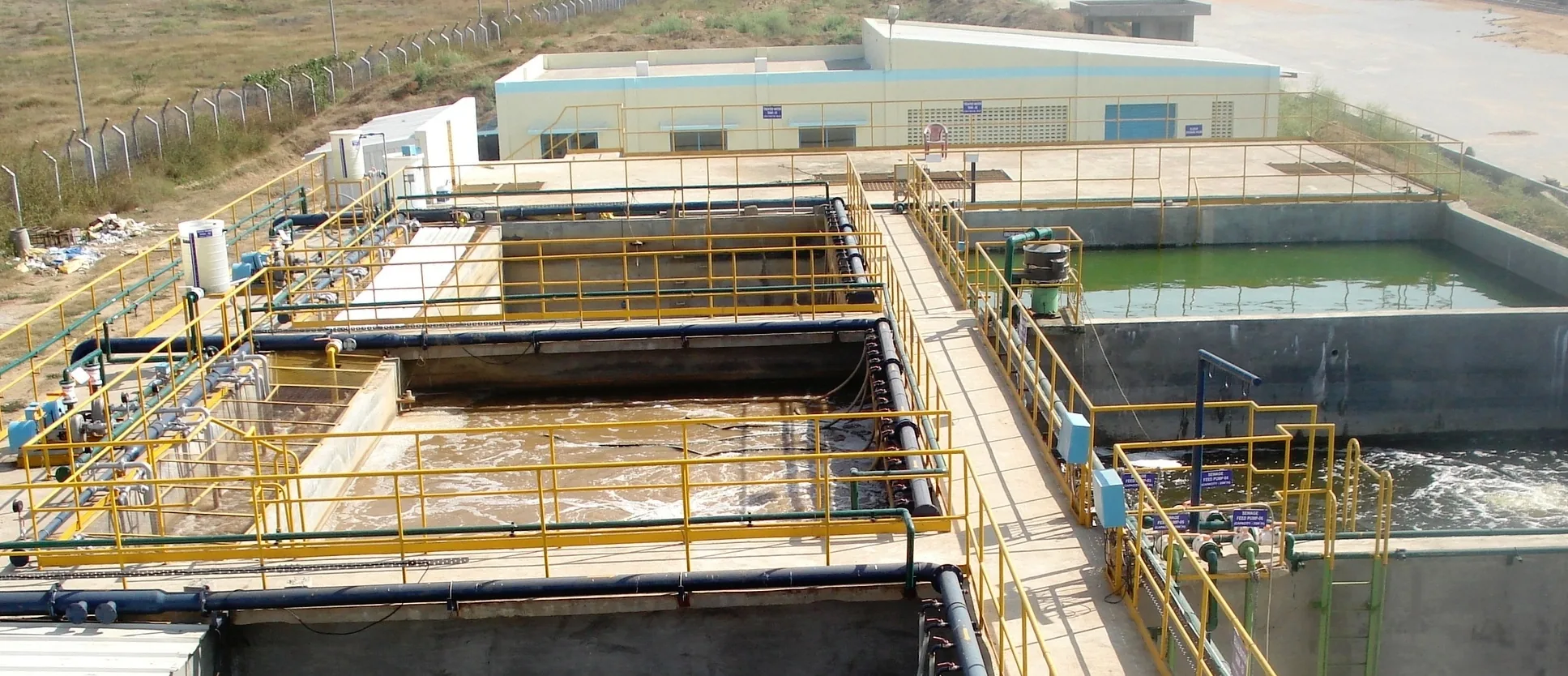
What is a Sewage Treatment Plant?
A Sewage Treatment Plant (STP) is a facility that processes domestic and municipal wastewater to remove contaminants before the treated water is discharged or reused. The process involves physical, biological, and chemical treatment stages that remove suspended solids, organic matter, nutrients, and pathogens.
Modern STP systems use technologies including MBBR (Moving Bed Biofilm Reactor), MBR (Membrane Bioreactor), SBR (Sequencing Batch Reactor), and conventional activated sludge processes — each suited to different capacities and site conditions.
In India, STPs are mandatory for residential societies above 20,000 sqm built-up area, commercial complexes, hotels, hospitals, and all industrial facilities discharging domestic effluent — as per CPCB norms and local Pollution Control Board regulations.
Sewage Treatment Plant in Pune — Why It Matters
Pune's STP demand splits cleanly between two very different buyers: the IT and residential belt around Hinjewadi and Baner, and the manufacturing belt around Chakan, Ranjangaon, and Pimpri-Chinchwad. The first group wants a quiet, low-maintenance plant that will not bother residents living above or beside it. The second group is dealing with MPCB's Red and Orange category rules and needs a system that can handle industrial-strength effluent alongside domestic sewage from staff facilities.
Pune's auto and auto-ancillary manufacturing base around Chakan and Ranjangaon means a meaningful share of our local projects are combined STP plus pre-treatment setups, where wash-water and workshop effluent get screened before joining the domestic stream. This is different from a straightforward residential STP and needs its own design sign-off from MPCB.
We keep a standing team in Pune given the volume of projects across Pimpri-Chinchwad, Hadapsar, and Bhosari, which shortens the gap between enquiry and site visit compared to a one-off project shipped in from outside the city.
Pune Wastewater Challenges & How Optima Solves Them
Pune's wastewater picture has two faces. The western and north-western belt around Hinjewadi, Baner, Wakad and Kharadi has grown through large residential townships and IT campuses, while Pimpri-Chinchwad, Chakan and Ranjangaon host heavy manufacturing. Rivers in the region have been the subject of pollution cases, and MPCB inspection has become a routine part of project life, particularly in the Pavana basin.
The recurring problems are predictable. Townships fill in phases, so a plant sized for the final build runs badly underloaded for years. IT campuses see sharp weekday peaks and near-empty weekends. Hillside and riverside sites make tank excavation and groundwater control expensive. And factories frequently route canteen sewage into the same tank as process wastewater, which neither an STP nor an ETP is built to handle.
How Optima solves it: we design phased plants as modules that come on line with occupancy, so biology is never starved. For IT campuses we add equalisation and reuse for flushing and cooling towers. For industrial users we separate domestic and process streams from day one. Treated water goes back to gardens, flushing and construction, which also cuts tanker costs in the summer months.
Key industrial areas we serve in Pune:
Regulatory Note: MPCB requires ETPs for all Red and Orange category industries in Pune. Residential projects above MPCB threshold need MPCB-approved STP.
STP Norms & Compliance in Pune
MPCB issues Consent to Establish and Consent to Operate for STPs in Pune, and its consents for large residential projects in the region commonly require 60% of the treated effluent to be recycled for flushing, fire-fighting and gardening, with a meter to prove it and online monitoring connected to the Board's server. Reports also note that the Pune and Pimpri-Chinchwad municipal corporations make a valid MPCB operating consent a condition of the occupancy certificate for new residential and commercial projects, so a late STP delays handover.
Hotels, hospitals, IT parks and industrial facilities carry their own obligations. Projects above 20,000 sq m of built-up area need environmental clearance, and industrial units on MIDC plots deal with MIDC as well as MPCB. Industrial process wastewater is regulated as effluent, separate from sewage.
MPCB's reuse-oriented standard for treated domestic sewage targets BOD around 10 mg/L with limits on suspended solids, ammoniacal nitrogen and coliform, which is stricter than many older civil plants can deliver. We design to the numbers in your consent letter rather than a generic table.
Organisations We Have Worked With in Pune
A selection of clients we have supported on water and wastewater projects. We can share a reference list for your sector on request.
Chang Zang BMR Refrigeration Tech. Ltd.
Pune
Minda Corporation Pvt. Ltd.
Pune
STP Capacity & Technology for Pune
For Pune's residential and township projects, particularly the large developments around Wagholi, Hinjewadi, and Kharadi, we default to MBBR technology sized for 100 to 1,000 KLD. It is the most cost-effective option for steady daily occupancy and gives residents treated water suitable for garden and flushing reuse without the higher running cost of a membrane system.
For manufacturing sites in Chakan, Ranjangaon MIDC, and Bhosari, the design brief changes. These plants often need an oil-and-grease trap or equalisation tank ahead of the biological stage to handle the variability of factory shift patterns, and MPCB inspectors in this belt pay close attention to whether pre-treatment is in place before effluent reaches the main STP. We design for this from the outset rather than retrofitting pre-treatment after an inspection flags it.
Sizing examples. A phased township of 1,200 flats with about 4,800 residents at 135 litres uses roughly 648 KLD and returns about 518 KLD at full occupancy, so we typically plan two or three modules of around 200 KLD each. An IT park with 6,000 staff at 45 litres uses about 270 KLD and returns around 216 KLD, concentrated in working hours. A Chakan factory with 1,500 workers uses about 68 KLD domestic water and returns roughly 54 KLD, so a 60 KLD STP covers staff and canteen while the process ETP is designed separately.
Choosing technology. MBBR modules suit phased townships because capacity can be added without rebuilding. MBR is worth considering for compact campuses and premium towers in Baner and Koregaon Park where treated water supplies flushing and cooling towers. SBR suits institutions, hospitals and township common plants with variable flow. Units in Pimpri-Chinchwad, Bhosari, Chakan and Ranjangaon should plan an ETP matched to their process, with a small STP for domestic sewage.
Our 4-Step Process — From Design to Handover
1
Site Assessment & Design
Free site visit. Wastewater characterisation. Custom system design based on flow rate, BOD, COD, and discharge norms.
2
Manufacturing & Supply
In-house fabrication at our Delhi NCR facility. All components tested before dispatch. Delivery to your site across India.
3
Installation & Commissioning
Expert installation team. Civil work coordination. Full commissioning with performance testing to CPCB standards.
4
O&M / AMC Support
Operator training. Annual Maintenance Contracts available. 24/7 emergency support. Guaranteed uptime.
Why Choose Optima Water Solutions
- ISO 9001:2015 certified manufacturer — quality assured at every stage
- 12+ years of experience — 158+ STP installations across India
- CPCB-compliant systems — all designs meet national discharge standards
- Full turnkey delivery — design, supply, install, commission, maintain
- In-house manufacturing — no middlemen, better quality control, faster delivery
- Post-installation AMC support — ongoing operations and maintenance contracts
- Multiple technology options — MBBR, MBR, SBR, conventional — best fit for your site
- Competitive pricing — transparent quotations, no hidden costs
- Pan India installation — projects completed from Delhi to Chennai to Mumbai
- Free site visit and technical assessment before any commitment
Industries & Applications in Pune
Residential Societies
Hotels & Resorts
Hospitals
Commercial Complexes
Industrial Plants
Construction Sites
Educational Institutions
Government Projects
Need a Sewage Treatment Plant in Pune?
Tell us your capacity, application and site requirements and our team can prepare a project-specific proposal. ISO 9001:2015 certified. 158+ projects delivered across India.
Sewage Treatment Plant in Other Cities
Related Services in Pune
Learn More About Sewage Treatment Plant
Common Questions
Sewage Treatment Plant in Pune — FAQ
What STP technology suits Pune's IT-belt residential societies?
MBBR is the standard choice for societies in Hinjewadi, Baner, and Wagholi. It handles the steady daily flow of a residential population efficiently and keeps electricity and maintenance costs lower than an MBR system, which is usually only justified when treated water needs to meet a stricter reuse standard.
Do factories in Chakan or Ranjangaon need pre-treatment before the STP?
In most cases, yes. Workshop wash-water and any oil or grease contamination has to be screened out in a pre-treatment or equalisation stage before it reaches the biological STP process. MPCB inspectors in the Chakan-Ranjangaon belt check for this specifically, and we include it in the design for any manufacturing site enquiry.
What does an STP cost for a Pune township project?
For a township of 1,000 to 3,000 flats, a packaged MBBR STP typically ranges from ₹35 Lakh to ₹1.2 Crore depending on capacity and civil scope. Phased townships often install the plant in stages matched to occupancy, which we can design for to avoid overbuilding capacity early. Call +91 9711880791 for a phased quote.
Is STP approval different for MIDC industrial plots in Pune?
Yes. MIDC industrial plots in Chakan, Ranjangaon, and Bhosari fall under MPCB's Red or Orange category rules depending on the manufacturing process, which carry stricter discharge limits than a standard residential MPCB approval. We identify the correct category during the site visit so the design meets the right standard the first time.
How quickly can Optima service an STP breakdown in Pune?
Our standing Pune team covers Pimpri-Chinchwad, Hadapsar, Wagholi, and the Chakan-Ranjangaon belt directly, so most AMC callouts get an engineer on site within the same working day rather than waiting on travel from another city.
Can a Pune project get its occupancy certificate without an MPCB operating consent?
Reports indicate the municipal corporations ask for a valid MPCB Consent to Operate before issuing the certificate, so the STP should be commissioned and consented early in the handover schedule.
How should a phased Pune township size its STP?
Build it in modules that match occupancy. This keeps biological load steady, avoids a large plant sitting nearly empty for years, and lets you add capacity as phases are handed over.
Do IT campuses in Hinjewadi or Kharadi need a different design from housing societies?
Yes. Office flow peaks during working hours and drops sharply at weekends, so equalisation and flexible aeration matter more, and the reuse plan usually includes flushing and cooling-tower make-up.
Ready to Start?
Ask our team about site-assessment availability for your Pune project.