Water Solution – One Call Ahead
Enquire? Send Your Mail

Optima Water Solutions is an STP Plant Manufacturer in Chandigarh. We design, install, commission, and maintain Sewage Treatment Plant systems, and hold ISO 9001:2015 certification with 12+ years of experience and 158+ completed projects across India. Our STP systems meet CPCB compliance standards and serve residential societies, commercial complexes, and industrial facilities in Chandigarh.
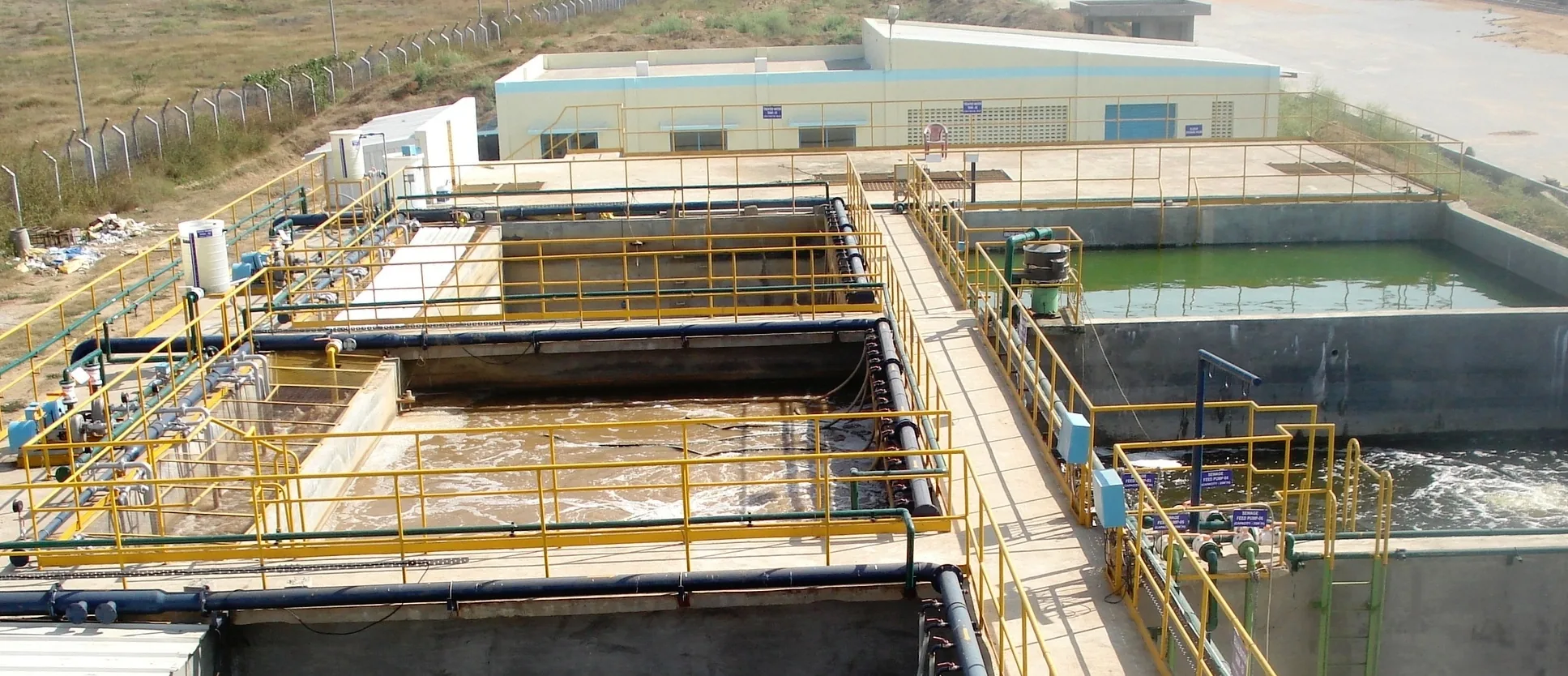
What is a Sewage Treatment Plant?
A Sewage Treatment Plant (STP) is a facility that processes domestic and municipal wastewater to remove contaminants before the treated water is discharged or reused. The process involves physical, biological, and chemical treatment stages that remove suspended solids, organic matter, nutrients, and pathogens.
Modern STP systems use technologies including MBBR (Moving Bed Biofilm Reactor), MBR (Membrane Bioreactor), SBR (Sequencing Batch Reactor), and conventional activated sludge processes — each suited to different capacities and site conditions.
In India, STPs are mandatory for residential societies above 20,000 sqm built-up area, commercial complexes, hotels, hospitals, and all industrial facilities discharging domestic effluent — as per CPCB norms and local Pollution Control Board regulations.
Sewage Treatment Plant in Chandigarh — Why It Matters
Chandigarh's STP market is unusual because it is really three jurisdictions in one metro area — Chandigarh city itself under CPCC, Panchkula under HSPCB, and Mohali under the Punjab board — and a single tricity development can sit close enough to a border that the applicable authority is not immediately obvious. We confirm jurisdiction as the first step on every tricity enquiry, since the compliance paperwork differs across the three.
Mohali's IT park and industrial zone brings tech-campus-style commercial demand alongside standard manufacturing, while the Baddi-Barotiwala industrial belt at the edge of the region is a distinct pharmaceutical and FMCG manufacturing cluster with its own effluent profile, closer to what we see in Himachal's industrial zones than in central Chandigarh.
Government and institutional buildings feature more heavily in Chandigarh's project mix than in most cities we serve, given the city's role as a joint capital, and these projects often run through a different procurement and approval process than private residential or commercial work.
Key industrial areas we serve in Chandigarh:
Regulatory Note: Chandigarh Pollution Control Committee (CPCC) and HSPCB jointly regulate industrial units. STPs mandatory for all large housing societies and commercial complexes in the tricity region.
Organisations We Have Worked With in Chandigarh
A selection of clients we have supported on water and wastewater projects across Chandigarh. We can share a reference list for your sector on request.
Omaxe Ltd.
Chandigarh
Bhanu InfraBuild Pvt. Ltd.
Chandigarh
STP Solutions Across Chandigarh
Optima serves Chandigarh through dedicated pages for each city we actively work in — each with its own local details on regulations, industrial zones, and pricing. Pick your city below.
STP Capacity & Technology for Chandigarh
A tricity project's design brief depends heavily on which jurisdiction it sits in. Chandigarh city projects under CPCC tend to be government, institutional, or established residential sector work, generally straightforward domestic STP design. Panchkula, under HSPCB, and Mohali, under the Punjab board, include a broader industrial mix, and Mohali's IT Park specifically brings the sharp weekday commercial occupancy pattern common to tech campuses elsewhere.
Baddi-Barotiwala, at the region's industrial edge, is dominated by pharmaceutical and FMCG manufacturing, and effluent from these units often needs the same STP-plus-ETP separation we design for pharma clusters elsewhere — domestic sewage treated separately from any process-related discharge, since the two carry different contamination profiles and different regulatory scrutiny.
Our 4-Step Process — From Design to Handover
1
Site Assessment & Design
Free site visit. Wastewater characterisation. Custom system design based on flow rate, BOD, COD, and discharge norms.
2
Manufacturing & Supply
In-house fabrication at our Delhi NCR facility. All components tested before dispatch. Delivery to your site across India.
3
Installation & Commissioning
Expert installation team. Civil work coordination. Full commissioning with performance testing to CPCB standards.
4
O&M / AMC Support
Operator training. Annual Maintenance Contracts available. 24/7 emergency support. Guaranteed uptime.
Why Choose Optima Water Solutions
- ISO 9001:2015 certified manufacturer — quality assured at every stage
- 12+ years of experience — 158+ STP installations across India
- CPCB-compliant systems — all designs meet national discharge standards
- Full turnkey delivery — design, supply, install, commission, maintain
- In-house manufacturing — no middlemen, better quality control, faster delivery
- Post-installation AMC support — ongoing operations and maintenance contracts
- Multiple technology options — MBBR, MBR, SBR, conventional — best fit for your site
- Competitive pricing — transparent quotations, no hidden costs
- Pan India installation — projects completed from Delhi to Chennai to Mumbai
- Free site visit and technical assessment before any commitment
Industries & Applications in Chandigarh
Residential Societies
Hotels & Resorts
Hospitals
Commercial Complexes
Industrial Plants
Construction Sites
Educational Institutions
Government Projects
Need a Sewage Treatment Plant in Chandigarh?
Tell us your capacity, application and site requirements and our team can prepare a project-specific proposal. ISO 9001:2015 certified. 158+ projects delivered across India.
Sewage Treatment Plant in Other Cities
Related Services in Chandigarh
Learn More About Sewage Treatment Plant
Common Questions
Sewage Treatment Plant in Chandigarh — FAQ
Which pollution board approves an STP in the Chandigarh tricity area?
It depends on location — Chandigarh city falls under CPCC, Panchkula under HSPCB, and Mohali under the Punjab Pollution Control Board. We confirm the correct jurisdiction as the first step on every tricity project, since the required documentation differs across all three.
Does a Mohali IT Park building need a different STP than a Chandigarh government building?
Generally yes. Mohali IT Park buildings tend to have a sharp weekday commercial occupancy pattern similar to tech campuses in other cities, while Chandigarh's government and institutional buildings typically follow a more standard, steady occupancy pattern for sizing purposes.
Do Baddi-Barotiwala pharma units need STP and ETP as separate systems?
Most do. Pharmaceutical and FMCG manufacturing units in the Baddi-Barotiwala belt typically need domestic sewage and process effluent treated as separate streams, similar to the separation required for pharma clusters in other cities, given the different contamination profiles involved.
What does an STP cost for a tricity residential or commercial project?
Costs are broadly comparable to other North Indian cities, typically ₹18 Lakh to ₹65 Lakh for a mid-size residential or commercial project depending on capacity and jurisdiction-specific documentation requirements. Call +91 9711880791 for a quote specific to your location within the tricity.
Does Optima handle government and institutional STP procurement in Chandigarh?
Yes, we work with the tender and procurement process common to government and institutional projects in the tricity region, which typically differs from private residential or commercial ordering in documentation and approval sequencing.
Ready to Start?
Ask our team about site-assessment availability for your Chandigarh project.