Water Solution – One Call Ahead
Enquire? Send Your Mail

Optima Water Solutions is an ETP Plant Manufacturer in Delhi NCR. We handle Effluent Treatment Plant design, manufacturing, installation, and maintenance end to end. Our ISO 9001:2015 certified systems meet Delhi Pollution Control Board discharge norms, helping industries in Delhi NCR avoid penalties and operate sustainably. With 158+ installations across India, our ETP solutions serve textile, pharmaceutical, chemical, food processing, and other industries.
What is a Effluent Treatment Plant?
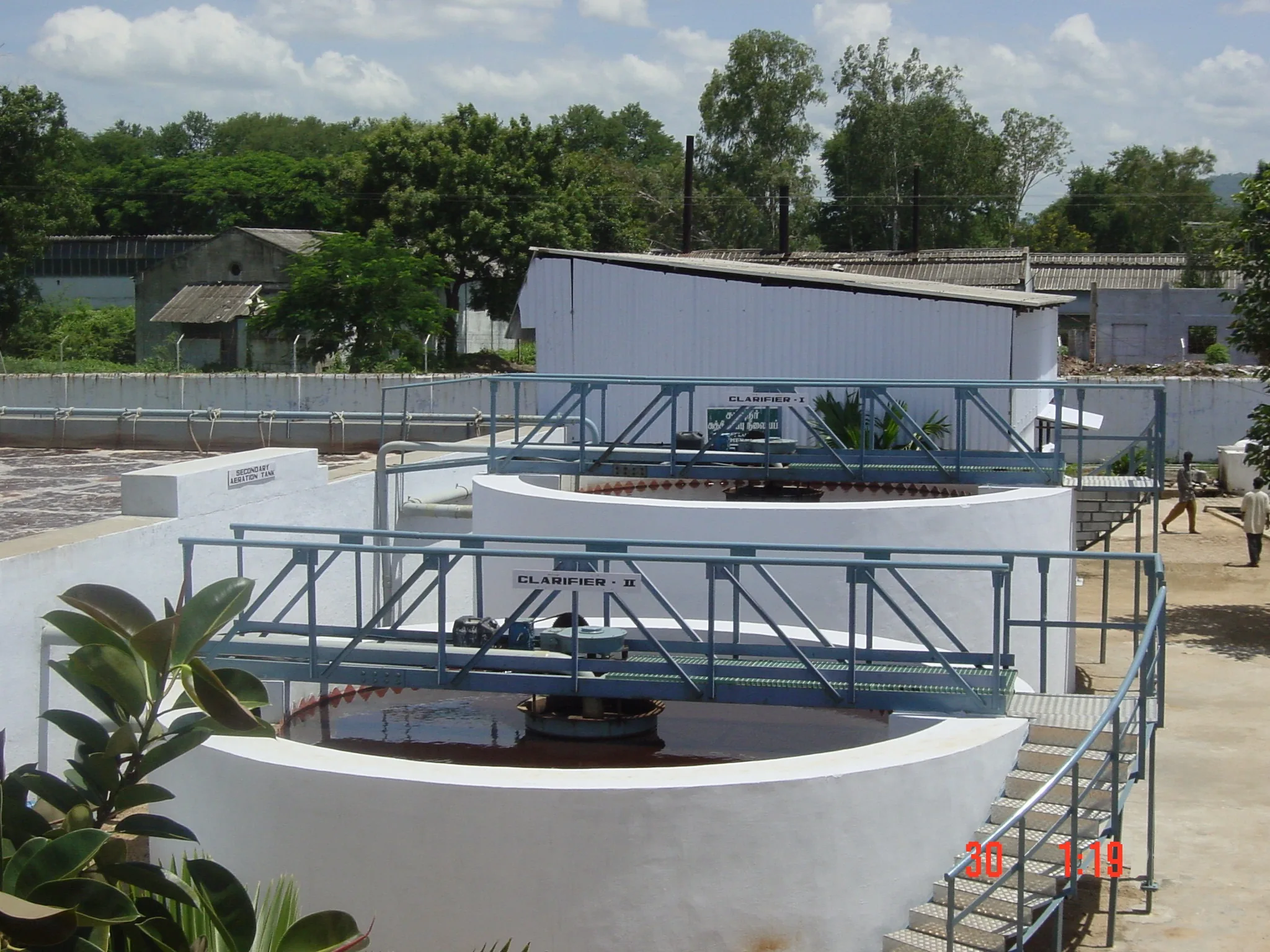
An Effluent Treatment Plant (ETP) is an industrial wastewater treatment system designed to remove pollutants, heavy metals, toxic chemicals, and organic matter from industrial effluent before it is discharged into the environment or reused in the manufacturing process.
Unlike domestic sewage treatment, ETP systems must be customised to the specific effluent characteristics of each industry. Common technologies include physico-chemical treatment (coagulation, flocculation, clarification), biological treatment (aerobic/anaerobic), advanced oxidation, and membrane filtration.
The Water (Prevention and Control of Pollution) Act and CPCB norms make ETPs legally mandatory for all major industries in India. Non-compliance results in penalties, factory closure, and criminal liability for directors.
Effluent Treatment Plant in Delhi NCR — Why It Matters
ETP demand across NCR is driven almost entirely by industrial pockets rather than the residential belt — Wazirpur, Okhla, and Faridabad's older manufacturing units, plus Manesar and Udyog Vihar's newer industrial estates. DPCC and HSPCB both classify units by discharge intensity, and a unit's ETP obligations depend heavily on that classification, not just its size.
A meaningful share of our NCR ETP work is retrofit — units built years before current norms tightened, now facing a closure or upgrade notice. Retrofitting effluent treatment into an operating factory with production schedules to protect is a different problem from designing one into a new plot, and we plan installation around production downtime windows rather than treating it as a standard construction timeline.
Our Delhi-based team covers the whole NCR industrial belt directly, which matters for ETP clients specifically — effluent characteristics can shift with production runs, and a nearby team can respond to an operational issue faster than one dispatched from another city.
Key industrial areas we serve in Delhi NCR:
Regulatory Note: The Delhi Pollution Control Committee (DPCC) and CPCB have issued strict norms for all industries and large residential projects in Delhi. Non-compliant units face closure orders. All Optima systems are designed to meet current DPCC and CPCB discharge standards.
ETP Capacity & Technology for Delhi NCR
NCR's ETP projects split by what the unit actually produces. Electroplating and metal-finishing units in Wazirpur need heavy metal removal stages ahead of standard biological treatment — a step general manufacturing effluent doesn't require. Food processing and packaging units in Faridabad and Manesar produce a more standard organic-load effluent, closer to STP-adjacent treatment. We assess the specific process before proposing a treatment train, since applying a generic ETP design to a metal-finishing unit typically fails inspection.
For retrofit projects specifically, available space usually dictates the technology more than anything else — a physico-chemical stage plus a compact MBBR biological stage tends to fit into a tighter footprint than a fully mechanical treatment train, which is why it is our default recommendation for older NCR units retrofitting under a compliance notice.
Our 4-Step Process — From Design to Handover
1
Effluent Analysis & Design
Collect effluent samples. Lab analysis of BOD, COD, TSS, heavy metals, pH. Custom ETP design for your industry.
2
Engineering & Fabrication
Detailed engineering drawings. In-house fabrication of tanks, reactors, and equipment. Quality testing at factory.
3
Installation & Commissioning
Site installation by expert team. Civil coordination. Full commissioning with SPCB compliance verification.
4
Training & AMC
Operator training for your team. Annual Maintenance Contracts. Documentation for SPCB renewal applications.
Why Choose Optima Water Solutions
- ISO 9001:2015 certified — every ETP built to international quality standards
- Industry-specific designs — textile, pharma, chemical, food, tannery, electroplating
- Full SPCB compliance — all systems meet Delhi Pollution Control Board norms
- In-house lab — effluent analysis and treatability studies before system design
- 12+ years, 158+ projects — proven ETP installations across India
- Turnkey execution — design, civil, mechanical, electrical, commissioning, handover
- AMC support — ongoing maintenance, spare parts, operator assistance
- SPCB renewal assistance — documentation and compliance reporting support
- Zero Liquid Discharge upgrades available — convert ETP to ZLD system
- Transparent pricing — detailed BOQ, no hidden costs
Industries & Applications in Delhi NCR
Textile Industry
Pharmaceutical
Chemical Industry
Food & Beverage
Electroplating
Tannery & Leather
Paper & Pulp
Paint Manufacturing
Need a Effluent Treatment Plant in Delhi NCR?
Tell us your capacity, application and site requirements and our team can prepare a project-specific proposal. ISO 9001:2015 certified. 158+ projects delivered across India.
Effluent Treatment Plant in Other Cities
Related Services in Delhi NCR
Learn More About Effluent Treatment Plant
Common Questions
Effluent Treatment Plant in Delhi NCR — FAQ
Does my NCR factory need heavy metal removal in its ETP?
It depends entirely on your process. Electroplating, metal finishing, and similar operations in areas like Wazirpur typically need a dedicated heavy metal removal stage before biological treatment. Food processing and general manufacturing units usually don't. We assess this during the site visit based on what you actually produce.
Can Optima retrofit an ETP into an operating NCR factory without stopping production?
In most cases, yes — we plan installation around your production downtime windows rather than requiring a full shutdown. This is one of our most common NCR project types, since a large share of units here are retrofitting to meet updated HSPCB or DPCC norms.
What does an ETP cost for an NCR manufacturing unit?
Cost depends heavily on effluent characteristics and required capacity, typically ₹12 Lakh to ₹80 Lakh for a mid-size unit, higher for units needing heavy metal or specialty chemical removal. Call +91 9711880791 for an assessment based on your specific process.
Is HSPCB or DPCC approval required before ETP installation in NCR?
Yes, Consent to Establish is required before construction begins, and Consent to Operate before commissioning, from whichever board covers your specific location — HSPCB for Gurgaon and Faridabad, DPCC for Delhi. We prepare the process-specific documentation each board requires.
How fast can an ETP be installed for an NCR unit facing a compliance deadline?
For units under time pressure from a compliance notice, we prioritize packaged and skid-mounted configurations that install faster than a full civil build, typically 4 to 8 weeks depending on effluent complexity. Call us early — HSPCB and DPCC timelines rarely extend for construction delays.
Ready to Start?
Ask our team about site-assessment availability for your Delhi NCR project.