Water Softener Plant Working Principle — Complete Guide 2026
What is a Water Softener Plant?
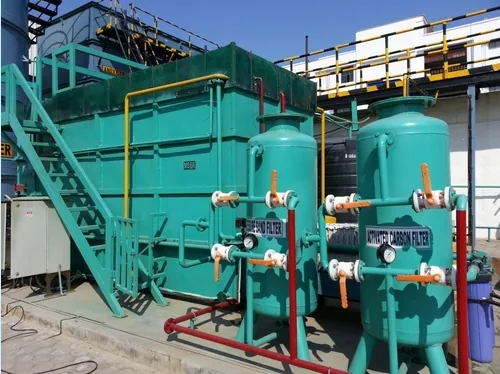
A water softener plant is a water treatment system designed to remove hardness-causing minerals — primarily calcium (Ca²⁺) and magnesium (Mg²⁺) ions — from water. Hard water is the most widespread water quality problem in India, affecting industries, hotels, hospitals, and households across Delhi NCR, Rajasthan, Gujarat, Haryana, and most of the Indo-Gangetic plain. Left untreated, hard water causes scale deposits in boilers, cooling towers, heat exchangers, pipelines, and RO membranes — leading to energy losses, equipment damage, and premature replacement costs.
In 2026, water softeners are a mandatory pre-treatment step for most industrial RO plants, boilers rated above 1 tonne/hour, and commercial laundry facilities in hard-water zones.
What is Hard Water? Understanding TDS and Hardness
Water hardness is measured in milligrams per litre (mg/L) of calcium carbonate equivalent, or in parts per million (ppm). BIS (Bureau of Indian Standards) classifies water hardness as follows:
| Hardness Level | CaCO₃ (mg/L) | Effect |
|---|---|---|
| Soft | 0–75 | No scaling |
| Moderately Hard | 75–150 | Minor scaling |
| Hard | 150–300 | Visible scaling, soap scum |
| Very Hard | >300 | Severe scaling, equipment damage |
Cities like Jaipur, Jodhpur, Ahmedabad, Faridabad, Gurgaon, and Delhi typically have groundwater hardness between 300–800 mg/L — well above the safe threshold for boilers and RO membranes. Many parts of Rajasthan exceed 1,000 mg/L.
How Does a Water Softener Work? Ion Exchange Explained
The most widely used water softener technology is the ion exchange process. Here is how it works step by step:
Step 1: Service Cycle (Softening)
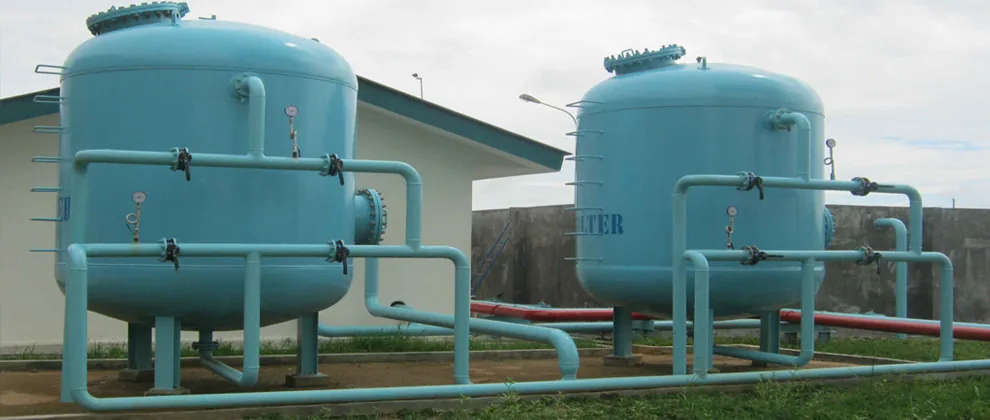
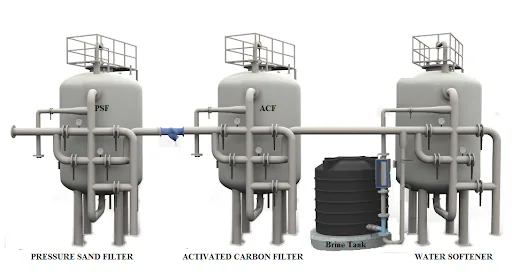
Raw hard water is passed downward through a pressure vessel filled with a resin bed — specially manufactured sulfonated polystyrene beads loaded with sodium (Na⁺) ions. As hard water flows through the resin, calcium and magnesium ions have a stronger affinity for the resin than sodium. They attach to the resin beads, displacing sodium ions into the water. The water leaving the vessel has its hardness removed and is now soft water — with sodium ions in place of calcium and magnesium.
The chemical exchange reaction is:
Ca²⁺ + 2NaR → CaR₂ + 2Na⁺
Mg²⁺ + 2NaR → MgR₂ + 2Na⁺
(where R represents the resin)
Step 2: Exhaustion
Over time, all the sodium sites on the resin become occupied by calcium and magnesium ions. The resin is now exhausted — it can no longer soften water. A hardness breakthrough is detected either by a timer-based controller or a hardness sensor at the outlet.
Step 3: Regeneration Cycle (Backwash + Brine Draw + Rinse)
The resin must be regenerated to restore its softening capacity. This is done using a concentrated brine solution (10–12% sodium chloride — common salt):
- Backwash: Water flows upward through the resin bed, loosening compacted resin and flushing out accumulated debris and broken resin fines.
- Brine Draw: Concentrated salt solution from the brine tank is slowly drawn through the resin. The high sodium concentration reverses the ion exchange — calcium and magnesium ions release from the resin and are replaced by sodium ions again. The displaced hardness ions are flushed to drain.
- Slow Rinse: Dilute brine continues to rinse remaining hardness ions from the resin.
- Fast Rinse: Fresh water flushes residual brine from the resin bed before the unit returns to service.
Step 4: Return to Service
After regeneration, the resin is fully recharged with sodium ions and ready for another service cycle. A typical industrial softener goes through one regeneration every 8–24 hours depending on flow rate and inlet hardness.
Types of Water Softener Plants Used in India
1. Manual Softener
Regeneration is initiated manually by an operator. Lowest cost. Suitable for small capacities (500–2,000 LPH) where an operator is always on site. Common in small boiler rooms and hostels.
2. Semi-Automatic Softener
The operator adds salt and initiates regeneration via a manual valve sequence, but the timing and duration of each regeneration step is controlled automatically. Most popular for medium industrial applications (2,000–10,000 LPH).
3. Fully Automatic Softener (Timer or Meter-Based)
A multiport valve with a programmable controller handles all regeneration steps automatically — based on a timer or a flow meter that triggers regeneration after a set volume of water has been treated. Ideal for 24×7 operations like hotels, hospitals, and continuous process industries.
4. Twin-Vessel / Duplex Softener
Two softener vessels operate alternately — while one is in service, the other is regenerating. This ensures continuous 24×7 soft water supply with zero interruption. Essential for boilers, pharmaceutical plants, and food processing where hard water even for a few minutes can cause damage.
Salt Consumption — How Much Salt Does a Softener Need?
Salt consumption depends on inlet hardness, treated volume, and resin capacity. As a general guideline for industrial softeners in India:
| Inlet Hardness (mg/L as CaCO₃) | Salt Required per m³ Treated |
|---|---|
| 150–300 | ~80–120 g/m³ |
| 300–500 | ~120–180 g/m³ |
| 500–1000 | ~180–300 g/m³ |
Common salt (NaCl) used must be food-grade or industrial-grade solar salt — avoid iodised salt, which can damage the resin. Salt is typically purchased in 50 kg bags. An industrial softener treating 50,000 litres/day in a 400 mg/L hardness zone will consume approximately 8–15 kg of salt per day.
Water Softener Plant Cost in India 2026
| Capacity | Approx. Cost (₹) | Typical Use |
|---|---|---|
| 500 LPH | ₹35,000–₹60,000 | Small boiler, restaurant |
| 1,000 LPH | ₹55,000–₹90,000 | Hotel, hostel |
| 2,000 LPH | ₹90,000–₹1.5 lakh | Hospital, industrial unit |
| 5,000 LPH | ₹1.8–₹3 lakh | Large industry, food plant |
| 10,000 LPH | ₹3–₹5.5 lakh | Large boiler, ETP pre-treatment |
Prices vary based on resin quality (food-grade vs industrial), vessel material (MS epoxy-coated vs SS 304), and control valve brand (Fleck, Autotrol, or local).
When Do You Need a Water Softener?
- Before a boiler: Hardness above 50 mg/L will cause scale on heat transfer surfaces, increasing fuel consumption by 15–25% and risking catastrophic boiler failure. IBR (Indian Boiler Regulations) mandates treated feedwater.
- Before an RO plant: Calcium carbonate and calcium sulphate scaling on RO membranes is the most common cause of RO failure in India. Softening is required when the Langelier Saturation Index (LSI) is positive.
- Cooling towers: Hard water causes scale on heat exchangers and fills, reducing cooling efficiency. Softening or anti-scalant dosing is required.
- Laundry and textile: Hard water reduces detergent efficiency, causes fabric stiffness, and creates grey deposits. Softening reduces chemical consumption by 30–40%.
- Food and beverage: Scale in steam systems and process water affects product quality and equipment life.
Softener vs Anti-Scalant Dosing — Which to Choose?
Anti-scalant chemical dosing is an alternative for RO pre-treatment — it prevents scaling without ion exchange but does not actually remove hardness. Softeners are preferred when: inlet hardness exceeds 500 mg/L, the downstream system is a boiler (where sodium increase from softening is acceptable), or where chemical handling is not feasible. Anti-scalant dosing is preferred for lower-hardness water ahead of RO systems where sodium increase would negatively affect permeate quality.
Why Choose Optima Water Solutions for Your Water Softener?
Optima Water Solutions manufactures and installs water softener plants for boilers, cooling towers, RO pre-treatment, and process industries across Delhi NCR, Noida, Gurgaon, Faridabad, Ghaziabad, and all major Indian cities. With 12+ years of experience and 158+ completed projects, we size your softener correctly based on actual inlet water quality — not approximations.
Contact us at +91 9711880791 or visit our Water Softener Plant page for a free site assessment and detailed quote. You may also be interested in our Industrial RO Plant and Water Treatment Plant solutions.