Water Solution – One Call Ahead
Enquire? Send Your Mail

Optima Water Solutions is an STP Plant Manufacturer in Ahmedabad. We design, install, commission, and maintain Sewage Treatment Plant systems, and hold ISO 9001:2015 certification with 12+ years of experience and 158+ completed projects across India. Our STP systems meet CPCB compliance standards and serve residential societies, commercial complexes, and industrial facilities in Ahmedabad.
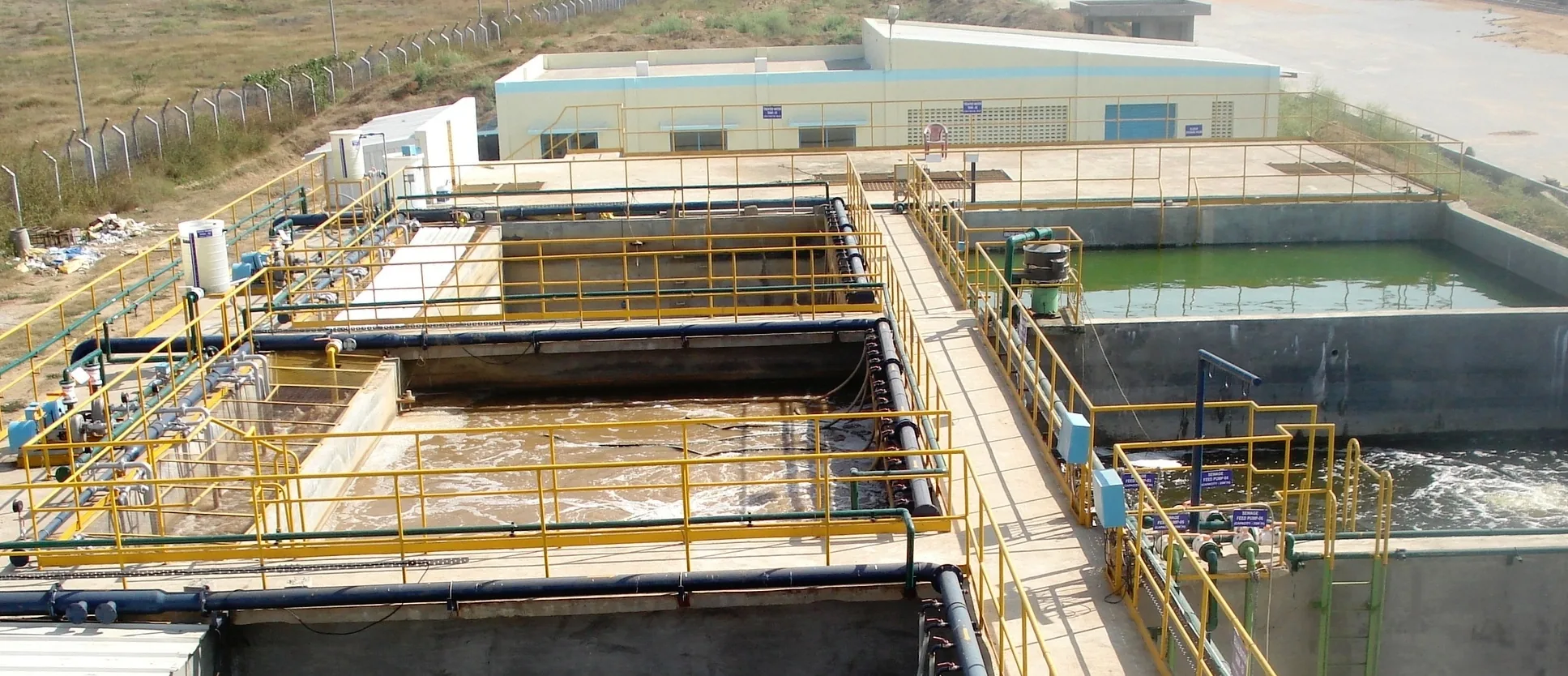
What is a Sewage Treatment Plant?
A Sewage Treatment Plant (STP) is a facility that processes domestic and municipal wastewater to remove contaminants before the treated water is discharged or reused. The process involves physical, biological, and chemical treatment stages that remove suspended solids, organic matter, nutrients, and pathogens.
Modern STP systems use technologies including MBBR (Moving Bed Biofilm Reactor), MBR (Membrane Bioreactor), SBR (Sequencing Batch Reactor), and conventional activated sludge processes — each suited to different capacities and site conditions.
In India, STPs are mandatory for residential societies above 20,000 sqm built-up area, commercial complexes, hotels, hospitals, and all industrial facilities discharging domestic effluent — as per CPCB norms and local Pollution Control Board regulations.
Sewage Treatment Plant in Ahmedabad — Why It Matters
Ahmedabad's STP and ETP demand is inseparable from its textile and chemical manufacturing base. Narol and Vatva are textile-dyeing and chemical hubs where GPCB enforces some of the strictest effluent norms in the country, including zero liquid discharge requirements for many units — meaning treated wastewater cannot be discharged at all and has to be recovered and reused within the plant.
This changes the nature of most Ahmedabad enquiries we get. A dyeing or chemical unit in Vatva is not usually asking for a standard STP — it is asking for a treatment train that ends in ZLD-grade water recovery, which is a substantially larger and more technical project than residential sewage treatment. Odhav Industrial Estate and Sanand's auto hub bring a different profile, closer to standard industrial and residential demand without the same ZLD pressure.
We size Ahmedabad projects around which category the unit falls into early, since a ZLD-linked project and a standard residential STP are not comparable in scope, cost, or timeline.
Key industrial areas we serve in Ahmedabad:
Regulatory Note: Gujarat Pollution Control Board (GPCB) enforces zero liquid discharge norms for textile, dyeing, and chemical industries in Ahmedabad.
STP Capacity & Technology for Ahmedabad
For textile and chemical units in Narol and Vatva operating under GPCB's zero liquid discharge mandate, the sewage treatment plant is typically the smaller half of a larger system — most of the design and cost sits in the ZLD stage that recovers and reuses process water, with the STP handling only domestic effluent from staff facilities. We size and quote these as a combined package rather than treating STP and ZLD as separate line items, since GPCB inspects the site as one integrated system.
Sanand's auto and auto-ancillary units and Bavla's broader industrial mix have a more conventional profile, closer to standard industrial STP demand without the ZLD requirement, though GPCB still expects documented compliance for any discharge. Odhav Industrial Estate sits between the two, with a mixed tenant base that we assess unit by unit.
Our 4-Step Process — From Design to Handover
1
Site Assessment & Design
Free site visit. Wastewater characterisation. Custom system design based on flow rate, BOD, COD, and discharge norms.
2
Manufacturing & Supply
In-house fabrication at our Delhi NCR facility. All components tested before dispatch. Delivery to your site across India.
3
Installation & Commissioning
Expert installation team. Civil work coordination. Full commissioning with performance testing to CPCB standards.
4
O&M / AMC Support
Operator training. Annual Maintenance Contracts available. 24/7 emergency support. Guaranteed uptime.
Why Choose Optima Water Solutions
- ISO 9001:2015 certified manufacturer — quality assured at every stage
- 12+ years of experience — 158+ STP installations across India
- CPCB-compliant systems — all designs meet national discharge standards
- Full turnkey delivery — design, supply, install, commission, maintain
- In-house manufacturing — no middlemen, better quality control, faster delivery
- Post-installation AMC support — ongoing operations and maintenance contracts
- Multiple technology options — MBBR, MBR, SBR, conventional — best fit for your site
- Competitive pricing — transparent quotations, no hidden costs
- Pan India installation — projects completed from Delhi to Chennai to Mumbai
- Free site visit and technical assessment before any commitment
Industries & Applications in Ahmedabad
Residential Societies
Hotels & Resorts
Hospitals
Commercial Complexes
Industrial Plants
Construction Sites
Educational Institutions
Government Projects
Need a Sewage Treatment Plant in Ahmedabad?
Tell us your capacity, application and site requirements and our team can prepare a project-specific proposal. ISO 9001:2015 certified. 158+ projects delivered across India.
Sewage Treatment Plant in Other Cities
Related Services in Ahmedabad
Learn More About Sewage Treatment Plant
Common Questions
Sewage Treatment Plant in Ahmedabad — FAQ
Do all Ahmedabad textile units need zero liquid discharge treatment?
Most dyeing and chemical processing units in Narol and Vatva fall under GPCB's ZLD mandate, meaning treated wastewater must be recovered and reused rather than discharged. Auto and general engineering units, such as those in Sanand, typically follow standard discharge norms instead. We confirm which category applies during the site assessment.
How is an STP different from a ZLD system for an Ahmedabad textile unit?
A standard STP treats sewage to a dischargeable standard. A ZLD system goes further, recovering and reusing nearly all process water so nothing leaves the site. For Vatva and Narol units under GPCB's ZLD mandate, the STP handles only domestic effluent, while a separate, larger ZLD train handles the industrial process water.
What does a combined STP and ZLD system cost in Ahmedabad?
This varies significantly by effluent volume and chemical complexity, typically starting from ₹60 Lakh for smaller units and running well above ₹2 Crore for larger textile processing operations. Call +91 9711880791 for an assessment specific to your process.
Does a Sanand auto-ancillary unit need the same treatment level as a Vatva textile unit?
Generally no. Sanand's auto and auto-component units typically follow standard GPCB discharge norms without the zero liquid discharge requirement that applies to most Vatva and Narol textile-dyeing units, resulting in a simpler and less costly treatment system.
How long does GPCB approval take for a ZLD-linked Ahmedabad project?
ZLD projects typically take longer to approve than standard STP projects, often 8 to 12 weeks, given the additional technical documentation GPCB requires for the recovery and reuse process. We prepare this documentation as part of our standard scope for Ahmedabad textile and chemical clients.
Ready to Start?
Ask our team about site-assessment availability for your Ahmedabad project.