Water Solution – One Call Ahead
Enquire? Send Your Mail
Extended Aeration is a type of activated sludge process with no primary settling and longer aerobic detention time to generate less excess sludge overall. It is a biological treatment process, which is able to produce high quality effluent at a reasonable operating and maintenance costs.
The Extended Aeration process is widely used by large cities and communities where large volumes of wastewater must be treated highly economically. Extended Aeration plants are good choices too for isolated facilities, such as hospitals or hotels, housing developments and even individual residences.
The Extended Aeration is the most popular biological treatment process for larger installations or small package plants being used today. The reason for this is their ability to produce a high quality effluent for the price. Other advantages of the Extended Aeration process are its stability, the ease of installation and operation of systems, the low operating and maintenance costs, handy operation the low sludge yield and the odorless operation.
Submerged Aerobic Fixed Film (SAFF) process uses support media to retain an active biomass to reduce the influent BOD Levels. Tubular/Disc diffusers are used with the SAFF media giving a good air dispersal and low level of blockage due to growth of biological film. SAFF reactor is a type of aerobic attached growth treatment process. Small foot print area, stable process, lesser sludge production and modular installations are the key features of SAFF process. Essentially SAFF system is a hybrid reactor where attached growth and suspended growth activity takes place simultaneously.
This technology utilizes an aerobic fixed film process that is a combination submerged attached growth and activated sludge processes. SAFF is highly suitable for medium and low strength wastewater. This is a cost-effective method of waste water treatment and sewage sanitation.
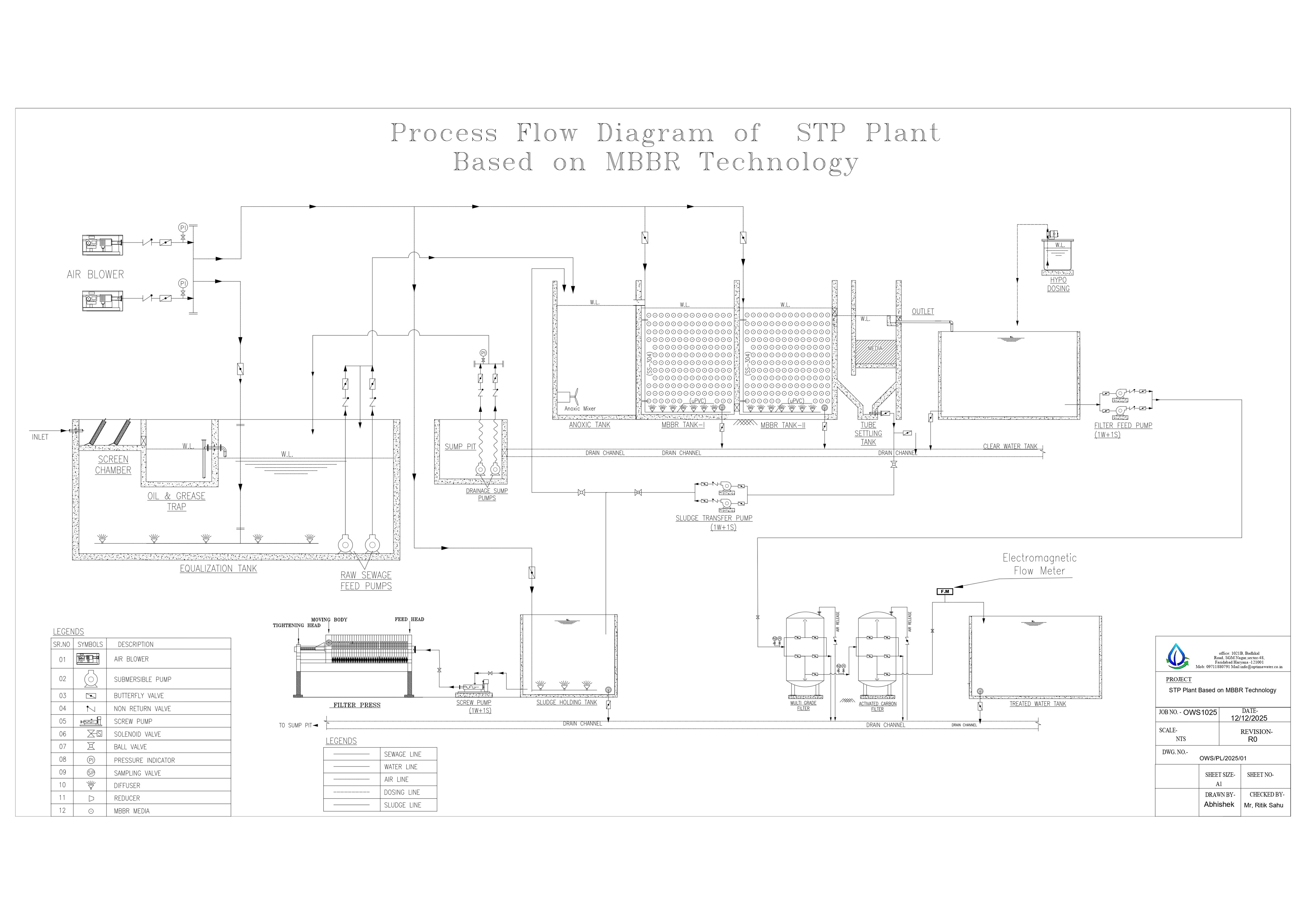
MBBR is an improved version of Fixed Film Bio Reactor like SAFF (Surface Area Fixed Filmed Technology (SAFF) or Rotating Bio Reactor (RBC), with a difference of MBBR carrier media is free floating in the Sewage/Effluent. MBBR technology employs thousands of polyethylene bio film carriers operating in mixed motion within an aerated wastewater treatment basin.
A Moving Bed Bio Reactor (MBBR) consists of a tank with submerged but floating plastic (usually HDPE, polyethylene or polypropylene) media having specific gravity less than 1.0. The large surface area of the plastics provide abundant surface for bacterial growth.
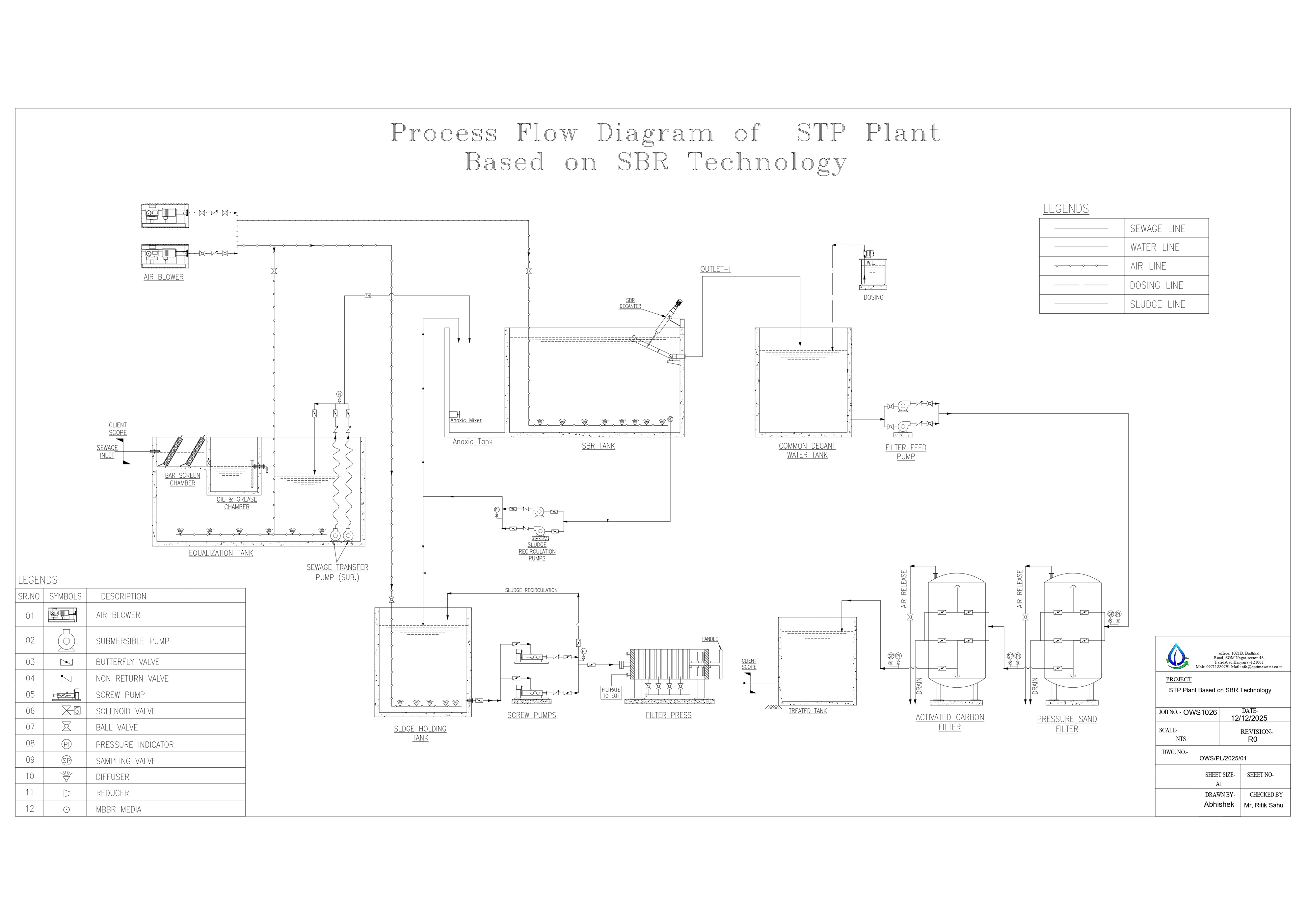
The Sequencing Batch Reactor (SBR) is an activated sludge process designed to operate in a batch mode with aeration and sludge settlement both occurring in the same tank. Difference between SBR and activated sludge system is that the SBR tank carries out the functions of equalization, aeration and sedimentation in a time sequence.
An appropriately designed SBR process is a unique combination of equipment and software. Working with automated control reduces the number of operator skill and attention requirement. There are basically five stages to treatment:
SBRs are broadly used in both industrial and municipal applications and especially where low or intermitted flow conditions apply.
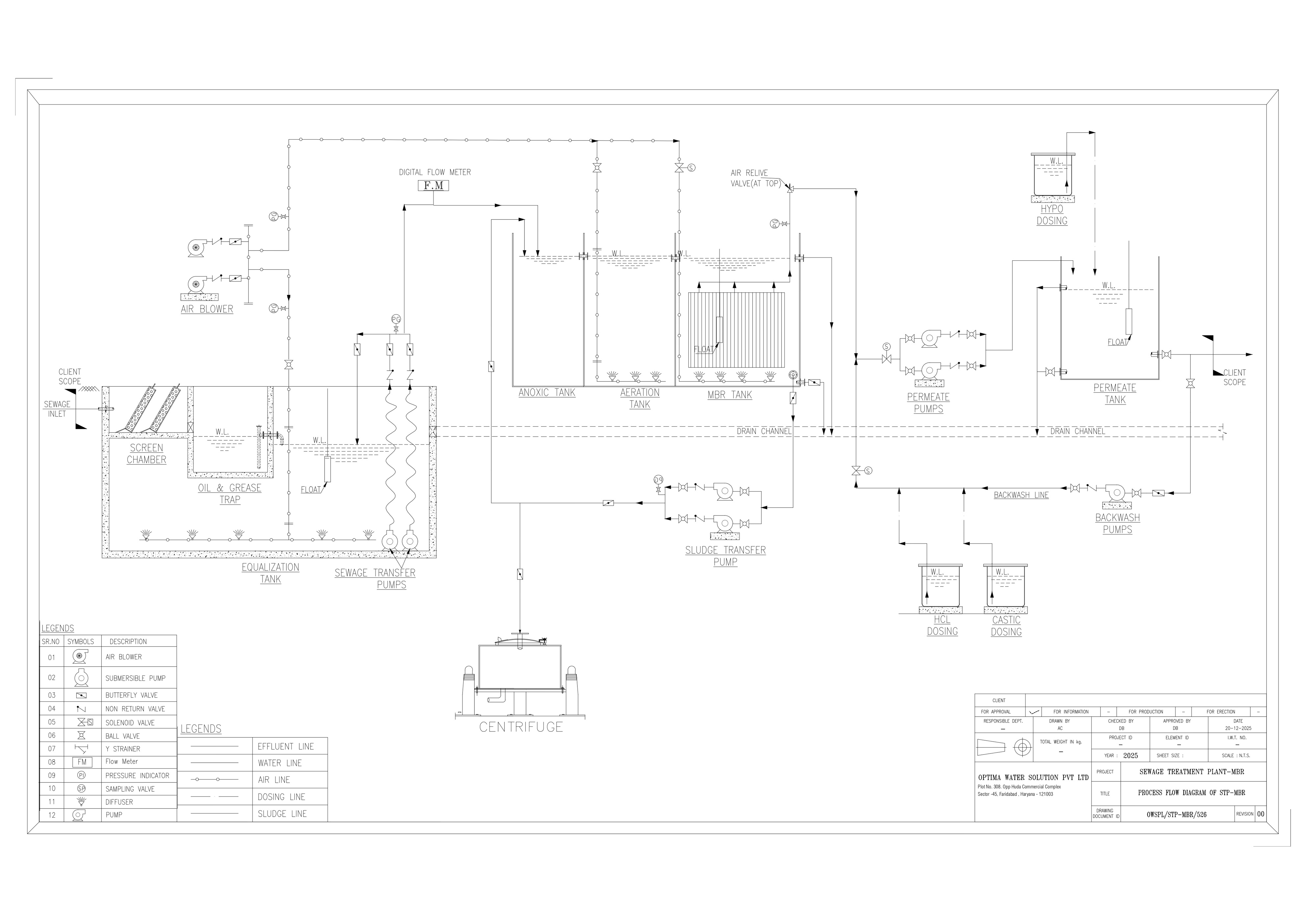
Membrane bioreactor (MBR) is the combination of a membrane filtration process with a suspended growth bioreactor. It is a very advanced technology and is now widely used for municipal and industrial wastewater treatment.
As its name tells, the process makes use of membranes. The nominal pore size of the membranes is small (up to 0.15µm), by which not only activated sludge but also coliform bacteria and virus can be shut out. The mixed liquor from the biological treatment can be separated clearly into solid and liquid. It assures almost 100% removal of SS and no carryover of SS into the effluent.
This process, therefore, assures stable treated water quality, which enables the treated water to be reused as reclamation water.