Water Solution – One Call Ahead
Enquire? Send Your Mail

Optima Water Solutions is an STP Plant Manufacturer in Punjab. We design, install, commission, and maintain Sewage Treatment Plant systems, and hold ISO 9001:2015 certification with 12+ years of experience and 158+ completed projects across India. Our STP systems meet CPCB compliance standards and serve residential societies, commercial complexes, and industrial facilities in Punjab.
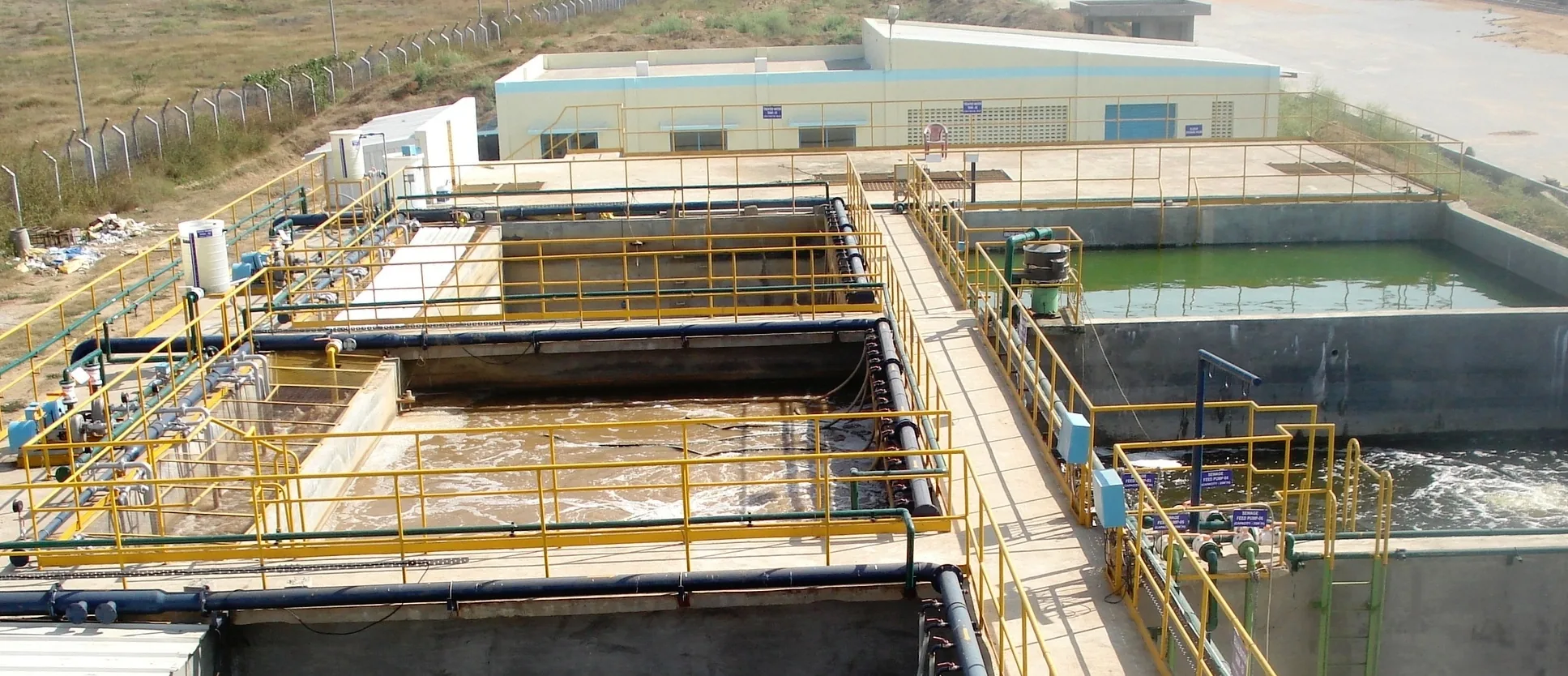
What is a Sewage Treatment Plant?
A Sewage Treatment Plant (STP) is a facility that processes domestic and municipal wastewater to remove contaminants before the treated water is discharged or reused. The process involves physical, biological, and chemical treatment stages that remove suspended solids, organic matter, nutrients, and pathogens.
Modern STP systems use technologies including MBBR (Moving Bed Biofilm Reactor), MBR (Membrane Bioreactor), SBR (Sequencing Batch Reactor), and conventional activated sludge processes — each suited to different capacities and site conditions.
In India, STPs are mandatory for residential societies above 20,000 sqm built-up area, commercial complexes, hotels, hospitals, and all industrial facilities discharging domestic effluent — as per CPCB norms and local Pollution Control Board regulations.
Sewage Treatment Plant in Punjab — Why It Matters
Punjab covers a wide spread of industrial and regulatory activity, from Ludhiana Industrial Focal Point, Jalandhar Industrial Area, Amritsar Industrial Estate, Bathinda Industrial Area to fast-growing residential markets. Rather than one generic Punjab-wide page, Optima maintains a dedicated, locally detailed page for each Punjab city we actively serve — including Amritsar, Jalandhar, Ludhiana — each covering that city's specific regulatory body, local industrial zones, and pricing.
This page exists as a starting point to help you find the right one. Punjab Pollution Control Board (PPCB) enforces wastewater treatment norms. Textile, dyeing, and pharmaceutical industries face strict ETP requirements. STPs mandatory for large residential projects.
Punjab Wastewater Challenges & How Optima Solves Them
Punjab's wastewater problem is shaped by two rivers and one drain. The Sutlej and Beas carry the state's water, while the Buddha Nullah in Ludhiana has become a symbol of pollution. Ludhiana's three municipal plant complexes at Balloke, Bhattian and Jamalpur use UASB and SBR processes, yet the Pollution Control Board has said it was not satisfied with their effectiveness, and the Tribunal has fined the Municipal Corporation. Dyeing and electroplating clusters add heavy industrial load.
The same pattern shows up in the new satellite cities. Around Mohali, the development authority's large municipal plant has been reported to lack a treated-water distribution network, so reuse lags, and a Tribunal case alleged that hundreds of flats were occupied without an operating STP or consent. Groundwater decline across the state makes treated water for irrigation and construction increasingly valuable.
How Optima solves it: we focus on compliance and reuse. We design plants that meet the discharge limits on the day of inspection, size treated-water systems for flushing, landscaping and nearby irrigation, and keep operating logs ready for a board visit. Industrial users get a separate ETP so process wastewater does not overload the STP. The city links on this page give local detail for Ludhiana, Amritsar, Jalandhar and others.
Key industrial areas we serve in Punjab:
Regulatory Note: Punjab Pollution Control Board (PPCB) enforces wastewater treatment norms. Textile, dyeing, and pharmaceutical industries face strict ETP requirements. STPs mandatory for large residential projects.
STP Norms & Compliance in Punjab
The Punjab Pollution Control Board (PPCB) issues Consent to Establish and Consent to Operate for sewage treatment plants under the Water Act, and inspects the plant before the building is allowed to function. Development authorities such as GMADA in Mohali and local bodies in Ludhiana, Amritsar and Jalandhar apply building rules that expect STPs for qualifying projects, and the Tribunal has repeatedly treated occupation without a plant or consent as a violation.
In the Mohali case the PPCB served notice under section 33-A of the Water Act on the development authority over occupied flats without a functioning plant or the required consents. In Ludhiana the Tribunal imposed environmental compensation on the Municipal Corporation in 2021, and PPCB has asked for additional treatment components. Both cases show that regulators check outcomes, not just installation.
Projects above 20,000 sq m of built-up area also need environmental clearance with its own recycling conditions. NGT's April 2019 order set a BOD ceiling of 10 mg/L for new STPs in large cities; consent letters carry their own limits, so we design to yours.
Organisations We Have Worked With in Punjab
A selection of clients we have supported on water and wastewater projects across Punjab. We can share a reference list for your sector on request.
Mahindra & Mahindra Ltd.
Mohali
Jaypee Associates Limited
Ludhiana
STP Solutions Across Punjab
Optima serves Punjab through dedicated pages for each city we actively work in — each with its own local details on regulations, industrial zones, and pricing. Pick your city below.
STP Capacity & Technology for Punjab
Typical capacities in Punjab. With planning norms of 135 litres per resident per day for housing, 45 for offices and day students, 180 per hotel bed and 450 per hospital bed over 100 beds, and sewage at roughly 80% of water used: a 250-flat society in Mohali needs about 125 to 150 KLD, a 150-bed hospital in Ludhiana or Amritsar needs about 55 KLD, and an IT or office tower of 2,500 staff needs about 90 KLD. Hosiery, dyeing and engineering units should size a small domestic STP separately from process effluent.
MBBR, MBR or SBR in Punjab. MBBR is the standard for societies, hotels and colleges. MBR suits compact urban sites and projects that want treated water of high quality for flushing and cooling towers. SBR is well proven in Punjab, with municipal SBR plants in Ludhiana and decentralised SBR plants in industrial parks, and it suits campuses and townships with variable flow. Ludhiana's dyeing and electroplating units need an ETP matched to their process, and large units should check CETP connection rules. Use the city links on this page for local detail.
Our 4-Step Process — From Design to Handover
1
Site Assessment & Design
Free site visit. Wastewater characterisation. Custom system design based on flow rate, BOD, COD, and discharge norms.
2
Manufacturing & Supply
In-house fabrication at our Delhi NCR facility. All components tested before dispatch. Delivery to your site across India.
3
Installation & Commissioning
Expert installation team. Civil work coordination. Full commissioning with performance testing to CPCB standards.
4
O&M / AMC Support
Operator training. Annual Maintenance Contracts available. 24/7 emergency support. Guaranteed uptime.
Why Choose Optima Water Solutions
- ISO 9001:2015 certified manufacturer — quality assured at every stage
- 12+ years of experience — 158+ STP installations across India
- CPCB-compliant systems — all designs meet national discharge standards
- Full turnkey delivery — design, supply, install, commission, maintain
- In-house manufacturing — no middlemen, better quality control, faster delivery
- Post-installation AMC support — ongoing operations and maintenance contracts
- Multiple technology options — MBBR, MBR, SBR, conventional — best fit for your site
- Competitive pricing — transparent quotations, no hidden costs
- Pan India installation — projects completed from Delhi to Chennai to Mumbai
- Free site visit and technical assessment before any commitment
Industries & Applications in Punjab
Residential Societies
Hotels & Resorts
Hospitals
Commercial Complexes
Industrial Plants
Construction Sites
Educational Institutions
Government Projects
Need a Sewage Treatment Plant in Punjab?
Tell us your capacity, application and site requirements and our team can prepare a project-specific proposal. ISO 9001:2015 certified. 158+ projects delivered across India.
Related Services in Punjab
Learn More About Sewage Treatment Plant
Common Questions
Sewage Treatment Plant in Punjab — FAQ
Which Punjab cities does Optima actively serve?
We maintain dedicated project pages for Amritsar, Jalandhar, Ludhiana in Punjab. Select your city above for local pricing, regulatory details, and project examples specific to that location.
Does Optima manufacture STPs within Punjab, or ship from elsewhere?
Optima's manufacturing base is centralised, with project teams and installation support covering Punjab directly. Delivery and installation timelines for Punjab projects are quoted per city based on site location and access.
I don't see my Punjab city listed — can Optima still help?
Yes. We regularly take on projects in Punjab locations without a dedicated page yet. Call +91 9711880791 and our team will assess your site directly, using the same design and compliance process as our listed cities.
Ready to Start?
Ask our team about site-assessment availability for your Punjab project.