Water Solution – One Call Ahead
Enquire? Send Your Mail

Optima Water Solutions is an STP Plant Manufacturer in Gwalior. We design, install, commission, and maintain Sewage Treatment Plant systems, and hold ISO 9001:2015 certification with 12+ years of experience and 158+ completed projects across India. Our STP systems meet CPCB compliance standards and serve residential societies, commercial complexes, and industrial facilities in Gwalior.
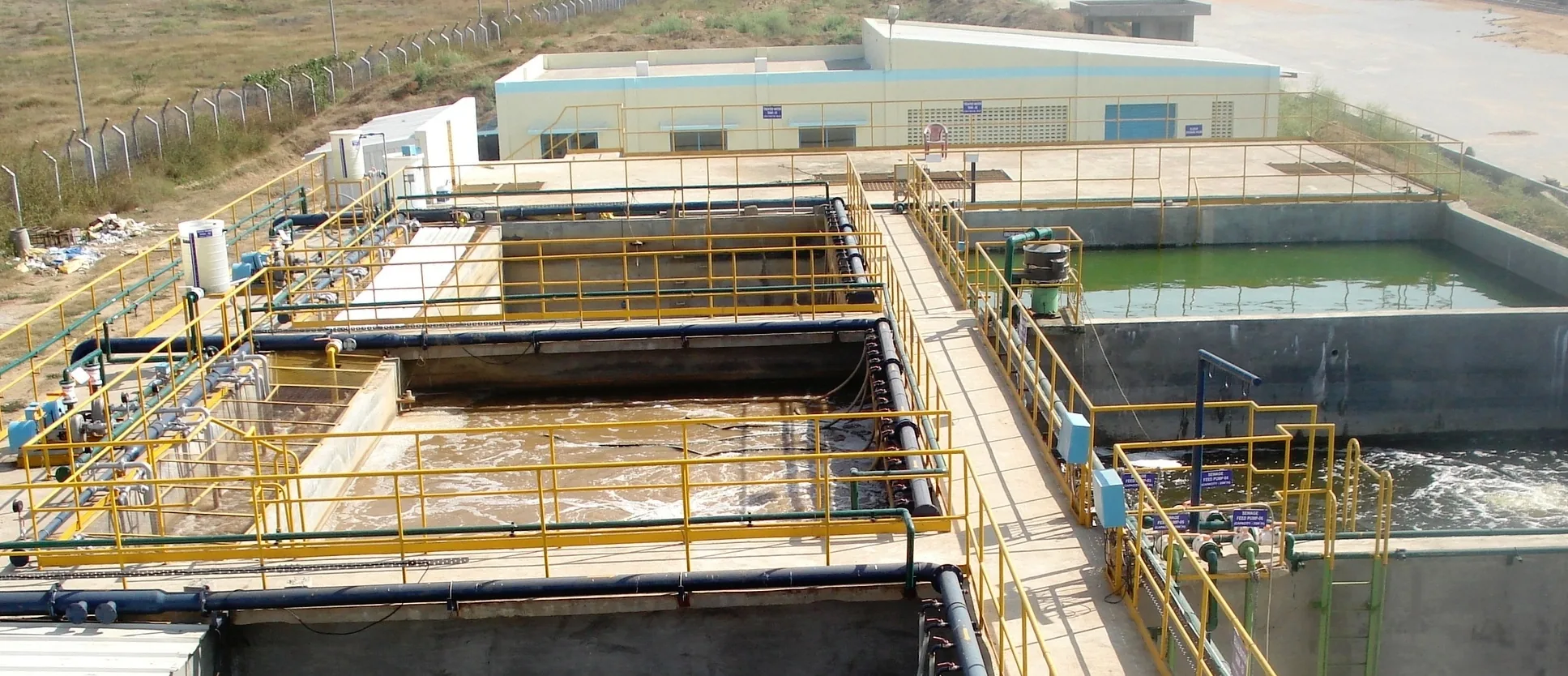
What is a Sewage Treatment Plant?
A Sewage Treatment Plant (STP) is a facility that processes domestic and municipal wastewater to remove contaminants before the treated water is discharged or reused. The process involves physical, biological, and chemical treatment stages that remove suspended solids, organic matter, nutrients, and pathogens.
Modern STP systems use technologies including MBBR (Moving Bed Biofilm Reactor), MBR (Membrane Bioreactor), SBR (Sequencing Batch Reactor), and conventional activated sludge processes — each suited to different capacities and site conditions.
In India, STPs are mandatory for residential societies above 20,000 sqm built-up area, commercial complexes, hotels, hospitals, and all industrial facilities discharging domestic effluent — as per CPCB norms and local Pollution Control Board regulations.
Sewage Treatment Plant in Gwalior — Why It Matters
In Gwalior, wastewater treatment obligations apply across a wider range of projects than many developers expect, from mid-size housing to light industry. Around Malanpur Industrial Area, Sithouli Industrial, AKVN Gwalior, the case for a properly designed system is straightforward — MPPCB inspection is routine, and retrofitting after the fact costs more than building it in from the start.
Optima Water Solutions delivers STP projects in Gwalior end to end — design, manufacturing, installation, commissioning, and Annual Maintenance Contracts — so clients are not left coordinating multiple vendors for one system.
Gwalior Wastewater Challenges & How Optima Solves Them
Gwalior's sewage network has long run behind its population. An earlier desk study by the Centre for Science and Environment found one 50 MLD plant with only part of the sewage reaching it, while the rest flowed through drains and river channels untreated. The Swarnrekha river, once the city's lifeline, is the subject of a High Court petition, with the Municipal Corporation directed to prepare a detailed project report for sewer lines along the river.
At state level, Madhya Pradesh has reported a large gap between sewage generated and treated, and has plans for dozens of new plants. For private owners this means that sewer connection and municipal treatment cannot be assumed, and the Pollution Control Board expects on-site treatment from larger projects. Gwalior's mix of schools, hospitals, hotels, malls, dairy and textile industry also means very different loads from site to site.
How Optima solves it: we size plants from actual occupancy, separate domestic and industrial streams, and plan for reuse in gardens, flushing and construction. Summer heat and uneven power supply are designed in with robust aeration and standby arrangements.
Key industrial areas we serve in Gwalior:
Regulatory Note: MPPCB monitors chemical, pharmaceutical, and engineering industries in Gwalior. ETPs mandatory for all industrial units. Chambal River basin proximity requires strict effluent treatment compliance.
STP Norms & Compliance in Gwalior
The Madhya Pradesh Pollution Control Board (MPPCB), through its Gwalior regional office, grants Consent to Establish and Consent to Operate under the Water Act. Guides to the state's STP rules report that treated water is expected to be reused for non-potable purposes such as flushing and landscaping, which calls for dual plumbing, and that discharge into freshwater bodies is restricted. Municipal approval comes through the Gwalior Municipal Corporation and the town planning authority.
State filings before the Tribunal acknowledge that treatment capacity still trails sewage generation, so enforcement attention is on both municipal and private plants. Projects above 20,000 sq m of built-up area need environmental clearance, and industrial units such as dairy, textile and chemical plants are regulated for process effluent separately from sewage.
The Tribunal's April 2019 order set a BOD ceiling of 10 mg/L for new STPs in large cities; MPPCB applies limits through each consent, so design to the figures in yours and keep sampling records.
Organisations We Have Worked With in Gwalior
A selection of clients we have supported on water and wastewater projects. We can share a reference list for your sector on request.
The Scindia School
Gwalior
Deendayal City Mall
Gwalior
Parijat Spa
Gwalior
Mascot Hospital
Gwalior
Harshit Textiles Pvt. Ltd.
Gwalior
Gwalior Sahakari Dugdh Sangh
Gwalior
STP Capacity & Technology for Gwalior
Sizing examples. A residential school with 600 boarders at 135 litres and 400 day students at 45 litres uses roughly 99 KLD and returns about 79 KLD, so an 80 to 100 KLD plant is a fit. A 100-bed hospital at 340 litres per bed uses about 34 KLD and returns around 27 KLD. A textile or dairy unit with 400 workers at 45 litres uses about 18 KLD of domestic water, while its process effluent is much stronger and needs an ETP.
MBBR, MBR or SBR for Gwalior? MBBR suits housing, hotels and hospitals with steady flow. SBR is a good fit for campuses with long holidays, because batch cycles cope with empty periods and restarts. MBR is worth considering where treated water must meet a high reuse standard for flushing or a mall's cooling system in a compact footprint. For Malanpur, Banmore and AKVN-area industries, plan a process ETP and a separate STP for staff. The client list on this page shows the sectors we have worked with in Gwalior.
Our 4-Step Process — From Design to Handover
1
Site Assessment & Design
Free site visit. Wastewater characterisation. Custom system design based on flow rate, BOD, COD, and discharge norms.
2
Manufacturing & Supply
In-house fabrication at our Delhi NCR facility. All components tested before dispatch. Delivery to your site across India.
3
Installation & Commissioning
Expert installation team. Civil work coordination. Full commissioning with performance testing to CPCB standards.
4
O&M / AMC Support
Operator training. Annual Maintenance Contracts available. 24/7 emergency support. Guaranteed uptime.
Why Choose Optima Water Solutions
- ISO 9001:2015 certified manufacturer — quality assured at every stage
- 12+ years of experience — 158+ STP installations across India
- CPCB-compliant systems — all designs meet national discharge standards
- Full turnkey delivery — design, supply, install, commission, maintain
- In-house manufacturing — no middlemen, better quality control, faster delivery
- Post-installation AMC support — ongoing operations and maintenance contracts
- Multiple technology options — MBBR, MBR, SBR, conventional — best fit for your site
- Competitive pricing — transparent quotations, no hidden costs
- Pan India installation — projects completed from Delhi to Chennai to Mumbai
- Free site visit and technical assessment before any commitment
Industries & Applications in Gwalior
Residential Societies
Hotels & Resorts
Hospitals
Commercial Complexes
Industrial Plants
Construction Sites
Educational Institutions
Government Projects
Need a Sewage Treatment Plant in Gwalior?
Tell us your capacity, application and site requirements and our team can prepare a project-specific proposal. ISO 9001:2015 certified. 158+ projects delivered across India.
Sewage Treatment Plant in Other Cities
Related Services in Gwalior
Learn More About Sewage Treatment Plant
Common Questions
Sewage Treatment Plant in Gwalior — FAQ
What determines STP pricing for a Gwalior project?
Capacity, technology, and site conditions are the main cost drivers for an STP in Gwalior. Smaller systems start from roughly ₹4-6 Lakh, with cost scaling for higher flow rates or added treatment stages. We quote after seeing the site.
Is STP compliance mandatory for Gwalior developments?
For most projects above the applicable size threshold, yes. The Madhya Pradesh Pollution Control Board and CPCB both apply requirements to residential, commercial, and industrial sites in Gwalior. We help confirm which rules apply to your specific development.
Which treatment technology fits Gwalior projects best?
MBBR is the standard, cost-effective choice for most Gwalior projects. For sites that need treated water for reuse — flushing, gardens, or similar — MBR technology is usually the better fit despite the higher upfront cost.
How soon can an STP be operational in Gwalior?
From order confirmation, a packaged STP in Gwalior typically reaches commissioning within 4 to 8 weeks, assuming the site is ready for installation. We manage the schedule directly with your civil and project teams.
What ongoing support does Optima offer in Gwalior?
We provide Annual Maintenance Contracts for Gwalior clients, covering scheduled servicing, breakdown response, and operator training, so the STP continues to perform reliably well after the initial installation.
Can a Gwalior project rely on the municipal sewer instead of its own STP?
Not safely. Municipal treatment capacity has lagged behind generation, so the Pollution Control Board expects larger projects to treat and reuse their own sewage on site.
Which technology suits a school or college campus in Gwalior?
SBR or MBBR with equalisation. Campuses sit idle during vacations, so a batch or well-controlled biological design recovers faster when students return.
Does a Gwalior dairy or textile unit need an ETP?
Yes. Process effluent from dairy and textile operations is far stronger than sewage, so it needs an ETP built for that stream, with a small STP for staff and canteen.
Ready to Start?
Ask our team about site-assessment availability for your Gwalior project.