Water Solution – One Call Ahead
Enquire? Send Your Mail
Optima Water Solutions is an ETP Plant Manufacturer in Surat. We handle Effluent Treatment Plant design, manufacturing, installation, and maintenance end to end. Our ISO 9001:2015 certified systems meet Gujarat Pollution Control Board discharge norms, helping industries in Surat avoid penalties and operate sustainably. With 158+ installations across India, our ETP solutions serve textile, pharmaceutical, chemical, food processing, and other industries.
What is a Effluent Treatment Plant?
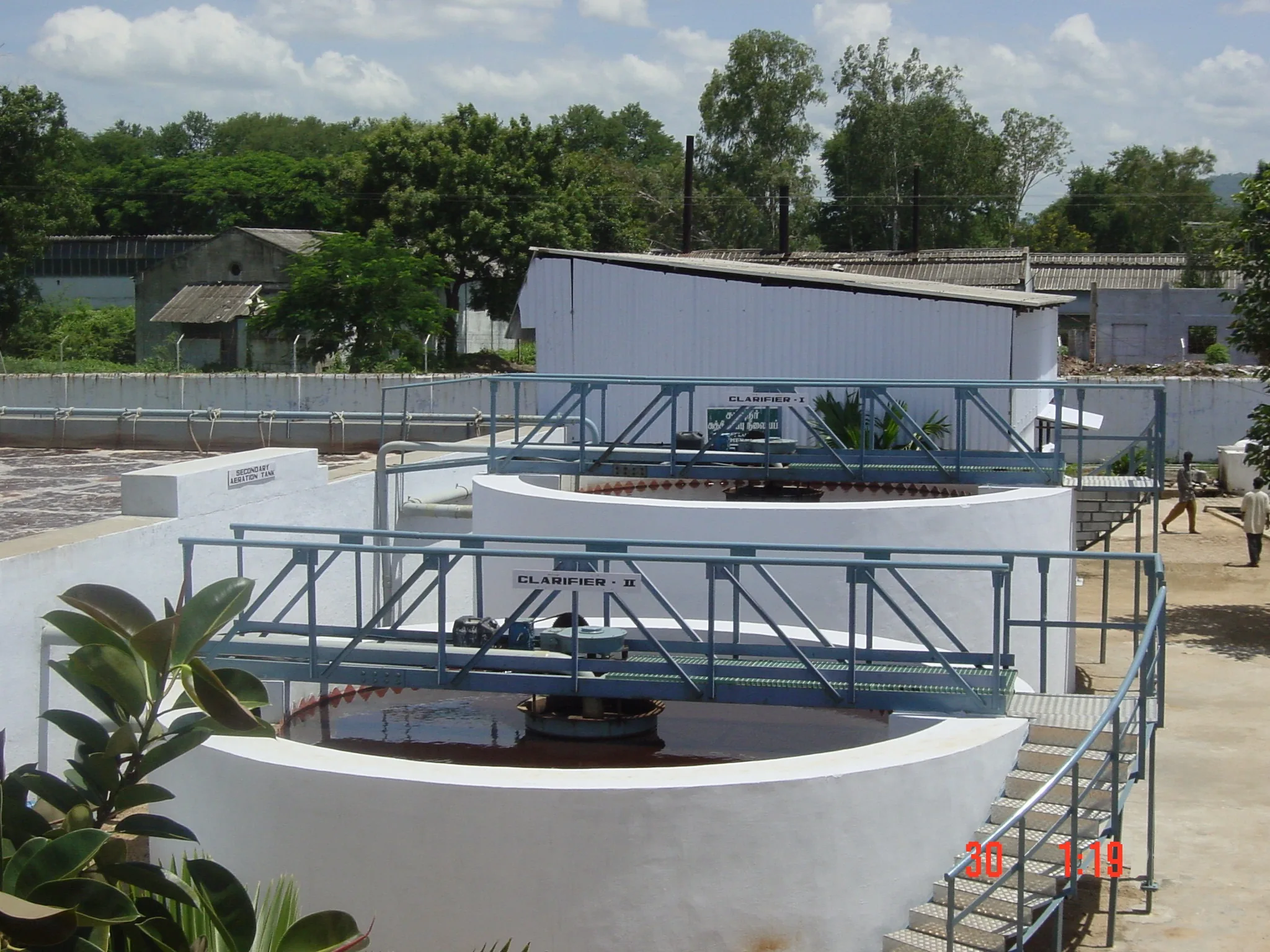
An Effluent Treatment Plant (ETP) is an industrial wastewater treatment system designed to remove pollutants, heavy metals, toxic chemicals, and organic matter from industrial effluent before it is discharged into the environment or reused in the manufacturing process.
Unlike domestic sewage treatment, ETP systems must be customised to the specific effluent characteristics of each industry. Common technologies include physico-chemical treatment (coagulation, flocculation, clarification), biological treatment (aerobic/anaerobic), advanced oxidation, and membrane filtration.
The Water (Prevention and Control of Pollution) Act and CPCB norms make ETPs legally mandatory for all major industries in India. Non-compliance results in penalties, factory closure, and criminal liability for directors.
Effluent Treatment Plant in Surat — Why It Matters
Surat's ETP demand is inseparable from its textile-dyeing industry, concentrated in GIDC Surat, Pandesara, and Kadodara. GPCB has issued some of the strictest effluent norms in the country for this sector given the sheer processing volume in Surat specifically, and zero liquid discharge applies to a large share of the city's dyeing units — meaning the treatment system has to recover and reuse water rather than simply discharge it after treatment.
This makes most of our Surat ETP work fundamentally different from a standard industrial project — dyeing effluent carries a heavy colour and dissolved-solids load that conventional biological treatment cannot fully remove alone, so the treatment train needs physico-chemical stages specifically built for colour removal ahead of biological treatment, followed by a ZLD-grade recovery stage for most units.
Sachin Industrial Estate and Kim Industrial host a broader manufacturing mix alongside textiles, and we assess each unit's process individually before proposing a design, since the ZLD requirement doesn't apply uniformly across all tenants in these zones.
Key industrial areas we serve in Surat:
Regulatory Note: GPCB has specific norms for Surat's massive textile and diamond processing industries. ZLD norms apply to dyeing and processing units.
ETP Capacity & Technology for Surat
Textile-dyeing effluent from GIDC Surat and Pandesara units needs a multi-stage treatment train that conventional ETP design doesn't fully address — physico-chemical treatment for colour and dissolved-solids removal, biological treatment for organic load, and for most units under GPCB's ZLD mandate, a final recovery stage that reclaims water for reuse. Getting the colour-removal stage right is often the difference between a system that passes GPCB inspection and one that doesn't.
Sachin and Kim Industrial's mixed tenant base means some units need this full textile-specific treatment train while others, with simpler general-manufacturing effluent, need a more standard system. We confirm which category applies during the site assessment before proposing a design.
Our 4-Step Process — From Design to Handover
1
Effluent Analysis & Design
Collect effluent samples. Lab analysis of BOD, COD, TSS, heavy metals, pH. Custom ETP design for your industry.
2
Engineering & Fabrication
Detailed engineering drawings. In-house fabrication of tanks, reactors, and equipment. Quality testing at factory.
3
Installation & Commissioning
Site installation by expert team. Civil coordination. Full commissioning with SPCB compliance verification.
4
Training & AMC
Operator training for your team. Annual Maintenance Contracts. Documentation for SPCB renewal applications.
Why Choose Optima Water Solutions
- ISO 9001:2015 certified — every ETP built to international quality standards
- Industry-specific designs — textile, pharma, chemical, food, tannery, electroplating
- Full SPCB compliance — all systems meet Gujarat Pollution Control Board norms
- In-house lab — effluent analysis and treatability studies before system design
- 12+ years, 158+ projects — proven ETP installations across India
- Turnkey execution — design, civil, mechanical, electrical, commissioning, handover
- AMC support — ongoing maintenance, spare parts, operator assistance
- SPCB renewal assistance — documentation and compliance reporting support
- Zero Liquid Discharge upgrades available — convert ETP to ZLD system
- Transparent pricing — detailed BOQ, no hidden costs
Industries & Applications in Surat
Textile Industry
Pharmaceutical
Chemical Industry
Food & Beverage
Electroplating
Tannery & Leather
Paper & Pulp
Paint Manufacturing
Need a Effluent Treatment Plant in Surat?
Tell us your capacity, application and site requirements and our team can prepare a project-specific proposal. ISO 9001:2015 certified. 158+ projects delivered across India.
Related Services in Surat
Learn More About Effluent Treatment Plant
Common Questions
Effluent Treatment Plant in Surat — FAQ
Why does Surat textile effluent need different treatment than standard ETP?
Textile-dyeing effluent carries heavy colour and dissolved-solids load that conventional biological treatment can't fully remove alone. Most Surat units need a physico-chemical colour-removal stage ahead of biological treatment, and under GPCB's ZLD mandate, a final water recovery stage as well.
Do all Surat textile units need zero liquid discharge treatment?
A large share of dyeing and processing units in GIDC Surat, Pandesara, and Kadodara fall under GPCB's ZLD mandate given the scale of textile processing in the city. We confirm the applicable requirement for your specific unit during the site assessment.
What does textile effluent treatment cost in Surat?
Given the multi-stage treatment required, costs run higher than standard ETPs, typically ₹50 Lakh to over ₹2.5 Crore depending on effluent volume, colour load, and whether full ZLD recovery is required. Call +91 9711880791 for an assessment specific to your process.
Does every unit in Sachin or Kim Industrial need textile-level ETP treatment?
No. Both estates host a mixed tenant base beyond textiles, and units with simpler general-manufacturing effluent don't need the full colour-removal and recovery treatment train that dyeing units require. We assess this per unit rather than applying one standard design.
How is colour removal handled differently from standard effluent treatment?
Colour from dye effluent typically needs specific physico-chemical treatment — coagulation, flocculation, and sometimes advanced oxidation — that standard biological treatment alone cannot achieve. We design this as a dedicated stage ahead of biological treatment for Surat textile clients.
Ready to Start?
Ask our team about site-assessment availability for your Surat project.